The United Kingdom’s Supreme Court commenced a two-day hearing on Wednesday, November 4, to consider an appeal against the designation of the direct action group Palestine Action as a terrorist organization. The legal challenge seeks to overturn the government’s decision to proscribe the group, a move that has drawn sharp criticism from civil liberties advocates and human rights organizations.
Huda Ammori, a cofounder of Palestine Action, stated prior to the proceedings that she would argue the ban has a disproportionate impact on fundamental rights. Specifically, she plans to focus on how the proscription affects freedom of speech and the right to protest in the UK.
The group was officially banned in July of last year by the administration of then Prime Minister Keir Starmer. Since that time, prominent rights groups such as Amnesty International and Liberty have denounced the decision. Palestine Action describes itself as a movement committed to ending global participation in what it calls Israel’s genocidal and apartheid regime.
The designation places Palestine Action on the same legal list as armed groups like al-Qaeda and ISIL. Under current law, individuals found guilty of belonging to or supporting the group face a maximum prison sentence of 14 years. This severity has led many observers to view the proscription as a significant constraint on civil liberties.
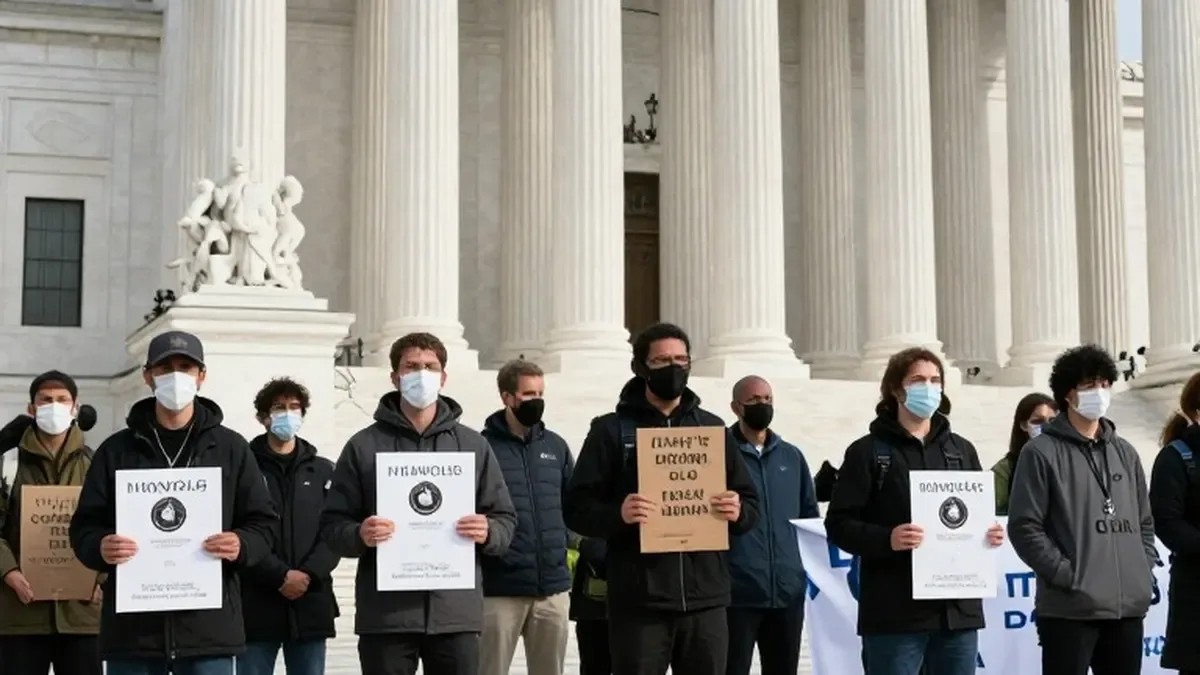
Outside the court, a crowd of demonstrators gathered as the hearing began. The protesters were divided in their stance, with some expressing direct support for Palestine Action and others opposing the legal ban on the group. One demonstrator held a placard with the message, 'God help us Jews who support Palestine and Palestine Action.'
Police arrested approximately 25 protesters during the demonstration, according to the Press Association. The final person detained was carrying a sign that read, 'God help us who are not married to the UK’s national security adviser who support Palestine and Palestine action.'
This slogan is understood to reference journalist and author Sarah Helm, who is married to the Prime Minister’s national security adviser. Helm had previously posted a similar line on the social media platform X but did not face prosecution for her comments.
Tom Southerden, the UK Law and Human Rights Director at Amnesty International, described the arrests as evidence of chaos caused by the government’s misuse of terrorism powers. He noted in a statement that seeing musicians, politicians, and celebrities arrested for peacefully holding signs was a grim sight. He further argued that the arrests highlighted how dangerously vague the current terrorism laws are, especially given that they were arrested for using the same language that Sarah Helm used without facing arrest.
Amnesty International is among several organizations calling for the UK government to lift the ban on Palestine Action. Southerden added that regardless of the Supreme Court's final decision, it is time for the government to admit the error, end the proscription, and stop the arrests.
The government’s approach to pro-Palestine voices has faced intense scrutiny since Israel launched its war on Gaza more than three years ago. Last week, Swedish academic Andreas Malm was denied entry to the UK on the grounds that his presence was not conducive to the public good. Malm is a vocal supporter of Palestine and has criticized the assault on Gaza. Prime Minister Andy Burnham, who took office in July, had previously stated that the Labour Party had got it wrong on Gaza, a comment that has come under renewed scrutiny following Malm's refusal of entry.