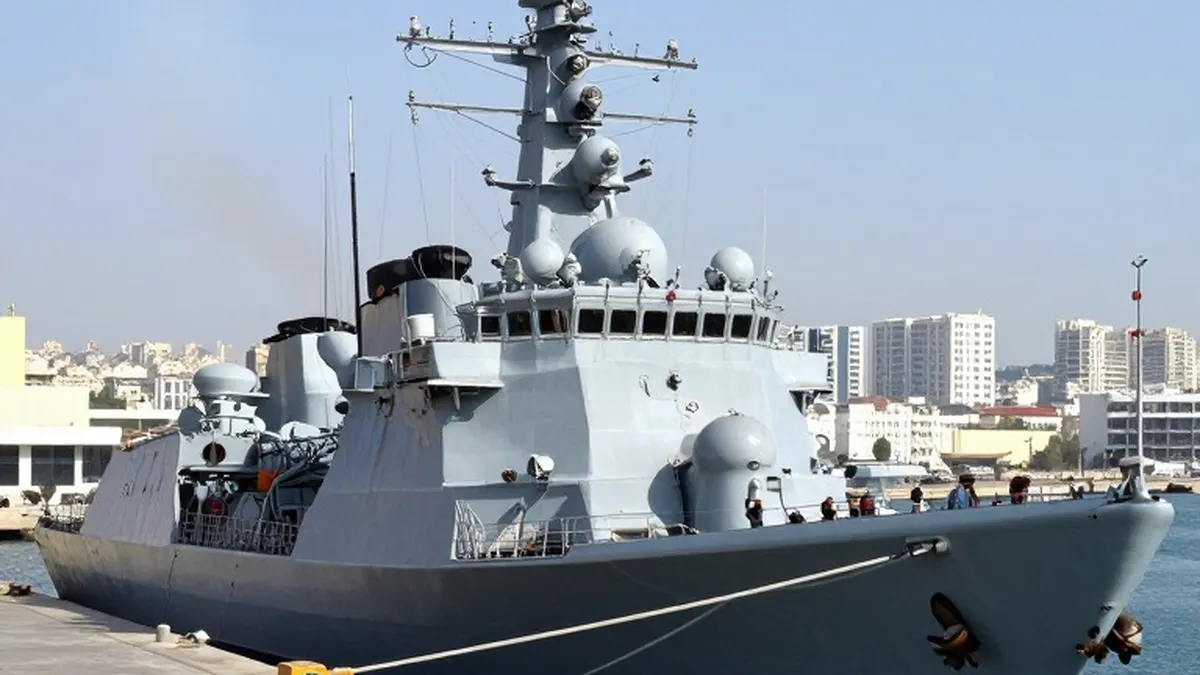
The Libyan National Army announced on Wednesday that two of its naval officers have died from injuries sustained during a recent Ukrainian drone strike on a Russian warship. The victims were pronounced dead on Tuesday evening after a sea drone struck the corvette Merkury while it was docked at the Benghazi Naval Base for refueling and resupply.
In a formal statement, the LNA’s general command expressed its grief over the losses and pledged to retaliate against Kyiv. The military leadership specified that the response would occur at the appropriate time and place, using the appropriate means, though no further details were provided regarding the timing or method of the counterattack.
The LNA, commanded by General Khalifa Hifter, remains the dominant military force in eastern and southern Libya. Hifter maintains strong ties with Moscow, while a rival government in Tripoli controls the western portion of the country. The drone attack was reportedly launched from this western region, highlighting the complex dynamics of the conflict that has fractured the nation for years.
According to an initial investigation briefed to two anonymous LNA officials, several Ukrainian sea drones were launched from a base in western Libya. During the Sunday operation, at least four drones were intercepted and destroyed, but two managed to hit the Merkury. At least ten individuals, including Libyan and Russian nationals, were reported to have been wounded in the incident.
Ukrainian officials did not provide an immediate response on Wednesday but had insisted the previous day that their forces did not intend to target Libyan personnel. The operation took place approximately 2,400 kilometers from the main front line of the war. Ukrainian Foreign Minister Andrii Sybiha defended the strike by citing Article 51 of the United Nations Charter, arguing that Russia’s right to self-defense allows targeting both naval vessels and cargo ships carrying military equipment.
Kremlin spokesperson Dmitry Peskov reacted to the news by stating that no country leaves an attempt on the life of its military unpunished. He declined to offer specific comments on the Russian personnel who were reportedly injured in the attack, maintaining a measured tone in the early stages of the diplomatic fallout.
The incident marks a significant expansion of the Russia-Ukraine conflict, bringing the war to a new geographic battleground in North Africa. The deaths of the Libyan officers have intensified tensions, fueling fears that Europe’s largest conflict since World War II is spreading further beyond Ukraine’s borders and affecting regional stability.
The Tripoli-based government has developed closer ties with Ukraine and its Western allies, a strategic move partly designed to bolster its position in the ongoing power struggle. Since Russia’s invasion nearly five years ago, the political and economic consequences of the war have rippled outward, now impacting North African nations and prompting European countries to increase defense spending.
Meanwhile, the broader war continues to intensify. Russia launched an overnight attack on the Kyiv region that killed one person, while Ukraine’s air force reported that 112 drones were launched, striking 18 locations. Power outages were reported in five Ukrainian regions. In response, Russia’s Defence Ministry claimed its forces intercepted 305 Ukrainian drones over several areas.
Ukraine’s Security Service reported striking two oil refineries in Russia’s Samara region, which have a combined processing capacity of about 117 million barrels annually. Additionally, the Ukrainian military claimed it hit five Russian warplanes at an air base in the Nizhny Novgorod region. While these claims could not be independently verified, they underscore the escalating exchange of long-range strikes between the two nations.