Ukraine’s Defence Intelligence Directorate has reported that Russia is facing significant technical challenges in deploying its Rassvet satellite communications system, a project designed to compete with the US-based Starlink network. The intelligence assessment highlights that none of the satellites launched for the system have yet reached their designated target orbits, causing delays in the broader deployment timeline.
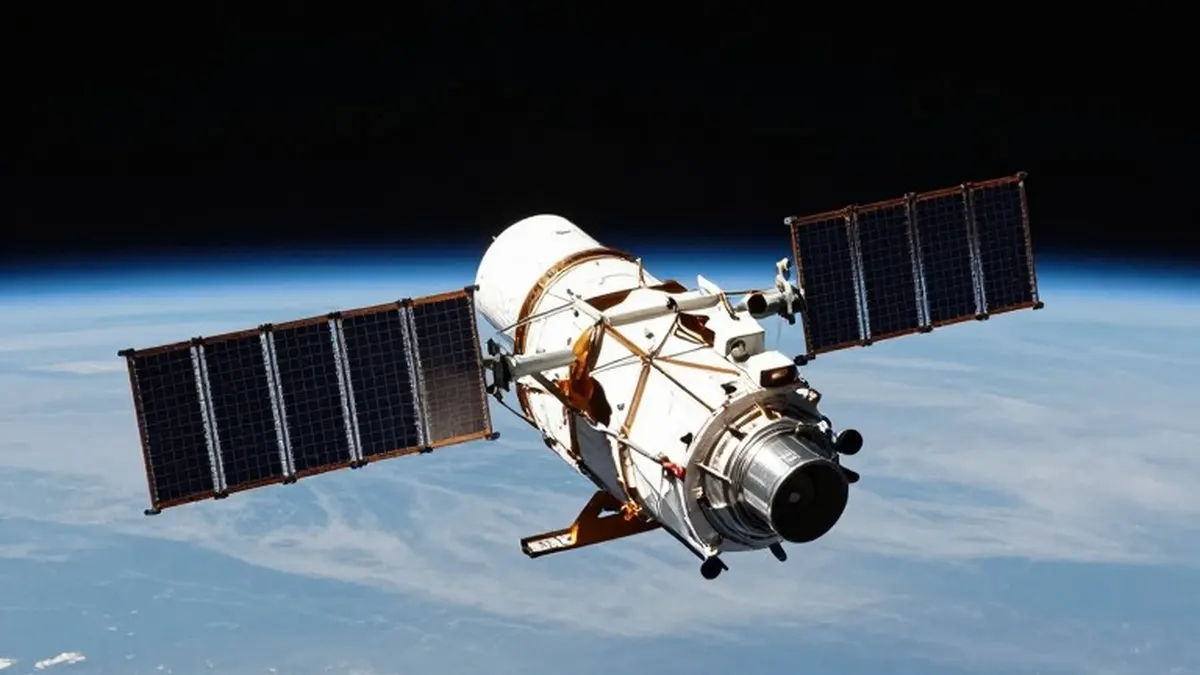
According to the Directorate, Russia has launched two batches of satellites into orbit, with the first occurring on March 23, 2026, and the second on July 19, 2026. These launches resulted in 30 satellites being placed in space, although two have already deorbited. The remaining 26 satellites have settled into stable positions at an altitude between 500 and 520 kilometers. However, the planned operational altitude for the constellation is approximately 800 kilometers, meaning the satellites are currently in an intermediate stage of their deployment.
The Directorate noted that the remaining satellites are continuing to maneuver in an attempt to reach their target orbits. Beyond orbital issues, the system suffers from a reliance on foreign components and difficulties in developing compact user terminals. Preliminary information suggests that a third satellite launch, which was scheduled for 2026, has been either cancelled or postponed. Each satellite in the constellation weighs approximately 280 kilograms and measures 2.7 meters by 1.8 meters by 0.6 meters.
A critical feature of the Rassvet system is its inter-satellite laser communication technology. This capability allows for direct traffic transmission between satellites, reducing the constant need for ground infrastructure. The main contractor for the project is Bureau 1440 LLC, a subsidiary of the ICS holding company. The production network involves at least 46 Russian and three Belarusian companies. The Directorate emphasized that 22 of these companies, including Bureau 1440, are not currently under sanctions.
The system’s ground infrastructure is anchored by a main control centre in Moscow, which manages satellite monitoring, laser link operations, and traffic routing. A network of ground stations is also planned for locations including Murmansk, Anadyr, Rostov-on-Don, Norilsk, Zheleznogorsk, and Yuzhno-Sakhalinsk. The Directorate reported that testing of the Ultra user terminal was completed in September 2026. This device is designed to support download speeds of up to 650 Mbps and can operate while its carrier moves at speeds of up to 250 kilometers per hour.
Russia intends to deliver approximately 1,000 of these terminals to customers by the end of 2026. Future development plans include four additional terminal variants named Zemlya, Mini, Prime, and Voda in 2027, followed by an aviation terminal called Vozdukh in 2028. The long-term goal is to expand the constellation to 47 or 48 spacecraft by the end of 2026. In 2027, an additional 240 satellites are planned to provide coverage of 94 percent of Russian territory with data transmission speeds reaching 150 Mbps.
The expansion roadmap projects the constellation will grow to 408 satellites by 2031 and 924 by 2035. The satellites are launched using Soyuz-2.1b rockets from the Plesetsk Cosmodrome. The project is overseen by Dmitry Bakanov, head of Roscosmos. Before his current appointment, Bakanov led the Gonets Satellite System joint-stock company, which previously collaborated with the British firm OneWeb on satellite internet infrastructure in Russia. That partnership ended after Russia’s full-scale invasion of Ukraine in 2022.
The Directorate noted that Russia’s technological base for Rassvet depends on imports of electronic components from China, particularly for antenna arrays, ground stations, and terminals. A key manufacturer of critical components is the Kaliningrad-based Fakel Design Bureau, which produces low-thrust engines and propulsion systems. The intelligence agency suggested that Russia may have gained access to certain technical developments during its previous cooperation with OneWeb, as Fakel had previously manufactured components for OneWeb satellites, including SPT-50M engines.
The Rassvet system is intended for various military applications, including communications, drone control, and integration into missile weapon targeting systems. The Directorate has identified 49 Russian and Belarusian companies involved in the system’s development. These reports highlight the ongoing efforts by Russia to build a robust domestic satellite network while navigating technical and logistical constraints.