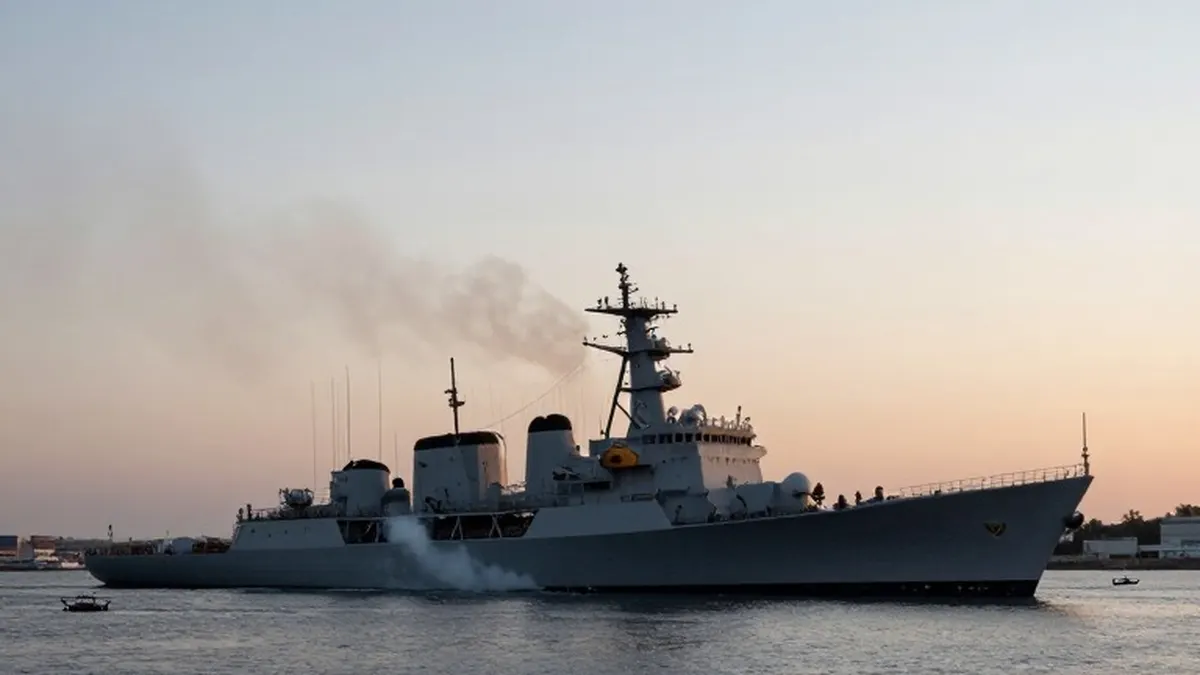
A Russian naval vessel was attacked in the port of Benghazi on Sunday, with initial reports indicating that multiple unmanned surface vessels were involved in the operation. Hours after the incident, Ukrainian President Volodymyr Zelensky claimed responsibility for the strike on social media. He described the event as an exemplary operation in response to the war, thanking the Security Service of Ukraine and the Defense Forces for their participation.
Zelensky detailed that the operation took place off the coast of Libya, where seven Ukrainian-made naval drones were deployed. Despite enemy counter-efforts, the Russian corvette Merkury, which was commissioned in 2023, was sunk. A Ka-27 combat helicopter was also destroyed alongside the corvette. The second target was the Russian dry cargo vessel MV ANGARA, which was used to transport weapons and was successfully hit.
This incident marks a significant moment in the conflict, adding to Russia's substantial naval losses. Ukraine has demonstrated increasing innovation by sinking ships far from its borders and launching complex drone attacks. These developments are drawing global attention as nations analyze the evolving tactics of the war.
The attack in Libya has prompted discussions about whether small drone boats represent a major shift in naval strategy. If such vessels can strike targets anywhere, it raises concerns for navies like the United States and Israel that invest heavily in large ships. Many modern navies operate with fewer large vessels, making each ship more critical to their overall capability.
Historical parallels highlight this vulnerability. The British Royal Navy shrank from over 1,000 large ships at the end of World War II to around 112 by the Falklands War, and approximately 60 today. Similarly, the 1862 Battle of Hampton Roads between ironclad warships changed naval design, just as the sinking of HMS Hood and other large vessels by smaller craft in World War II proved the vulnerability of big ships to aircraft and submarines.
Modern naval planners are already aware that large warships are susceptible to small vessels. Past incidents include the 2000 attack on the USS Cole by a small boat off Yemen and the use of fast boats by Iran and the Houthis. Pirates have also used cheap skiffs to hijack large tankers, such as the Maersk Alabama in 2009. While these threats can be countered with rifles, water cannons, or sinking the small vessels, detection and counter-measures remain key challenges.
Regional media reports suggest that the Ukrainian drone boats were launched from a base operated by Ukrainian forces in western Libya. Al-Ain media, citing sources, stated that at least four unmanned boats were intercepted, while others struck the Russian warship. The report indicated that Ukrainian forces, focused on drone operators, operate mainly from a base in Misrata, with additional sites in Tripoli and Zawiya.
The presence of Ukrainian forces in western Libya may extend beyond this specific attack, potentially forming part of broader military and intelligence activities targeting Russian interests in the Mediterranean. Libya’s geographical proximity to Russian shipping routes makes it a strategic location for such operations.
Libya may investigate the incident, raising concerns about how far Ukraine is willing to go to strike Russian vessels. Historically, naval warfare included rules against attacking ships in neutral ports. For example, during World War I, the German battleship Admiral Graf Spee sought refuge in neutral Uruguay before being scuttled to avoid capture by the British.
The United Nations Support Mission in Libya may also examine the events. Regardless of the political implications, the Benghazi operation has demonstrated the effectiveness of swarms of small drone boats and suggests that their operational range may expand in the future.