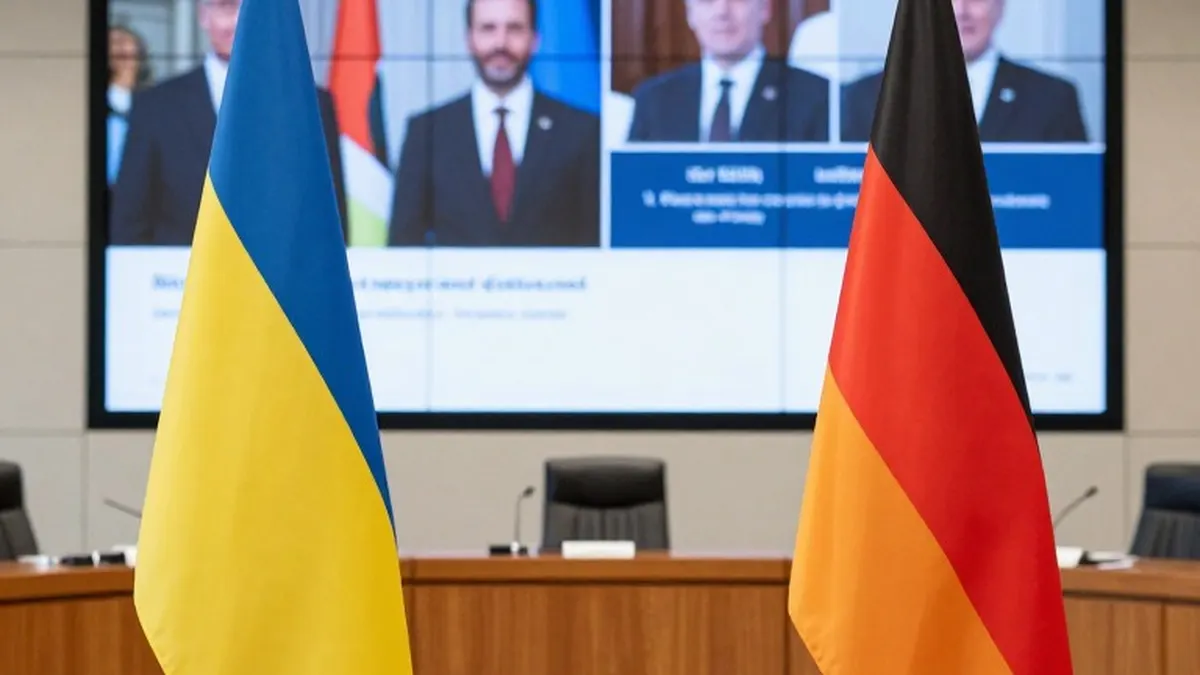
Ukrainian President Volodymyr Zelenskyy stated on Tuesday that he expects the upcoming United States-mediated negotiations with Russia in Abu Dhabi to pave the way for a direct meeting between himself and Russian President Vladimir Putin. Speaking from Berlin alongside German Chancellor Friedrich Merz, Zelenskyy described the scheduled adviser-level talks as a crucial component of a wider diplomatic effort to bring an end to the war.
The bilateral discussions are planned for November 10 and 11. Zelenskyy told reporters that he is counting on the progress made in this format, along with other diplomatic initiatives, to open the door to a trilateral format involving the leaders of both nations. This statement marks a significant diplomatic development, as the two presidents have had no direct contact since Russia launched its full-scale invasion in February 2022.
Chancellor Merz commented on the significance of the upcoming talks, emphasizing that it is vital for Russia to engage seriously in negotiations regarding a ceasefire and a subsequent peace agreement. However, the German leader noted that he has not yet seen this level of serious engagement from the Russian side, indicating that the process remains tentative.
Zelenskyy’s visit to Berlin was kept under wraps for security reasons and was not announced in advance. Upon arrival, the Ukrainian president outlined the primary agenda items on the social media platform X. He identified diplomatic coordination, the strengthening of air defense systems, and support for Ukraine’s energy sector as the top priorities for his discussions with the German leadership.
The new round of talks between Russia, Ukraine, and the United States was announced on Monday by US special envoy Steve Witkoff. Witkoff explained that the discussions would center on post-war security arrangements, de-escalation measures, humanitarian efforts, and the next steps toward achieving peace. The Kremlin confirmed through spokesman Dmitry Peskov that a Russian delegation would attend the meetings, led by Vladimir Medinsky, the former Culture Minister.
The buildup to next week’s talks follows a notable display of cooperation between the warring parties. Last week, human rights ombudsmen from both countries oversaw a local ceasefire in the Russian-occupied city of Oleshky. This mission, which allowed for the evacuation of residents and the delivery of aid, was brokered by US First Lady Melania Trump. Such coordinated efforts are rare since the start of the conflict.
Despite the progress, questions remain regarding the role of European nations in the peace process. Al Jazeera correspondent Dominic Kane noted that while Zelenskyy and Merz expressed positivity about the Abu Dhabi meeting, the absence of European representatives at the table raised concerns. Kane highlighted that although Europe and Ukraine are aligned, European leaders are not expected to be present in Abu Dhabi.
To address these concerns, US envoys are scheduled to meet with representatives from Germany, France, the United Kingdom, NATO, and the European Union in Brussels this week. The purpose of these meetings is to discuss security guarantees for Ukraine and to define Europe’s post-war security architecture. European governments have insisted on being involved in the negotiations and are working to ensure their interests are represented.
Financial support remains a critical issue for Ukraine. Zelenskyy has stated that the country requires an additional 70 billion euros from European nations next year. While successive German governments have pledged full support for Ukraine, financing its defense and supplying weapons, Chancellor Merz acknowledges that the economic situation in Europe is becoming increasingly challenging. The cost of living has become a serious concern for many voters in Germany.
Political dynamics in Germany are also influencing the support for Ukraine. Parties that oppose continued funding for the war effort, including the far-right Alternative for Germany and the left-wing Die Linke, are gaining traction in polls and elections. This financial pressure adds complexity to the diplomatic landscape as the war enters its fifth year.
Several other high-profile summits are planned before the end of the year. US President Donald Trump, Chinese President Xi Jinping, and Putin may hold three-way talks on the sidelines of the APEC summit in Shenzhen, China, on November 18 and 19. Additionally, the Coalition of the Willing, a group of approximately 35 countries supporting Ukraine, is due to meet in Berlin around the same time. The G20 summit will follow in Florida from December 13 to 15, where it remains to be seen if Putin will attend for the first time since the invasion.