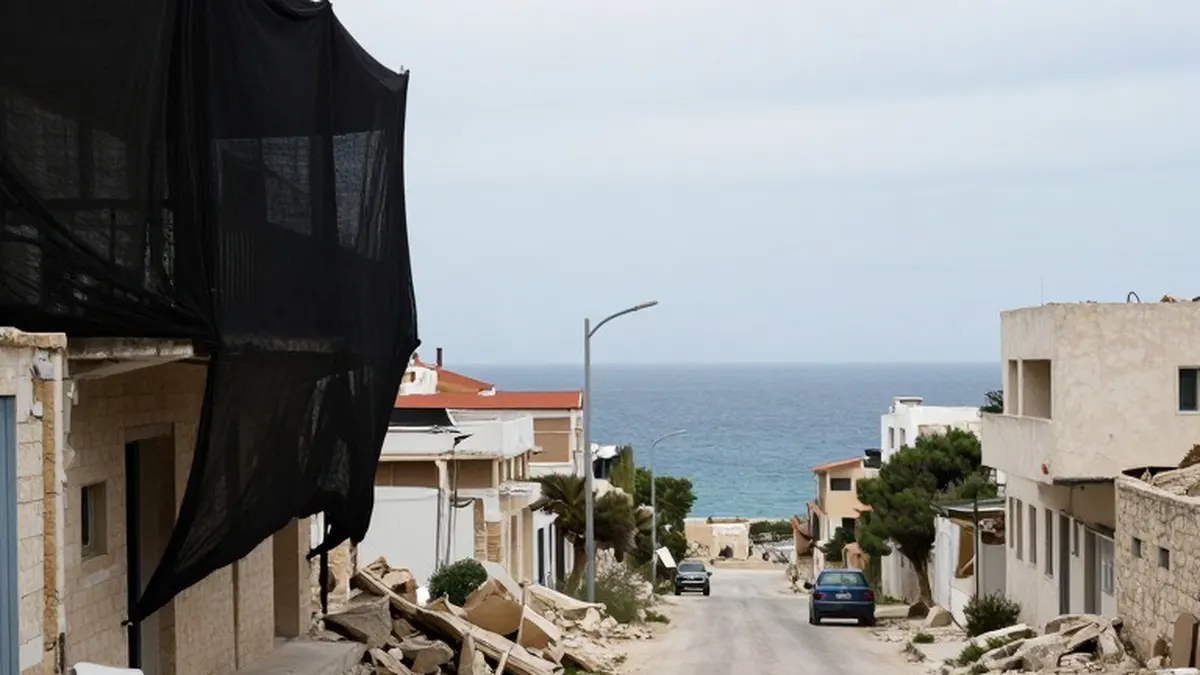
The southern Lebanese border town of Naqoura stands as a testament to the region's ongoing instability. In a landscape largely reduced to rubble, an abandoned hotel occupied by Israeli soldiers and the headquarters of the United Nations Interim Force in Lebanon (UNIFIL) remain among the few structures still standing. The once-idyllic seaside location is now quiet, with roads empty except for military patrols and UN convoys escorting civilians and supplies.
The end of the nearly 50-year UNIFIL mandate is approaching, with a gradual drawdown of its 7,500 peacekeepers scheduled to begin on January 1. Despite this imminent exit, there remains no definitive plan for what will follow, leaving the future of southern Lebanon in a state of limbo. The departure is occurring alongside a continued Israeli military presence and ongoing debates regarding the disarmament of the Hezbollah group.
Lebanon has expressed a desire for the UN force to remain, but the UN Security Council voted last year to terminate the mandate at the end of 2026. This decision followed demands from the United States and Israel, both of which argued that the mission had failed to prevent Hezbollah's military buildup over the years. Conversely, UNIFIL officials maintain that their presence helped preserve calm for 17 years prior to the regional conflict ignited by the October 2023 attack on southern Israel.
UNIFIL Commander Maj. Gen. Diodato Abagnara clarified the scope of the mission in an interview with The Associated Press. He stated that his mandate is to support the Lebanese Armed Forces in taking full control of the south, rather than to fight against Hezbollah directly. He emphasized the critical need to avoid a security vacuum in the region as the peacekeepers begin their withdrawal process.
Local residents express anxiety about the future without the peacekeeping force. Mohammed Aoun, an olive farmer in the village of Halta, noted that the presence of UNIFIL patrols provides a sense of protection. Although the force could not stop recent missile launches or airstrikes, Aoun and other civilians feel safer with their presence. He expressed apprehension about what might happen once the UN forces leave, particularly given his own experiences with delayed harvests due to conflict.
The UNIFIL mission was established in 1978 following an Israeli invasion and expanded its role after the 2006 war to monitor violations of Security Council Resolution 1701. When a ceasefire ended another conflict in 2024, the force became part of the mechanism overseeing the implementation of that agreement. The Lebanese army is expected to assume security responsibilities after the UN exit, though the situation remains complex.
Complicating matters, Hezbollah recently attacked Israel, dragging Lebanon into the broader US-Israeli war against Iran. Israel currently occupies significant portions of southern Lebanon, where dozens of villages have been emptied or demolished. Approximately 11,000 people remain in a few mostly Christian villages within the occupied area, relying on UNIFIL to escort convoys that maintain their connection to the rest of the country.
Diplomatic efforts to resolve the situation have stalled. Lebanese President Joseph Aoun stated that Israel continues hostile acts in the south and that his government, along with France, seeks an extension of the UNIFIL mandate. Any alternative force should operate under the existing Resolution 1701 framework with possible amendments. US officials have suggested the possibility of a civilian force or private defense contractor, while Israel prefers direct military coordination with the Lebanese army to remove remaining Hezbollah weapons.
Israel's ambassador to the UN, Danny Danon, stated that Hezbollah had exploited the presence of UNIFIL and that Israel trusts only its own soldiers. Lebanon opposes the idea of using civilian contractors and has rejected direct military coordination with Israel. France is currently working on a Security Council resolution to authorize a new international force, while other diplomats discuss slowing the withdrawal to maintain certain missions and prevent a power vacuum.
The question of Hezbollah's weapons remains a central issue. The Lebanese army announced in January that it had finished removing weapons caches from the border area south of the Litani River. However, Hezbollah has refused to give up weapons elsewhere in the country and has threatened to resist forced disarmament. The army is currently cautious, aiming to stop weapons shipments from moving around the country without raiding storage sites to avoid provoking a civil conflict. Hezbollah has indicated it would accept a UN-mandated force but not a private security contractor or one seen as supporting the Israeli occupation.