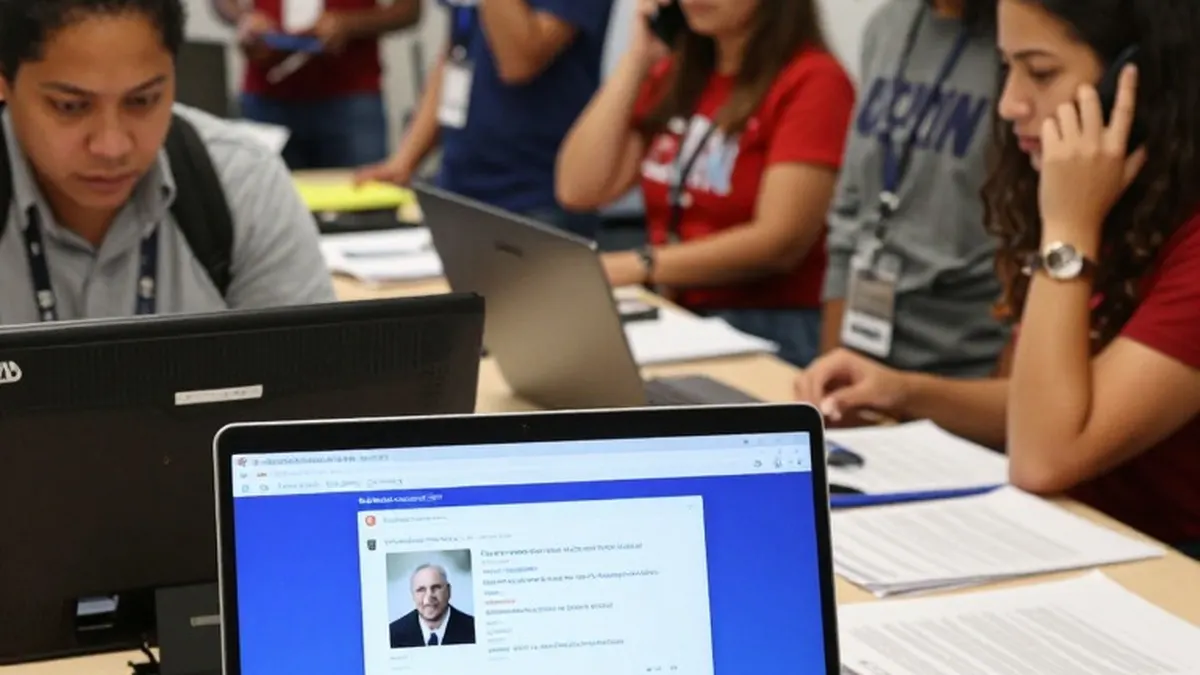
Organized labor played a pivotal role in the 2026 midterm elections, helping Democrats secure victories in Washington and numerous state legislatures. This political surge was driven by a massive mobilization effort that included millions of dollars in spending and the active participation of thousands of union members. Now, union leaders are shifting their focus from campaigning to enforcement, expecting newly elected officials to prioritize worker protections and economic stability.
The scale of union involvement was significant. The AFL-CIO, a federation representing nearly 15 million workers, launched a seven-figure paid media campaign. Since Labor Day, the organization reported engaging with almost 15 million voters. As a result of these efforts, more than 600 union members were elected to office, with dozens heading to the U.S. Congress and hundreds taking seats in statehouses.
Data from the CNBC Voter Poll highlights the strength of this demographic. Union members and their households supported Democratic candidates over Republicans by a margin of 22 percentage points, the highest gap seen in the last four election cycles. This support was far stronger than that of non-union voters, where the margin was only 10 percentage points. Liz Shuler, president of the AFL-CIO, described the effort as the biggest and boldest in the organization's history.
In Michigan, the United Auto Workers made an early and decisive move by backing Democrat Abdul El-Sayed for the U.S. Senate before the primary was even decided. The union estimates that one in every ten early voters in the August primary was a UAW member. El-Sayed won the race, joining Jocelyn Benson, who also had early UAW support, in a victory that reversed the state's recent trend of backing President Donald Trump.
The UAW's ground game was extensive, with volunteers knocking on more than 100,000 doors and making half a million phone calls. Union households, which made up about 22% of the Michigan electorate, voted for El-Sayed and Benson by margins of 25 and 27 points respectively. Shawn Fain, UAW president, noted a direct correlation between legislative action and economic security, stating that what is bargained for at the table can be taken away in the halls of government.
Similar efforts were seen in Nevada, where AFL-CIO members canvassed for candidates including Aaron Ford, who defeated incumbent Republican Governor Joe Lombardo. Vladimir Ortega, a letter carrier in North Las Vegas, volunteered for the first time, citing frustration with the economic management under the previous administration. He plans to continue supporting AFL-CIO backed candidates in the 2028 cycle.
This renewed enthusiasm marks a departure from recent years when union support for Democrats had waned due to economic frustrations. In 2024, the gap between union and non-union voter support for Democrats narrowed to just 8 points, and the Teamsters notably did not endorse either major party presidential candidate. However, AFL-CIO polling now shows that 83% of union voters are highly motivated, a 10-point increase from 2022.
With Democrats now holding power, labor leaders are setting clear expectations. In Ohio, electrician Brody Rutledge, who helped create social media content for local candidates, is focused on ensuring new data center projects use union labor. In Michigan, the UAW expects the new state legislature to pass a law guaranteeing unemployment insurance for striking workers.
Shawn Fain emphasized that the era of blindly endorsing candidates based on party affiliation is over. Union leaders warn that if Democrats do not act on worker issues while they hold legislative majorities, the union's support may be pulled in future elections. The goal is to ensure that the political victory translates into tangible economic benefits for the working class.
Liz Shuler stated that union voters participated in the election hoping to level the economic playing field. With 70% of respondents in the CNBC poll believing the economy favors the wealthy, union leaders are positioning themselves as a check on power, supporting whichever party commits to working-class issues in the coming years.