China and Russia have pledged closer cooperation in Arctic shipping and shipbuilding, strengthening a partnership that challenges US and allied interests in the region. Following an October 21 meeting of their heads of government in St. Petersburg, the countries issued a joint statement calling for more freight traffic on Arctic routes, joint construction of polar vessels and support for businesses involved in Arctic cooperation.
Beijing has steadily expanded its activities since Chinese leader Xi Jinping set a goal in 2014 of making China a major polar power by 2030. A 2022 estimate from the House Foreign Affairs Committee put Chinese investment in the Arctic since 2003 at $90 billion, with much of that investment directed toward Russian natural resources projects. Joint military exercises with Russia followed Moscow's full-scale invasion of Ukraine in 2022.
China's ambitions face a geographic and diplomatic obstacle: it is not one of the eight Arctic nations. Its northernmost territory lies roughly 1,450 kilometers from the Arctic Circle. Washington rejects Beijing's description of itself as a near-Arctic state, a term China has used since 2018. Russia is also skeptical, but has tolerated the claim as its dependence on Beijing has grown since the Western sanctions that followed its 2014 invasion of Crimea.
For Washington, the Arctic has several defense roles. Alaska houses infrastructure intended to intercept long-range ballistic missiles before they reach the continental United States and supports airpower operations across the Arctic and Indo-Pacific. Greenland, an autonomous territory within the Kingdom of Denmark, provides a platform for US and NATO missile warning and space surveillance. It also contains substantial deposits of critical minerals used in military systems.
Military cooperation between Beijing and Moscow has brought those concerns into sharper focus. In July 2024, their strategic bombers flew a combined patrol over the Bering Sea and entered airspace near Alaska for the first time, prompting interception by US and Canadian fighters. The countries also conducted their first joint Arctic Ocean naval patrols during Ocean 2024. Norwegian Institute for Defense Studies fellow Jo Inge Bekkevold told RFE/RL that such activity helps China strengthen ties with Russia and monitor US military operations in Alaska.
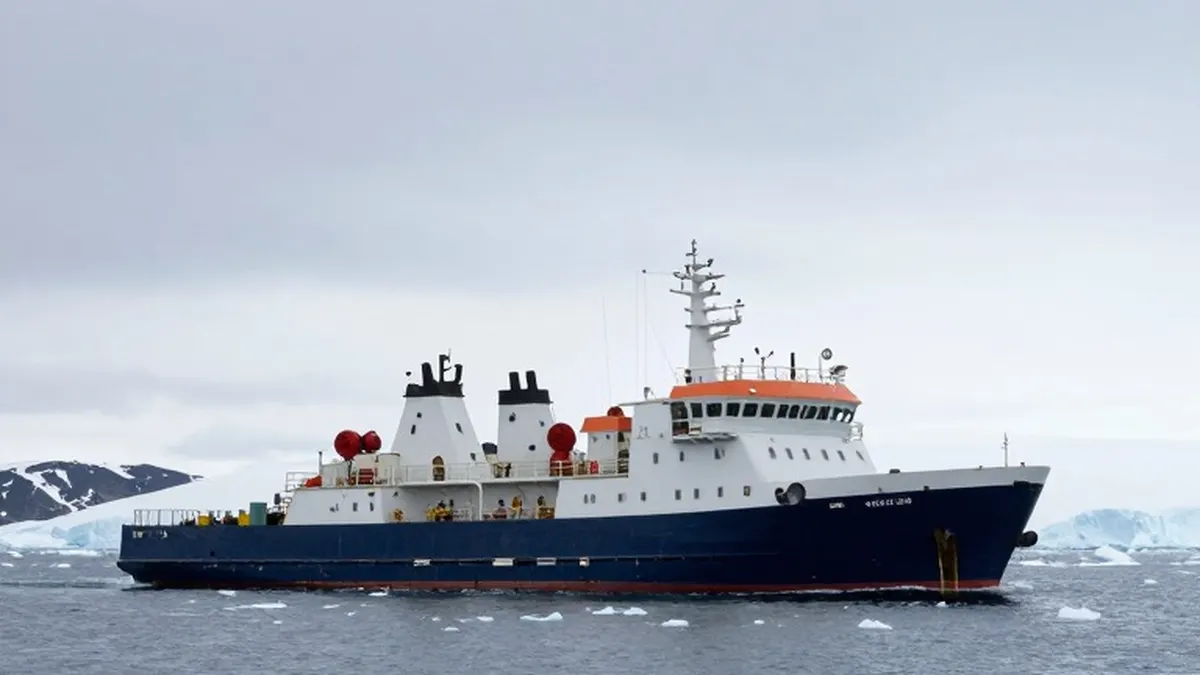
Chinese research voyages have drawn scrutiny as well. In July, Beijing launched its 16th annual Arctic Ocean scientific expedition, sending four research ships into the region simultaneously for the first time. The US Coast Guard monitored the vessels as they crossed the US exclusive economic zone and extended continental shelf in the Bering Sea. Some defense officials say equipment aboard the ships could also map underwater infrastructure or track submarines.
China has limited influence over Arctic governance. Its observer status in the Arctic Council, held since 2013, provides no voting or decision-making rights. Russia is its only close partner among the council's eight members. CNA Corporation expert Elizabeth Wishnick described Moscow as a gatekeeper for Chinese activity in the region, while Stimson Center analyst Yun Sun said the two countries retain different Arctic agendas despite their cooperation.
Access to Greenland has become more restricted. Denmark blocked Chinese attempts to acquire airports and an abandoned naval station between 2016 and 2018 under US pressure. A September security agreement among the United States, Denmark and Greenland prohibits military bases or troop deployments by non-NATO countries, specifically naming China and Russia. It also expands US military access and restricts investment in sensitive sectors.
Analysts nevertheless expect China to maintain its Arctic interest. Climate-driven ice loss is opening northern shipping routes that shorten journeys between Asia, Europe and North America. Lowy Institute fellow Bobo Lu told RFE/RL that Beijing's Arctic approach centers on future planning, with questions over the region's governance likely to become more pressing as melting continues.