FIFA has officially approved the joint bid from the United States, Mexico, Costa Rica, and Jamaica to host the 2031 Women's World Cup. The decision was ratified during an extraordinary FIFA Congress held in Zurich on Monday. This marks a significant return of the tournament to North America, a region that has not hosted the competition since Canada staged the event in 2015. For the United States, it will be the first time hosting the women's tournament since 2003.
The four nations formally committed to the bid one year ago, and they were the only contenders for the 2031 tournament. In the same session, FIFA also confirmed that the United Kingdom will host the 2035 Women's World Cup, a bid that also faced no opposition. The inclusion of Mexico, Costa Rica, and Jamaica, all first-time hosts, represents a strategic effort to accelerate the growth of women's soccer across the Concacaf region.
U.S. Soccer President Cindy Parlow Cone explained that the expansion of the tournament to 48 teams was the primary reason for adding Costa Rica and Jamaica to the bid. The original vision had been a 32-team competition hosted solely by the United States and Mexico. Cone stated that she approached Concacaf president Victor Montagliani to discuss including more countries, citing team quality, stadium infrastructure, hotels, and training facilities as key decision factors.
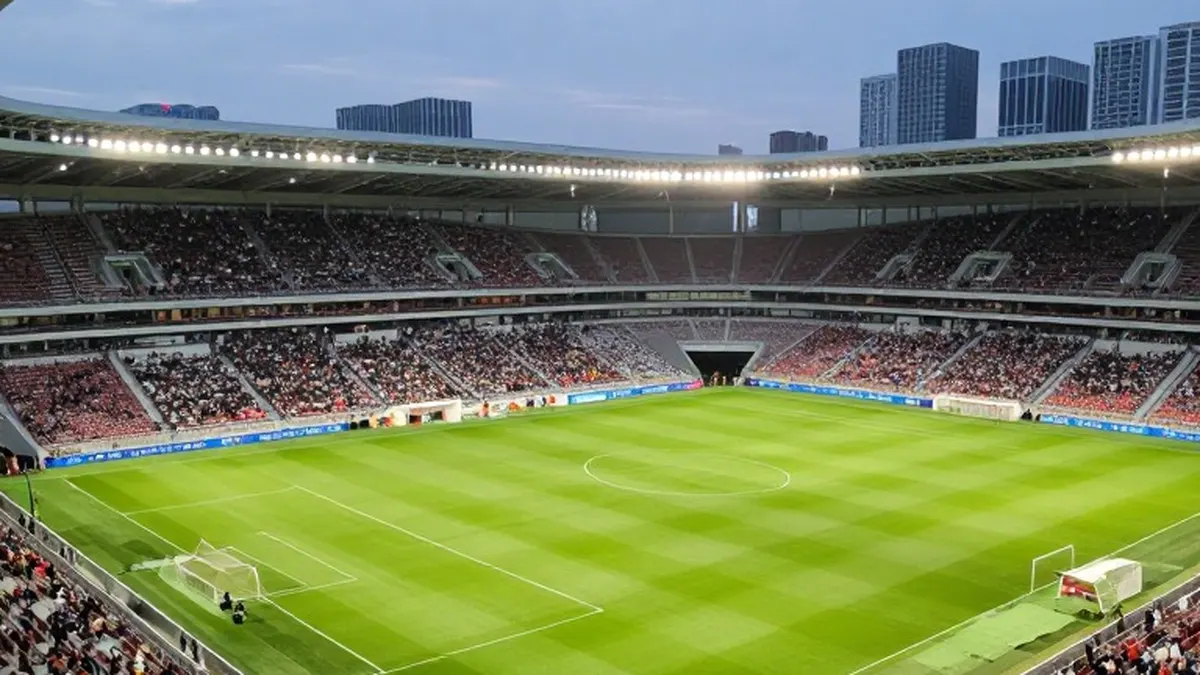
FIFA projects that the 2031 tournament will attract more than 4.5 million spectators and generate over $4 billion in revenue, which would make it the highest revenue-generating women's sporting event in history. The host city selection process is now underway, with more than 30 cities and 45 venues vying for the opportunity. The official bid evaluation report lists 20 stadiums, though the broader bid includes additional potential sites.
Many of the 14 cities that hosted matches during the 2026 Men's World Cup are part of the new bid. These include MetLife Stadium in the New York area, which hosted the 2026 final, as well as AT&T Stadium in the Dallas suburbs and Mercedes-Benz Stadium in Atlanta, both of which hosted semifinals. New contenders such as Denver's Empower Field and the under-construction stadium in Washington, D.C., are also listed. The Washington venue, home to the NFL's Washington Commanders, is expected to be completed in 2030.
In Mexico, Costa Rica, and Jamaica, the number of potential venues is smaller due to country size and available resources. Jamaica is expected to have a straightforward selection process, with Independence Park in Kingston listed as the only venue in the bid. The park is currently undergoing renovation. The list of potential U.S. venues includes 14 cities, ranging from Arrowhead Stadium in Kansas City to SoFi Stadium in Inglewood, California.
Organizers are considering a different approach to stadium selection compared to the 2026 Men's World Cup, which was limited to NFL stadiums or similarly large venues. For 2031, venues with capacities of 40,000 seats or fewer, such as Geodis Park in Nashville and Snapdragon Stadium in San Diego, are being evaluated. There is a possibility that the energetic atmosphere in smaller stadiums may be preferred over larger venues that might not fill up for less popular matches, although a final decision on this format has not yet been made.
Economic concerns remain a topic of discussion following the 2026 Men's World Cup, where local host committees reported spending up to $150 million per city. These groups lobbied the federal government for funding and expressed concerns about cost divisions with FIFA. Some host committees reported waiting for additional payments promised by FIFA president Gianni Infantino even weeks after the tournament concluded.
Potential host cities for the 2031 Women's World Cup are expected to negotiate for a different financial arrangement. Local officials in the United States are reportedly considering banding together with the support of U.S. Soccer to negotiate more favorable contracts with FIFA. This strategy aims to avoid the fierce competition between cities that previously strengthened FIFA's negotiating position.