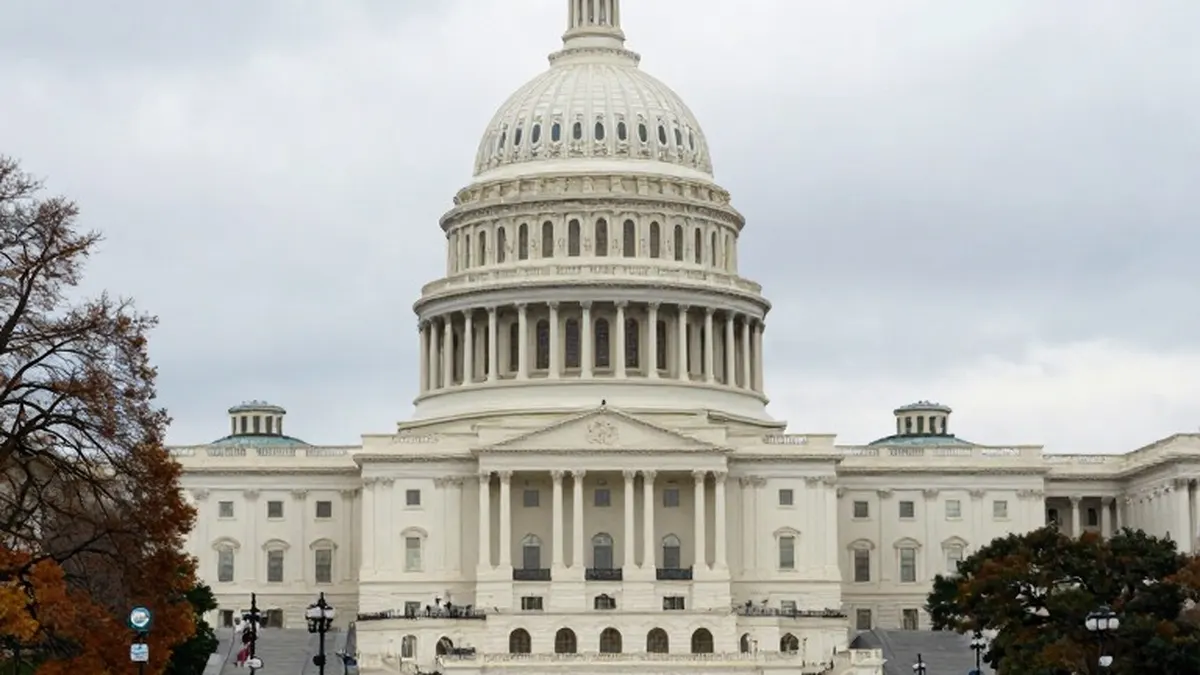
Senior Republicans were searching for answers on Thursday after the party lost control of both the Senate and the House of Representatives in this week's midterm elections, with once reliable strongholds such as Texas falling to the Democrats and Vice President JD Vance publicly blaming the war in Iran for the scale of the defeat.
In posts on X hours after the results were confirmed, Vance wrote that 'the reason we lost is the war', noting that President Donald Trump had himself said so the night before. He challenged defenders of the conflict to argue openly that losing the Senate for the next six years was a worthwhile cost, and said former Trump voters had switched sides over the Iran war and US ties to Israel. 'I remain hopeful about our country,' he added, telling angry voters they were right to have warned the party and urging them to channel that energy into electing Republicans who share their worldview.
The United States and Israel launched strikes across Iran on February 28, and days later Tehran effectively closed the Strait of Hormuz, a waterway that had carried roughly 25 percent of the world's seaborne oil trade. Brent crude hit $120 a barrel in March and April and has hovered around $115 in recent weeks. On Thursday morning, prices dropped to $93.82 a barrel on expectations that the Republican losses would make renewed US strikes on Iran less likely after weeks of speculation.
The midterm wipeout has forced a leadership rethink as American consumers contend with high petrol and diesel prices and soaring food costs, which have also been driven up by Trump's trade tariffs. While no Republican has declared a run for the 2028 presidential election, some in the party are believed to be eyeing it now.
Andrew Payne of the Chatham House think tank told Al Jazeera that any 2028 contender will need to distance themselves from the more unpopular aspects of Trump's record, above all the Iran war, which he called the greatest poisoned chalice of them all. He said that explained why Vance came out so clearly in blaming the war, describing the vice president as long the voice of scepticism behind the scenes, but warned that separation will be hard while Trump remains in office and presumably wants to play kingmaker.
Vance is the current frontrunner for the 2028 nomination and is known to harbour ambitions of succeeding Trump. Though he has publicly backed the war, Axios reports that he has privately urged Trump and others to end the conflict, and last week he sent a letter to Mohsen Rezaei, secretary of Iran's Supreme National Security Council, proposing a meeting between US and Iranian officials to prevent further escalation. Trump, by contrast, said this week the war would end only 'when I want it to'.
A Vance ally close to the White House told Politico it was possible for the vice president to 'modestly differentiate himself' from Trump but impossible to fully delink. 'He's still Trump's vice president. This is still a Trump administration war. They're still both unpopular,' the source said. A New York Times poll published on Tuesday put Vance at 40 percent in a theoretical Republican primary, with Secretary of State Marco Rubio and Donald Trump Jr both at 21 percent. Rubio has yet to comment on the results, and Payne said candidates face two routes: re-energising the MAGA movement, which he called difficult because Trump built it through sheer force of personality, or holding the base while appealing to traditional conservatives who drifted away, a path he said might suit Rubio better.
Senator Ted Cruz, now Texas's only statewide Republican lawmaker, called the result 'a blue tsunami' and an 'a** kicking', writing that food, gas, diesel and insurance were all too expensive, that tariffs had made everything costlier and that the Iran war 'should have been brief, decisive, and over'. The Wall Street Journal reported in September that Cruz was testing the waters for 2028, though his early cheerleading for the war could make disassociating himself from it difficult.
Florida Governor Ron DeSantis described the outcome as 'close to an extinction-level event' for the party, warning that Republicans would not be viable nationally without Texas as an anchor and that leaders must recognise how quickly things shift in a volatile political era. His second term as governor ends in January, and speculation has grown that he may also enter what remains a wide open contest for the nomination.