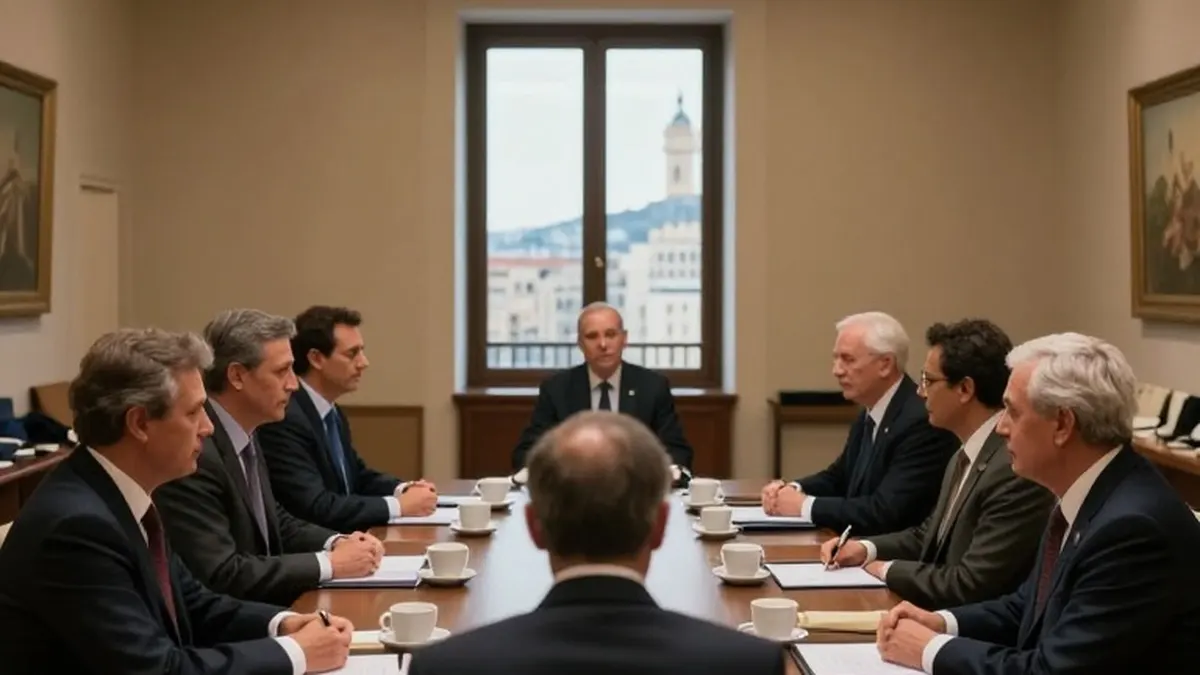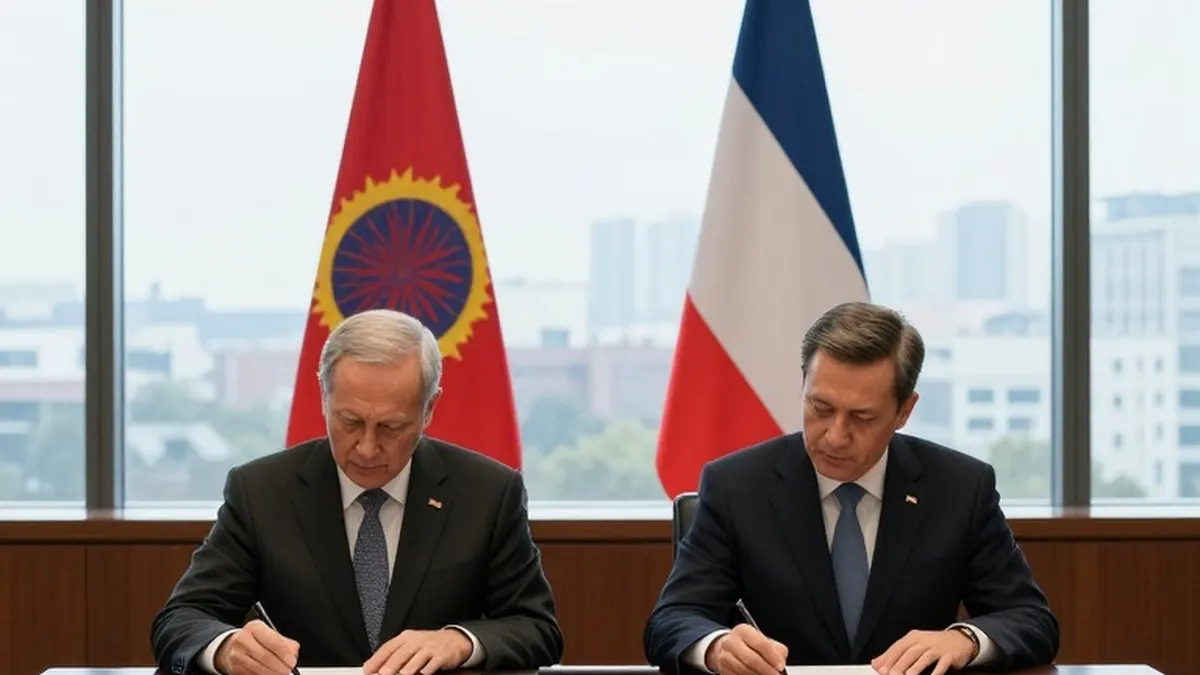
The United States and Venezuela have re-established military ties less than one year after US forces captured the former leader of the South American nation, Nicolas Maduro, during a raid on the capital, Caracas. The interim government, currently led by Delcy Rodriguez who served as Maduro's vice-president, formally signed a military cooperation agreement with US Secretary of Defence Pete Hegseth on Wednesday.
While specific details of the new accord have not yet been fully released, Secretary Hegseth characterized the shift in relations as a rapid transformation. He stated that Venezuela moved from being the region's most aggressive threat to a compliant security partner in a period of less than twelve months. Interim President Rodriguez echoed this sentiment, noting that the agreement would assist both nations in confronting common threats.
Military cooperation between the two countries had been suspended since 2005 by Hugo Chavez, Venezuela's left-wing president at the time. Chavez claimed that US military personnel sent to train their Venezuelan counterparts had made disparaging comments about his administration. He further accused the US military office at Fuerte Tiuna, the country's largest military complex, of acting as an organ of the CIA while conspiring against the government.
Relations deteriorated further under Nicolas Maduro, who succeeded Chavez following the latter's death from cancer. The situation reached a critical point late last year when the US doubled the reward for information leading to Maduro's capture to $50 million. This was followed by the military raid on 3 January that resulted in his seizure. Maduro and his wife, Cilia Flores, are currently in custody in New York facing charges of drug trafficking and conspiracy to commit torture, charges which they deny.
Hegseth addressed the evolution of the bilateral relationship during a speech at the US embassy in Caracas on Wednesday. He described the moment as a great honor, noting that he was the first US Secretary of War this century to set foot in Venezuela. He remarked that just one year ago, the presence of US officials would have been deemed almost unimaginable.
Recalling a public appearance by Maduro exactly one year prior, Hegseth quoted the deposed leader who had mockingly yelled, 'Come and get me!' from a stage near the embassy. Hegseth stated that the US had answered that call. He added that the outcome of the January raid aligned with Maduro's prediction of 'no war, yes peace.'
The Secretary of Defence described the signed deal as a new chapter for the US, Venezuela, the Venezuelan military, and the Western Hemisphere through the Americas Counter Cartel Coalition. In her own remarks, Rodriguez called the agreement extraordinarily relevant for bilateral relations. She explained that the cooperation would focus on training the armed forces, improving operational equipment, and accessing new technology to confront shared threats.
Hegseth was more direct regarding the nature of those threats. Addressing what he termed narco-terrorists who use Venezuela as a safe haven, he warned that the US would hunt them down, find them, and kill them. Following the signing ceremony, Hegseth traveled to neighboring Colombia, where President Abelardo de la Espriella is a close ally of the Trump administration.
Colombia is already part of the US-led Americas Counter Cartel Coalition, and joint US-Colombian military operations have been discussed since August. On Wednesday, President de la Espriella used the social media platform X to deny a report by the New York Times that claimed he had rejected joint operations. He emphasized that any decisions would respect Colombia's constitution, laws, and sovereignty. Hegseth reposted the statement, commenting that the partnership between the two nations is stronger than ever before.