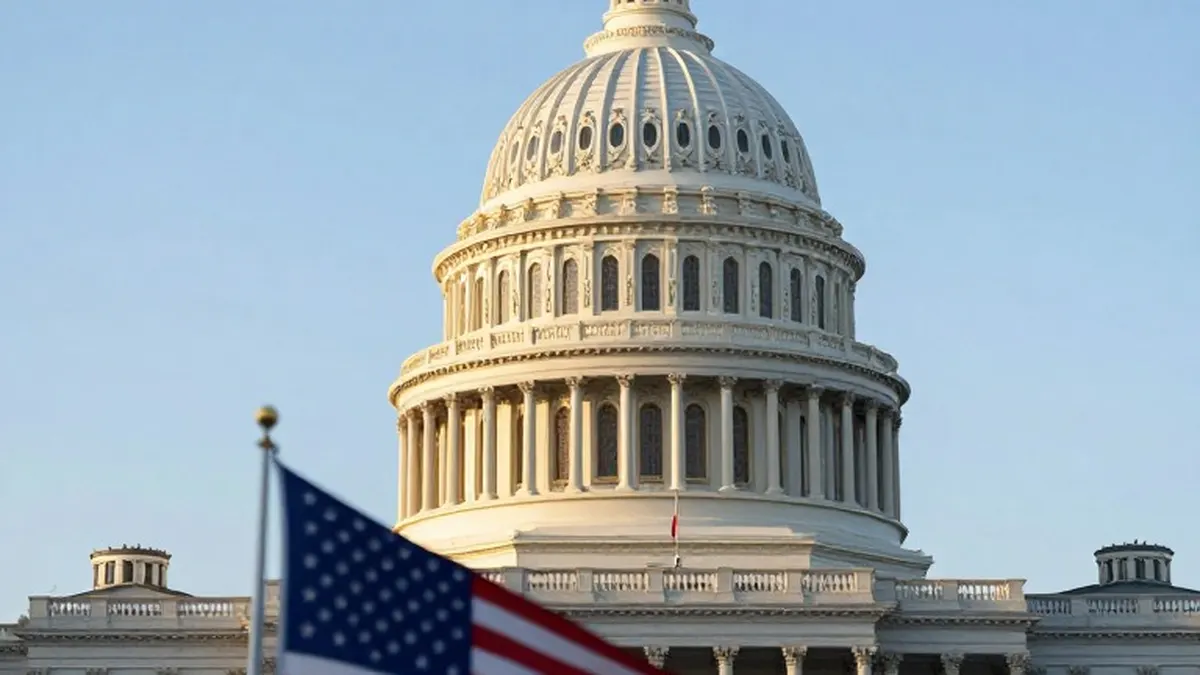
As the United States marks Veterans Day on November 11, 2026, new data indicates that the presence of military veterans in Congress will decline to its lowest level in decades when the 120th Congress convenes in January. Analysis from With Honor Action and Military Times projects that veterans will occupy approximately 15 percent of legislative seats. This figure represents a significant drop from the 19 percent held in the outgoing body and is well below the 27 percent recorded in 2001, prior to the start of the war on terror. The decline occurs despite a record number of veterans running for office in the 2026 elections.
While the overall share of veteran legislators is shrinking, the partisan dynamics among new arrivals show a notable shift. Democrats are bringing in roughly three times as many first-time veteran members as Republicans. In the previous Congress, which began in January 2025, there were 28 Democratic veterans compared to 72 Republicans. For the incoming 120th Congress, the projected total is 79 veteran members, with the partisan split narrowing to 33 Democrats and 46 Republicans.
This increase in Democratic veteran representation is largely driven by the results of the midterm elections, which saw significant losses for the Republican Party. At least 11 Democratic veterans are expected to win House seats for the first time. Among the confirmed newcomers is former Navy Vice Admiral Nancy Lacore of South Carolina, who was removed as chief of the Navy Reserve by War Secretary Pete Hegseth in August 2025. Lacore has stated she was never given a specific reason for her dismissal and has argued that Hegseth's leadership has negatively impacted military readiness.
Other prominent Democratic veterans entering Congress for the first time include former Army Major Cait Conley of New York, a West Point graduate who defeated Representative Mike Lawler. The list also includes former Army Lieutenant Colonel Fred Wellman of Missouri and former Navy helicopter pilot Rebecca Bennett of New Jersey. Additionally, retired Marine Corps Gunnery Sergeant JoAnna Mendoza of Arizona and former Army Captain Jessica Killin of Colorado, the first Democrat to win her district, will join the chamber.
The incoming Democratic class features several high-profile figures with extensive military backgrounds. Adam Hamawy, a former Army combat surgeon from New Jersey, helped save the life of Senator Tammy Duckworth after her helicopter was shot down. Former Hartford mayor Luke Bronin, a Navy Reserve Lieutenant from Connecticut, and former Air Force Major Kristina Knickerbocker of Ohio, who defeated incumbent Michael Turner, are also part of the freshman class. Retired Army Major Richard Ojeda of North Carolina and former Navy JAG officer Zach Dembo of Kentucky round out the group of confirmed Democratic veteran newcomers.
Several of these new Democratic members have been vocal critics of War Secretary Hegseth. They have raised concerns regarding his personnel decisions, interventions in promotions, and focus on cultural issues. Some have indicated support for increased oversight of the Department of Defense, while others have signaled backing for potential impeachment proceedings. This stance contrasts with the Republican newcomers, who have generally aligned with the administration's defense priorities and expressed support for Hegseth.
On the Republican side, four first-time veteran members are heading to Washington. The group includes former Air Force and Air National Guard member Chris McGowan of Iowa and former Navy SEAL Ed Gallrein of Kentucky. Former Air Force Major Jace Yarbrough of Texas and former Alabama National Guard and Army Reserve member Barry Moore of Alabama are also joining. Moore won the open Senate seat previously held by Governor-elect Tommy Tuberville.
The decline in veteran membership is also reflected in the number of incumbents who lost their seats. Twelve Republican veterans were defeated in the 2026 elections, including Senator Roger Marshall of Kansas and Representatives Gabe Evans of Colorado, Mariannette Miller-Meeks of Iowa, and Dan Crenshaw of Texas. Other defeated Republican veterans include members from Michigan, Ohio, Pennsylvania, Virginia, Wisconsin, Florida, and Iowa.
Beyond electoral defeats, a significant number of veteran legislators retired or did not seek re-election. Eleven Republicans left the chamber, including Senators Joni Ernst of Iowa and Mitch McConnell of Kentucky. The group of retiring Republican representatives included Darrell Issa of California, Neal Dunn of Florida, and Ryan Zinke of Montana. On the Democratic side, only two veterans did not seek re-election: Senator Gary Peters of Michigan and Representative Jared Golden of Maine.
Additional changes in veteran representation include three members who left Congress after losing races for other offices. These are Representatives Seth Moulton of Massachusetts, John James of Michigan, and Wesley Hunt of Texas. Furthermore, four Republicans and one Democrat left office early in the past Congress or passed away. Senator Lindsey Graham of South Carolina died in July 2026. Representatives Mike Waltz of Florida, Mark Green of Tennessee, and Tony Gonzales of Texas also left, while Representative Mikie Sherrill of New Jersey resigned after becoming governor.