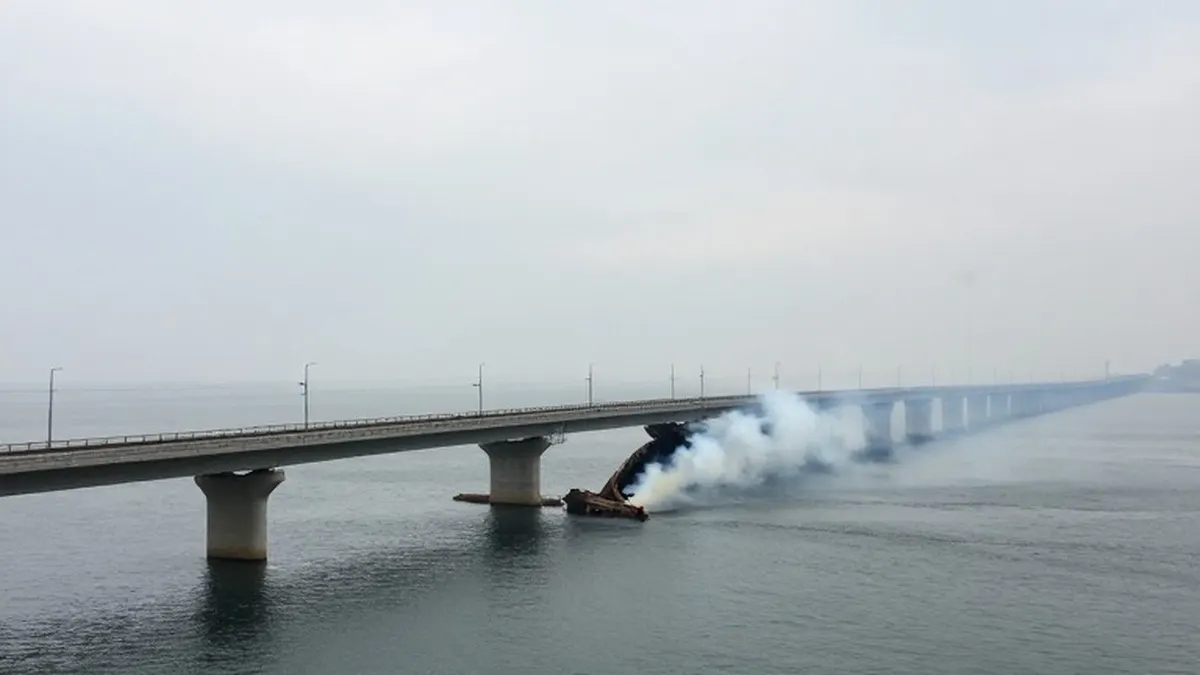
The Kerch Bridge, a critical infrastructure link between the occupied Crimean Peninsula and mainland Russia, suffered severe damage on Tuesday. This event represents a major strategic blow to President Vladimir Putin, who has long considered the structure a flagship project. Geolocated media reviewed by NBC News confirmed that one section of the bridge collapsed into the water following the attack.
Russian authorities verified that the structure was damaged and that all vehicular and train traffic had been suspended. An emergency government meeting was convened following a series of attacks that began on Monday. Dmitry Peskov, the Kremlin spokesman, stated that plans are already being drawn up to restore the bridge. He asserted that there is no doubt it will be rebuilt and will be even better than before.
Ukrainian President Volodymyr Zelenskyy described the operation as unprecedented, noting it was a response to recent Russian strikes on Ukrainian infrastructure. He shared video footage on social media showing a missile approaching the bridge. The SBU, Ukraine’s Security Service, reported that a metal arch and the road span were completely destroyed, while the railway section sustained damage. They noted that a wide range of Ukrainian-made weapons was used in the operation.
The bridge serves as a vital supply route for the Russian military and a key transportation artery for civilians. Moscow claims it is the longest such structure in Europe. Since opening to traffic in 2018, nearly 24 million vehicles have crossed the span. The construction cost approximately 2.7 billion dollars and was intended to solidify Russian control over the peninsula, which was annexed in 2014.
Zelenskyy indicated that this strike was the seventh stage of a multi-week operation. He said Ukrainian forces targeted air defense systems, radars, and electronic warfare equipment along the path to the final objective. He emphasized that while Ukraine restores its own infrastructure, it is also reminding Russia that the conflict will return to where it began.
Local officials in Crimea have advised residents to avoid traveling toward the bridge. Sergey Aksyonov, the Russian-installed head of Crimea, reported that two people were killed in a drone strike in a district near the site. He later added that some rail traffic had resumed and that ferries are available for passengers without vehicles.
Mikhail Razvozhayev, the governor of Sevastopol, assured residents that the city's supplies would remain stable. He warned against panic and said authorities were developing alternative logistics solutions for those needing to return home or continue their journeys. The collapse of the bridge section could also temporarily block shipping routes between the Sea of Azov and the Black Sea.
Military analysts suggest the damage will have long-term implications. Emil Kastehelmi of the Black Bird Group noted that removing the debris and reopening the channel could take a long time. He argued that the road bridge is unlikely to be fully repaired during the war, citing the complexity of the structural damage to the foundations.
The Institute for the Study of War stated that these strikes highlight Russia's difficulty in defending strategic objects vital to its economy and military logistics. The attacks occur amid intensifying exchanges between the two sides, even as diplomatic efforts continue. U.S.-brokered peace talks in Abu Dhabi recently concluded without significant breakthroughs.
In parallel developments, Ukrainian authorities reported that two main bridges in the capital were damaged and closed due to overnight Russian attacks that killed two people. Energy officials also reported new strikes on the power grid across eight regions, causing widespread outages. The Russian Defense Ministry announced that over 1,400 Ukrainian drones were shot down on Tuesday, marking the largest attack since the war began.