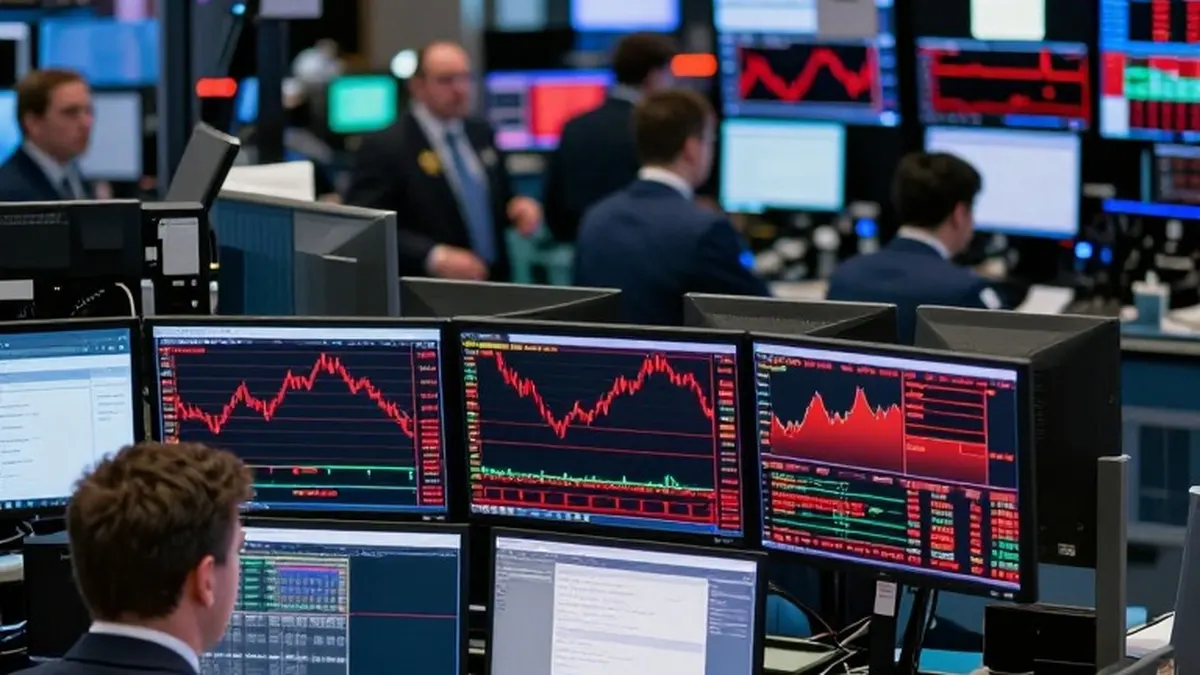
Whether the selloff amounts to a referendum on the midterms or simply extends a bear market in semiconductor stocks that began when the group peaked in June, the message from Thursday's options activity was unmistakable: very few traders anticipated this move.
That was clear in the Cboe Volatility Index, the market's most watched fear gauge. The VIX leaped as much as 5.7 points to trade above 28 roughly 90 minutes after Thursday's opening bell, marking its highest reading since March 31. That date came one day after the S&P 500 bottomed following a sharp selloff as tensions among Iran, Israel and the United States reached a fever pitch.
Measured from its intraday low to its intraday high, the VIX traveled more than 11 points on Thursday, its largest one-day swing since April 9. The spike came as the S&P 500 fell 3% and headed toward its steepest decline since April 2025.
Even with that surge, there is a case that volatility remains too low relative to the damage in stocks. Traders rely on a rule of thumb that 16 points on the VIX corresponds to a 1% move in the underlying index. With the S&P 500 down three times that amount, some on trading desks argued the fear gauge should be printing even higher.
Noel Smith captured the tension many investors felt. "My data says to de-risk, but my gut says this is a blowout that could create a dip-buying opportunity," Smith said. "I do not see macro stuff causing this, like oil or rates. Those things are relatively unchanged. The tape looks like a liquidation and that's exactly what it is according to what I'm hearing with regards to a hedge fund."
Wednesday's trading session had already offered a clue that the VIX was running too calm. Semiconductor stocks were hit hard that day, with the VanEck Semiconductor ETF dropping 3%. Yet the VIX actually fell more than 4 points at the same time, the first such occurrence in market history, according to data from the X account OddStats. That disconnect between sinking chip stocks and a declining fear gauge added a wrinkle for traders trying to read the market's positioning.
By midday Thursday, positioning had flipped decisively. Nearly 800,000 call options had changed hands on the VIX, a pace 3.5 times the 30-day average, according to Cboe data. Call buying on the volatility index typically reflects demand for protection against, or speculation on, further market turbulence.
For now, the surge in the fear gauge underscores how abruptly sentiment has shifted. A market that looked placid even as chip stocks unraveled earlier in the week is suddenly pricing in the kind of turbulence not seen since the spring, and the debate on trading floors is whether the repricing has gone far enough.