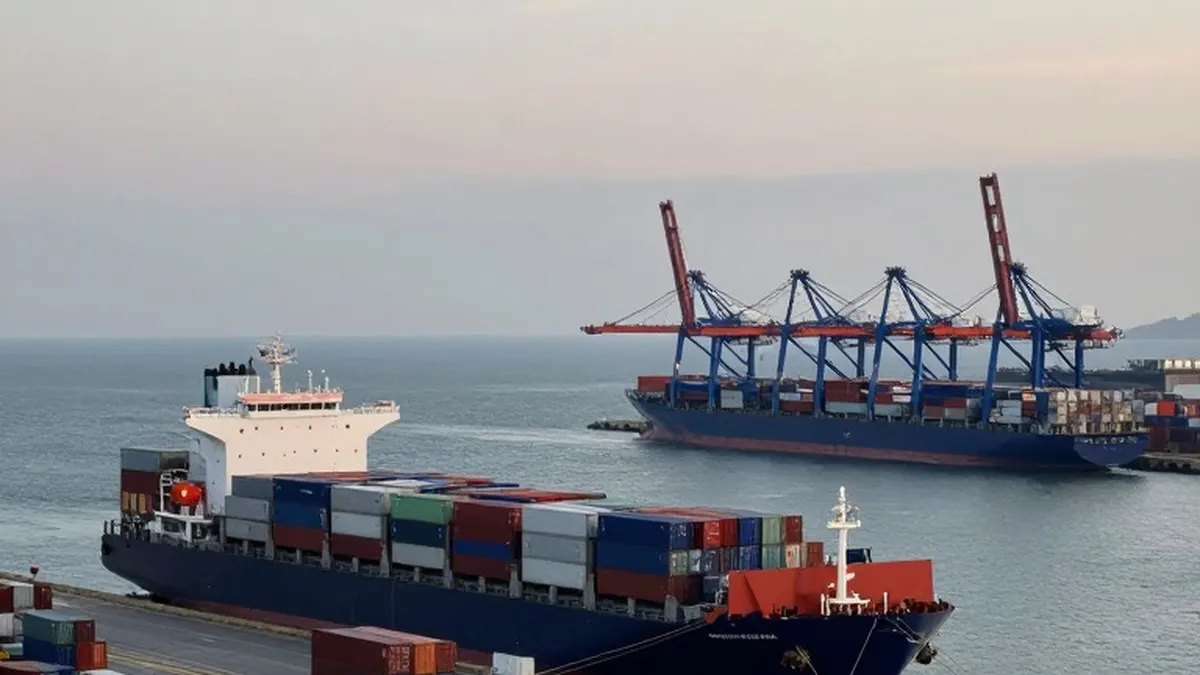
The head of the World Food Programme has issued a stark warning regarding the impact of global trade disruptions on humanitarian efforts. Luke Lindberg, the WFP Executive Director, addressed the United Nations Security Council in New York on Monday. He explained that a simultaneous disruption of three critical trade routes is driving up the costs of food and aid delivery. This situation is now threatening the assistance provided to millions of vulnerable individuals across the globe.
Lindberg described the situation as a triple chokepoint involving the Strait of Hormuz, the Bab al-Mandeb, and the Black Sea. He noted that these blockages have dramatically tightened the supply of food exports and essential farming inputs. According to the WFP chief, the impact on food production and market prices has become very real, especially when combined with a surge in conflicts and climate shocks such as El Nino.
The agency projects that if current conditions continue, it will face an additional $727 million in costs by mid-2027. This financial burden puts the food assistance of 7.3 million people at risk. Lindberg emphasized that these rising expenses are taking money directly out of WFP operations. He stated that this translates into less food being available for fewer families in need.
The warning arrives at a critical time when 266 million people worldwide are facing acute hunger. There is also a significant risk of famine in parts of Sudan, South Sudan, and Somalia. The strategic importance of the affected waterways cannot be overstated. Approximately 30 percent of global fertiliser supplies pass through the Strait of Hormuz. Meanwhile, the Black Sea serves as a key source of grain for several nations, including Somalia and Yemen. Yemen alone imports 90 percent of its food supply.
Recent data highlights the severity of the shipping slowdown. By mid-October, the number of wheat and maize vessels moving through the Bosphorus had dropped by 63 percent compared to the same period a year earlier. The WFP estimates that about 10 million tonnes of Russian and Ukrainian wheat could fail to reach global markets. This volume of grain is sufficient to feed an estimated 44 million people, illustrating the scale of the potential shortfall.
Lindberg argued that the current crisis is not primarily a problem of production. Instead, he identified it as a political problem. He noted that grain is available in sufficient quantities, but it is not reaching the people who depend on it. In Sudan specifically, the cost of a basic diet has risen by 130 percent since February, highlighting the immediate economic pressure on affected populations.
To address these challenges, Lindberg urged member states to commit to three specific red lines. He called for an end to famines, a stop to the weaponisation of food, and a halt to attacks on humanitarian workers. These commitments are seen as essential steps to stabilize the global food system and ensure that aid reaches those most in need despite the ongoing logistical hurdles.