Only hours before a Ramadan event for Muslim city employees, Mayor Zohran Mamdani decided to overhaul his prepared remarks. The reason, according to the story of the week, was a flood of Islamophobia aimed at him and at Muslims across the country.
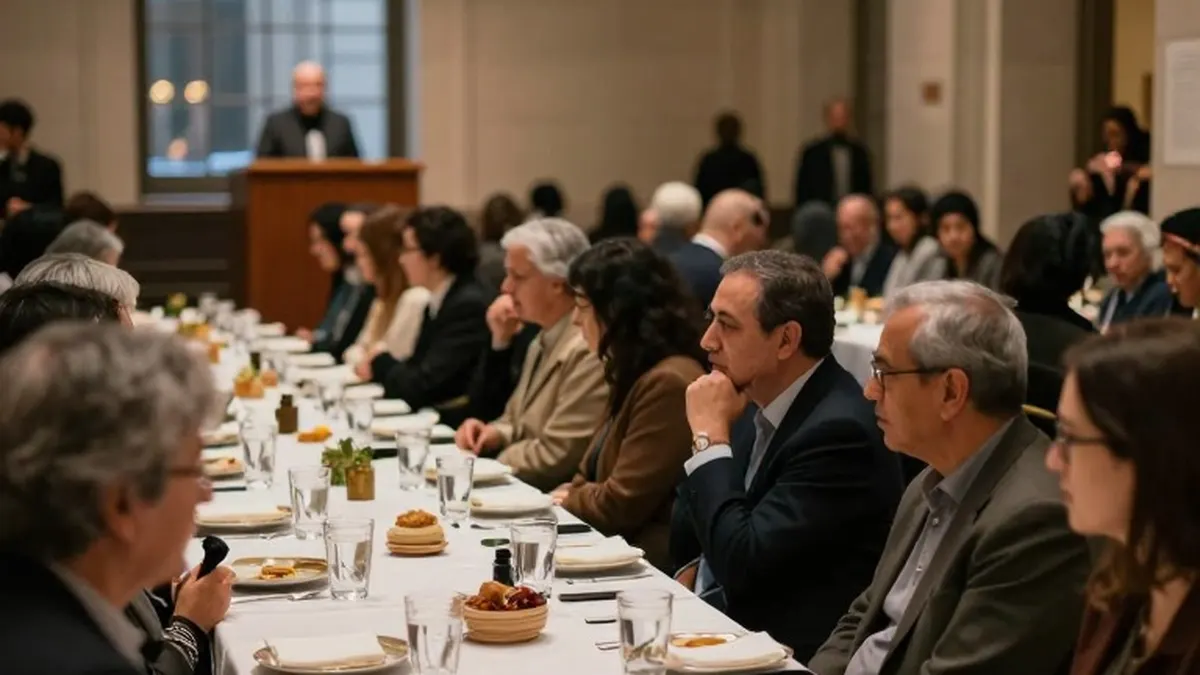
Speaking Thursday at the Museum of the City of New York, Mamdani told the audience that unchecked hatred leaves him with "an isolation and a loneliness" that he knows many in the room have also felt. Hundreds of Muslims who work for the city were expected to attend the event, which marked a holiday centered on charity and care for the less fortunate.
Earlier that day, a U.S. senator had posted a photo of Mamdani sitting on a prayer rug inside City Hall alongside an image of the World Trade Center burning on 9/11, with the caption "the enemy is inside." Republican congressmembers from Florida and Texas added their own Islamophobic comments. Longtime political observers say anti-Muslim sentiment has sharply intensified amid President Donald Trump's war in Iran and continuing backlash against the city's first Muslim mayor.
Tensions rose further last weekend, when a right-wing agitator led a protest outside Gracie Mansion called "Stop the Islamic Takeover of New York City." Two alleged Islamic State sympathizers tried to throw homemade explosive devices into a crowd of people and police, but the devices failed to detonate. Some observers say the current climate recalls the months and years after the 9/11 attacks, even as hate crime reports against Jews have climbed in recent months. "It is absolutely scary," said Hassan Naveed, a former head of the city's Office for the Prevention of Hate Crimes. "This is not normal."
According to press secretary Joe Calvello, the mayor reworked his remarks by hand at City Hall on Thursday afternoon. The resulting 10-minute speech celebrated a shared Muslim identity in the face of attacks on both his faith and his politics. He spoke of the suspicion Muslims have faced since 9/11, of men being called "Muhammad" regardless of their actual names, and of a recent viral video in which a storeowner confronted an NYPD officer for praying in his bathroom.
"Who here has heard the words, 'Go back to where you came from?'" Mamdani asked. "I have known these experiences as a young man, as a candidate for office, as the mayor of New York City." He also reflected on the joy of growing up in a multiracial, multiethnic city. "We are whole here in this city we love," he said. "And we are enough."
The criticism has come from several directions. Conservative talk show host Sid Rosenberg earlier this month called Mamdani a "jihadist" and a "Radical Islam cockroach" on social media, and later apologized. On Thursday he tweeted that the mayor "doesn't care" about an attack on a Michigan synagogue because no statement had come an hour after the news broke, then accused Mamdani of "gaslighting" when one followed an hour later. Councilmember Vickie Paladino has called for Mamdani to be deported and has repeatedly linked him to terrorism. Some critics also faulted him for not sufficiently condemning the two teen suspects in the Gracie Mansion incident, and a photo of activist Mahmoud Khalil dining with Mamdani and his wife, Rama Duwaji, drew a rebuke from the White House.
Speaking to reporters Tuesday, the mayor brushed off the attacks. "No matter the attempts, I will never be ashamed of who I am," he said. Throughout Ramadan he has hosted iftar dinners where Muslims break their fasts, which officials say is meant to engage Muslim New Yorkers and introduce non-Muslims to the culture and customs.
Taiba Ahmad, a Queens public school teacher who attended Thursday's event, said tickets were distributed by lottery and the room was packed. She said that despite the week's ugly rhetoric, the evening felt like a victory. "Our sheer presence there is a defiance of the hatred that we face," she said, adding that the speech resonated because she could link it to an experience of her own.