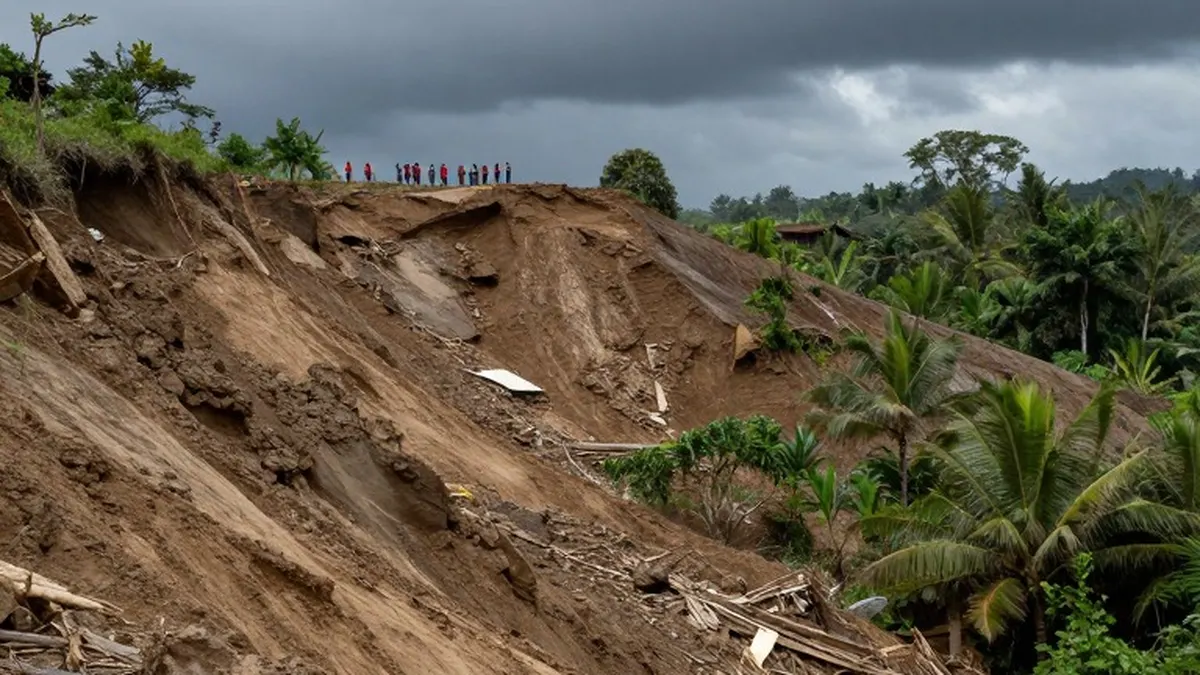
Survivors of a catastrophic landslide in eastern Uganda have escalated their fight for compensation and safe relocation to the United Nations. The group, comprising 48 complainants, accuses the Ugandan government of violating the national constitution by failing to implement effective disaster management measures in Bududa, a mountainous district known for its susceptibility to landslides. Their legal challenge arrives at a critical time, as recent heavy rains have heightened the risk of further geological instability in the region.
The original disaster struck Bududa in 2019, claiming the lives of more than 53 individuals, including 33 children. For the remaining survivors, every instance of heavy rainfall triggers renewed fears of a repeat tragedy. William Tsama, one of the lead claimants, lost four family members in the collapse. He stated that his legal pursuit should serve as a lesson to other victims who feel ignored by their governments, emphasizing that citizens can compel state action through the courts.
The UN Human Rights Committee is currently reviewing what is believed to be the first case specifically seeking climate adaptation measures. This proceeding has the potential to set a significant global precedent for how international bodies handle climate-related human rights claims. The complainants argue that the current government relocation program overlooks critical aspects of safety, land rights, and the preservation of livelihoods for affected families.
Uganda introduced a resettlement plan for high-risk areas in 2011, but progress has remained limited. Last month, the government launched a new initiative offering affected households 18 million Ugandan shillings, approximately 4,300 US dollars, to assist with moving to safer zones. Under this scheme, families may choose between receiving two acres of land valued at 8 million shillings plus 10 million shillings for housing construction, or the equivalent land allowance in cash alongside the same housing grant. The program targets 1,410 households identified as living in high-risk zones.
Despite the new funding, some survivors question whether the financial support is sufficient to cover the full cost of relocating and rebuilding their lives. The government has issued a strict deadline, giving residents of designated high-risk areas only two months, from November through December, to vacate their homes or face forced eviction. This timeline adds urgency to a situation already complicated by changing rainfall patterns and declining soil fertility, which have negatively impacted farming and family income.
Tsama, describing himself as an elderly man fighting for his children, expressed a desire to secure a safe place for his family so they would be protected even after his passing. The survivors first initiated legal action within Uganda in 2020 and later received support from the environmental organization Greenwatch three years ago. They are seeking compensation for lost lives and livelihoods, along with emergency measures such as accessible early-warning systems in vulnerable areas.
Samantha Atukunda Kakuru Mwesigwa, Executive Director of Greenwatch, noted that the case aims to transform how governments prepare for and respond to climate-related disasters. She stated that achieving justice is not merely about a court victory, but about forcing policy to keep pace with a changing climate and ensuring that loss and damage are central to disaster management rather than afterthoughts.
The vulnerability to such disasters is not unique to Uganda. Across East Africa, climate-related events have caused significant loss of life, including floods and landslides in Kenya that killed at least 181 people in early 2024, and similar events in Rwanda in 2023 that claimed 135 lives. The threat is also global, with a recent flash flood in Nepal's Gorkha district in October 2026 killing over 1,500 people after a landslide blocked a river.
Vesselina Newman, a lawyer with ClientEarth, highlighted that disasters like the one in Bududa are intensifying due to climate change. She argued that poorer nations, which have contributed less to global emissions, are bearing the heaviest consequences and require greater financial support. She urged high-income countries to provide direct financial assistance to nations like Uganda to help them implement life-saving adaptation measures.
The complainants insist that relocation must involve more than simply moving people out of danger zones. They are demanding that the government protect their livelihoods, respect their land rights, and consider individual needs in the process. The case remains before the UN Human Rights Committee, which has requested a response from the Ugandan government within six months.