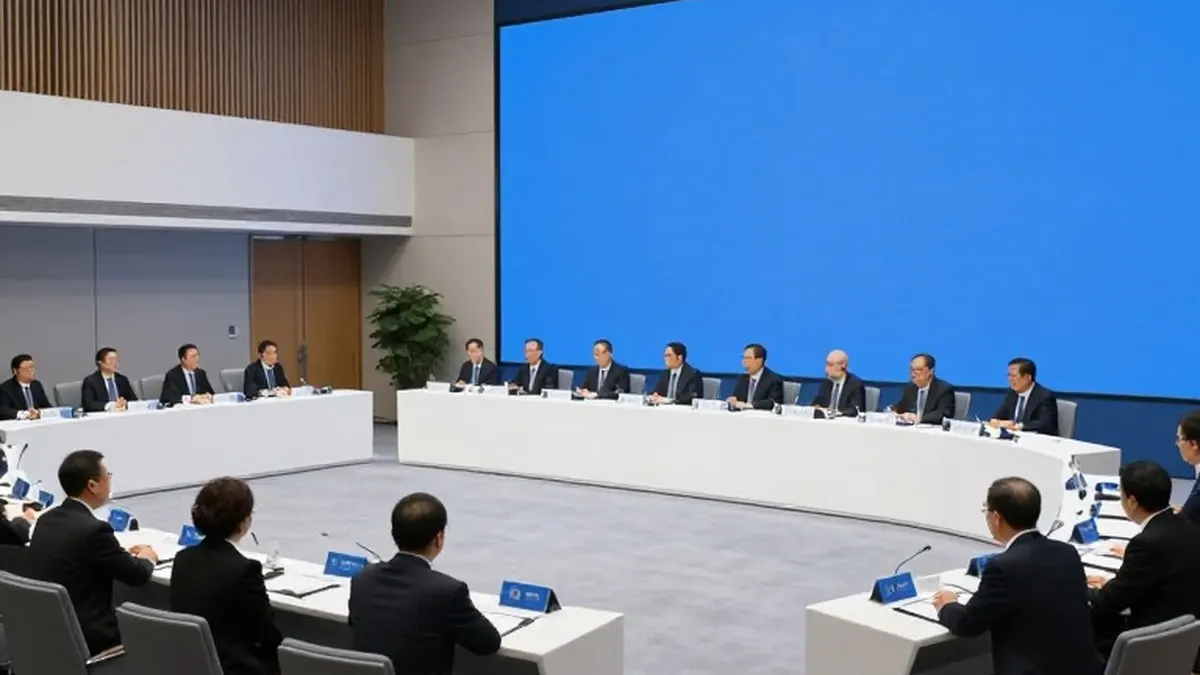
President Donald Trump is set to attend the Asia-Pacific Economic Cooperation summit in Shenzhen, China, this week. The event brings together 21 Pacific Rim member economies and is expected to feature a bilateral meeting between Trump and Chinese President Xi Jinping, as well as a historic three-way gathering that will include Russian President Vladimir Putin. This will mark the third time the two superpower leaders have met in 2026, following their previous encounters in Beijing in May and at the White House in September.
While earlier meetings in 2026 were characterized by ceremonial displays of stability, experts anticipate that the Shenzhen discussions will focus heavily on pressing issues such as artificial intelligence regulation, trade dynamics, and the status of Taiwan. The summit arrives at a critical juncture for Washington, occurring just days after Democrats secured control of both chambers of the US Congress. This shift in legislative power is expected to provide a stronger check on the president during the final two years of his term, while Beijing looks to position itself for the post-Trump era.
Ali Wyne, a senior adviser on US-China relations at Crisis Group, noted that while Trump aims to strengthen his personal rapport with Xi, the meeting is unlikely to yield major substantive breakthroughs. The White House has outlined a framework for a constructive relationship based on respect and reciprocity, with both nations planning to support each other at the upcoming G20 summit in Florida. However, the path forward remains complicated by differing national priorities and ongoing geopolitical tensions.
Artificial intelligence remains a central pillar of the diplomatic agenda. Both the US and China face internal pressure to establish joint safeguards for the transformative technology. In September, the two sides pledged to create a mechanism for rapid communication regarding AI incidents. Despite this, the Trump administration has largely downplayed the need for strict developmental guardrails, with the president stating that the US would not slow down its AI industry. Treasury Secretary Scott Bessent recently emphasized that while the US and China may exchange best practices for testing models, they should not expect their approaches to every challenge to converge.
The recent resignation of Nvidia CEO Jensen Huang is also casting a shadow over the summit. Huang stepped down following revelations of a relationship with an alleged Chinese spy, a development that has renewed scrutiny over his influence on US export controls. Commerce Secretary Howard Lutnick has faced particular criticism from within the Republican Party for his perceived lax enforcement of these controls. Wyne suggested that Trump may face pressure to raise the scandal, warning Xi that the relationship could suffer if the US believes Chinese business executives are being used to sabotage American AI efforts. However, some analysts, including Gabriel Wildau of Teneo, believe the issue will have little impact on the current diplomatic rapprochement.
The status of Taiwan is another significant point of negotiation. Trump has recently departed from longstanding US policy, referring to the island as a valuable negotiating chip and holding up approval of a $14 billion arms package. The White House has attributed the delay to limited production capacity and the need to maintain a delicate trade truce. With Democrats now in Congress and bipartisan support for Taiwan remaining strong, pressure on the issue is likely to increase. Bonnie Glaser and Noah Munk of the German Marshall Fund warned that Trump's language invites Beijing to expect concessions in exchange for future approvals on arms sales.
Trade relations have also been a focal point. After tariffs on Chinese goods reached 145 percent earlier in the year, the two nations agreed to a truce that has since been extended through January 2027. Despite this agreement, US imports of Chinese rare earth minerals remain significantly lower than pre-restriction levels. China has also committed to purchasing 25 million metric tonnes of US soybeans and other agricultural products over the next three years, though actual shipments have lagged behind these diplomatic promises.
The most anticipated event of the summit is the trilateral meeting between the leaders of the US, China, and Russia. Russian foreign policy adviser Yury Ushakov described the symbolism of such a meeting as hard to overestimate. For Putin, the gathering would signal a return to major player status on the global stage, moving beyond his current pariah image. Meanwhile, Xi would benefit from the perception of China acting as the convener for global relations. Experts suggest that for Trump, the meeting serves to showcase the mutual desire of both himself and Putin to cultivate favor with the Chinese president, even as it may raise concerns among US allies about informal global power arrangements.