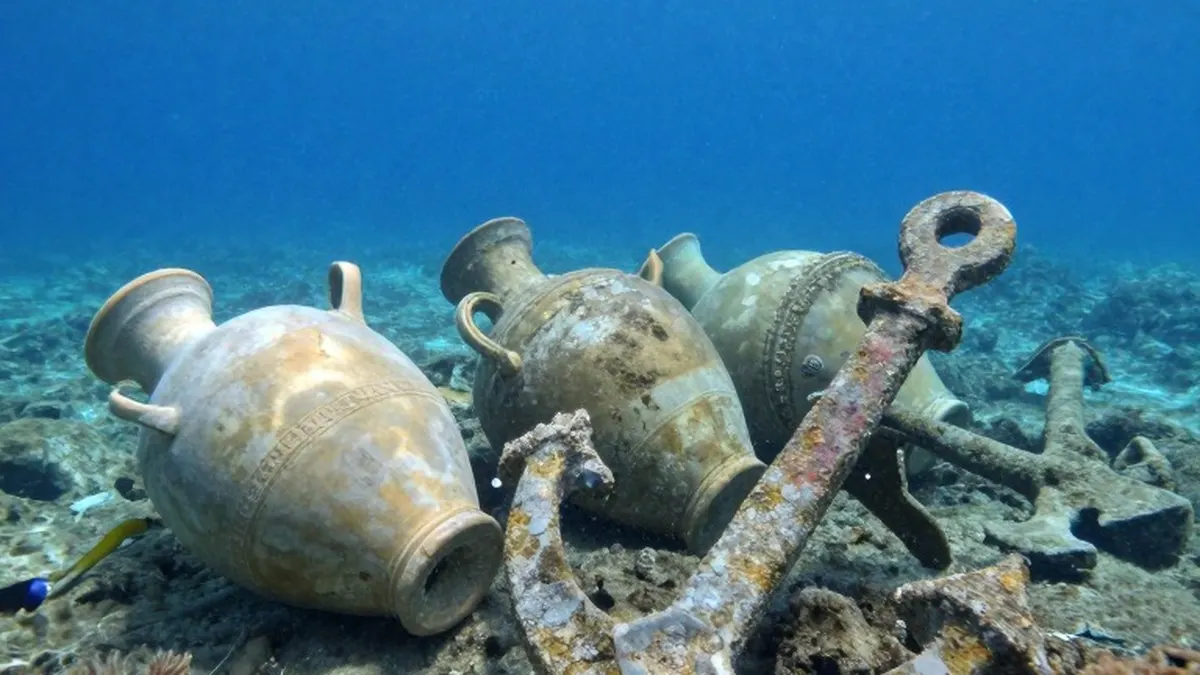
A discovery off the Turkish island of Kekova may represent the world's oldest shipwreck, according to an announcement by Turkish Tourism and Culture Minister Mehmet Ersoy. The underwater finds include pottery dated to approximately 4,400 to 4,700 years ago, offering evidence of Bronze Age maritime trade along the coasts of Anatolia.
Kekova is a small, uninhabited island in the Mediterranean Sea in western Turkey. Three stone anchors and about 30 amphorae were found at the site, the BBC reported. The expedition was led by Prof. Hakan Öniz of Turkey's Akdeniz University for the Mediterranean Archaeology Association.
Öniz told the BBC that comparisons of the pottery's decorative techniques placed the wreck firmly in the Early Bronze Age. He expressed certainty about that dating, describing the site as a preserved glimpse of the past beneath the sea. Its possible status as the world's oldest shipwreck remains tentative.
The shapes of the amphorae suggest they were probably made in workshops in the Jordan Valley. They resemble vessels found in Egypt, Troy and Crete. These comparisons provide clues to the origins of the pottery recovered from the wreck and contribute to the picture of ancient trade along Anatolia's shores.
Ersoy highlighted one unusual amphora bearing nine separate markings and two holes in its body. Researchers believe it may have served as a churn for cheese or butter. That possible use suggests Bronze Age sailors might have prepared their own food while undertaking lengthy sea journeys.
Other vessels retained a glossy substance, according to the BBC, which cited Macquarie University archaeologist Dr. Karin Sowada. She described being astonished by the quantity still visible inside the pottery. Possible contents include olive oil, wine or tree resins, although the material's identity was not established in the account.
Sowada also suggested that the residue might reflect repeated use of the jars. Given their large size, she said, people could have emptied them after delivery and continued using them for many years. Öniz, meanwhile, reflected on the people connected to the objects, including their makers, those who carried them aboard and sailors who never returned to their waiting wives.
In his announcement on X, Ersoy said the discoveries were helping illuminate Anatolia's maritime history while preserving underwater cultural heritage for future generations. He congratulated Öniz, who has scientific responsibility for the excavations, and the other colleagues involved in the work.