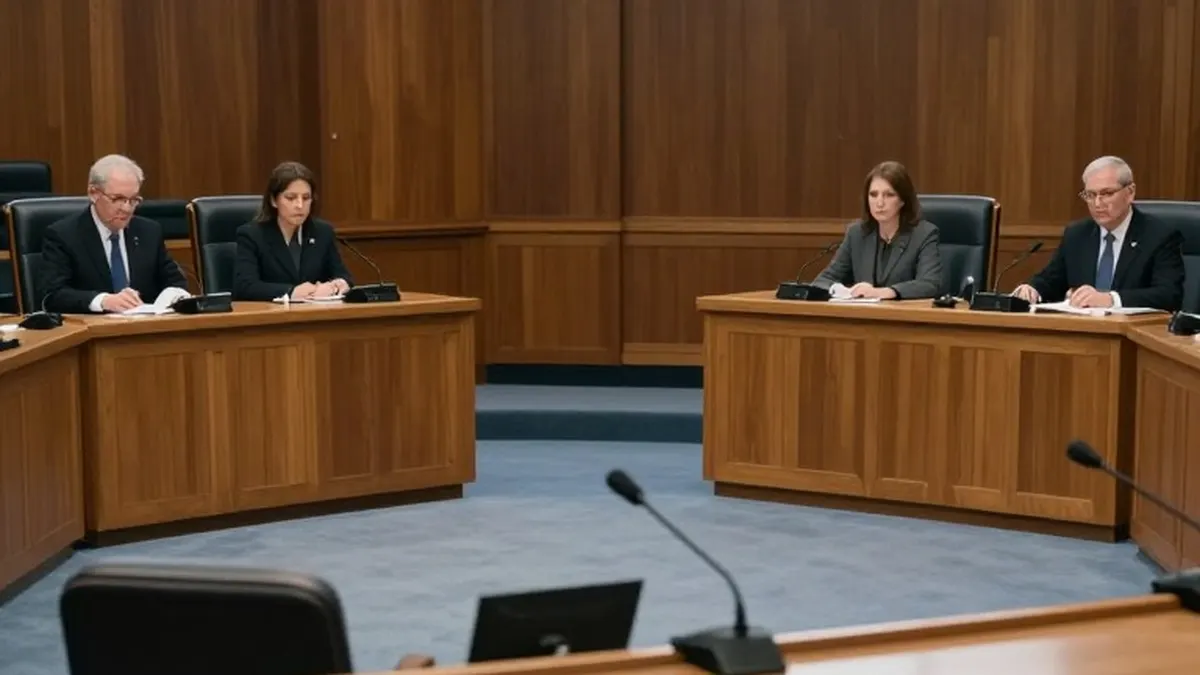
A recent hearing before the Senate Budget Committee reignited a long-standing debate regarding the structural integrity of Social Security. Senate Budget Committee Chairman Ron Johnson, a Republican from Wisconsin, described the program as a legal Ponzi scheme in his opening remarks. He noted that a Ponzi scheme involves using funds from new investors to pay existing ones, arguing that Social Security fits this description if the element of fraud is removed.
The comments drew immediate criticism from experts who believe the description oversimplifies the program's mechanics. Johnson's remarks followed an interview on Fox Business where he stated there was no way to fix Social Security and suggested shutting it down. During the hearing, Johnson described those earlier comments as imprecise, clarifying that he was speaking broadly about Ponzi schemes rather than specifically condemning the current Social Security structure.
Despite the clarification, the hearing featured a proposal from Johnson that would allow general revenue to fund retirement benefits once the trust fund reaches insolvency. Maya MacGuineas, president of the Committee for a Responsible Federal Budget, argued that this approach would significantly increase the national debt. She stated that using the general fund would cost 165 percent of gross domestic product over a 75-year period.
Bill Sweeney, senior vice president of government affairs at AARP, emphasized that the public understanding of Social Security differs from the committee's perspective. He stressed that the program operates on its own budget and is not part of the unified federal budget. Sweeney pointed out that Social Security cannot borrow money or go into debt, meaning it has never contributed to the national debt in the traditional sense.
The funding mechanism for the program relies primarily on payroll tax contributions. When income exceeds costs, the surplus is invested in special U.S. Treasury securities. According to the Congressional Budget Office, these securities count as intragovernmental debt but are not included in the debt held by the public. This distinction is central to the ongoing debate about the program's fiscal impact.
Projections indicate that the Social Security trust funds may face depletion within the next six to eight years. The retirement trust fund is expected to run out by the fourth quarter of 2032, at which point 78 percent of scheduled benefits could be paid. The combined retirement and disability trust funds may face exhaustion by the third quarter of 2034, with 83 percent of benefits remaining payable.
Jason Fichtner, executive director of the LIMRA Retirement Income Institute, described the hearing as a missed opportunity for deeper discussion. He noted that while some reforms could delay funding issues, they would not ensure long-term solvency. Fichtner also highlighted that fear regarding the program's future is already influencing behavior, with many individuals claiming benefits earlier than originally planned.
Kathryn Anne Edwards, a senior fellow at the National Academy of Social Insurance, argued that Social Security is effective at solving problems but is often viewed negatively due to broader fiscal mismanagement. She suggested that reform could expand the program to include universal paid family and medical leave, as well as strengthened unemployment insurance to address job losses related to artificial intelligence.
The next session of Congress will be in place when the retirement trust fund depletion date arrives in 2032. Sweeney expressed hope that the new session will provide a venue for serious hearings on the program's future. This follows a series of other recent hearings, including those held by the Senate Finance Committee in June and August of this year.