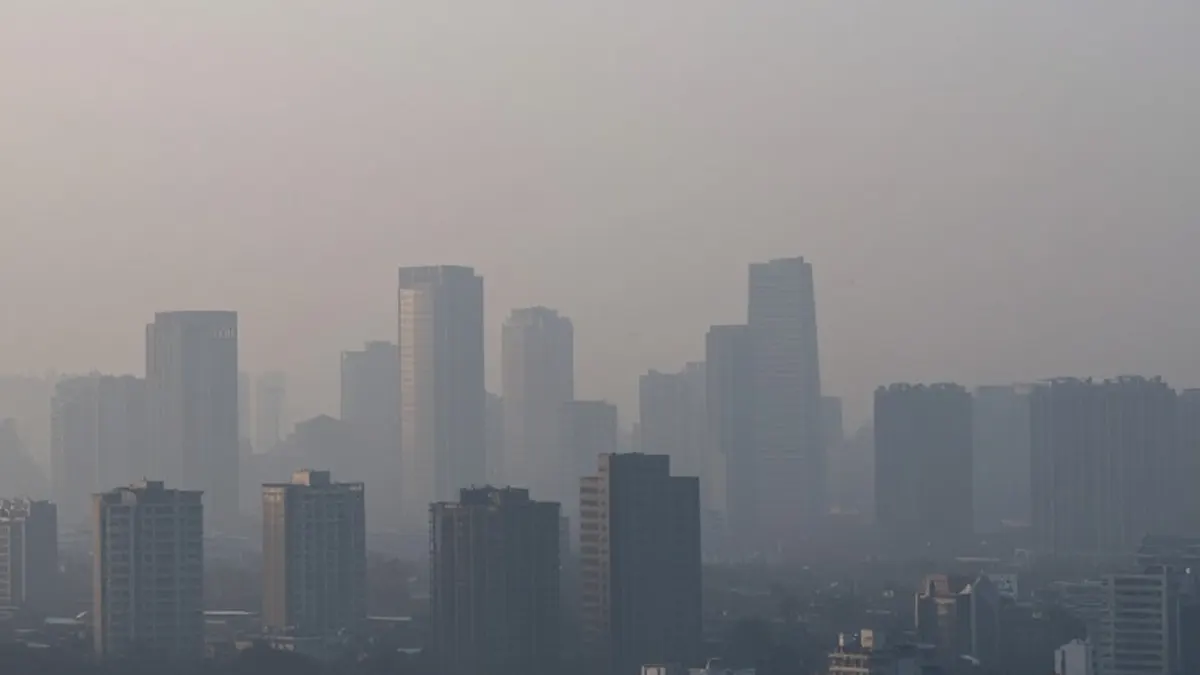
The arrival of winter in the Northern Hemisphere brings with it the annual challenge of smog, a phenomenon that particularly affects cities in South Asia. Major urban centers, including New Delhi and Dhaka, are currently enveloped in a dense grey haze. Last week, the Air Quality Index in several districts of India’s capital surpassed 350. According to the monitoring platform IQAir, this level is classified as hazardous, signaling significant risk to public health.
The formation of winter smog is driven by specific meteorological conditions. A layer of warmer air often settles above cooler air near the ground, creating an inversion that traps pollutants from vehicles, industrial activities, and crop burning. This effect is exacerbated by low wind speeds, which prevent the dispersal of these contaminants. In South Asia, the geography of the Indo-Gangetic Plain further compounds the issue. Hemmed in by the Himalayas to the north, the region experiences weak winds and a shallow air layer during winter months, leaving pollution with nowhere to escape.
While summer smog results from sunlight reacting with nitrogen oxides to form ground-level ozone, winter smog is defined by these trapped particulate matter. The primary sources of this pollution include the burning of fossil fuels, such as coal, along with exhaust from factories and cars. Additionally, smoke from forest and crop fires contributes significantly to the poor air quality observed in the region.
Air quality is assessed through monitoring stations that track six main pollutants, including ozone, nitrogen dioxide, and particulate matter. The most dangerous component is PM2.5, which consists of particles 2.5 micrometres or smaller in diameter. These particles are approximately thirty times thinner than a human hair and can penetrate deep into the lungs before entering the bloodstream. The readings from these stations are aggregated into an Air Quality Index. The US AQI scale ranges from 0 to 500, with a maroon color indicating hazardous conditions for emergency levels of pollution.
Recent data highlights the severity of the crisis in Asia. According to IQAir, all fifty of the world’s most polluted cities in 2025 were located in Asia, with forty-two situated in India and Pakistan. Loni, a suburb of Delhi in Uttar Pradesh state, ranked first with average PM2.5 levels of 112.5 micrograms per cubic metre. This figure is more than twenty-two times the limit recommended by the World Health Organization. Hotan in China and the Indian cities of Byrnihat and New Delhi also appeared high on the list.
The health impacts of such pollution are profound. The World Health Organization links air pollution to roughly seven million premature deaths globally each year. These pollutants enter the body primarily through the lungs, causing inflammation and weakening the immune system. PM2.5 particles can reach vital organs, including the heart and brain. Long-term exposure is strongly associated with stroke, heart disease, lung cancer, and chronic obstructive pulmonary disease. Vulnerable groups, such as children, the elderly, and pregnant women, face the highest risks.
Individuals can take several steps to minimize their exposure. Experts recommend wearing well-fitting N95 masks outdoors, as cloth masks offer limited protection against fine particles. Keeping indoor air clean by closing windows on high-pollution days and using HEPA filters is also advised. Checking local air quality indices before engaging in outdoor activities and limiting strenuous exercise during peak pollution times can further reduce health risks.
Governments are implementing various strategies to combat pollution. Paris introduced car-free days in 2015, which led to a forty percent drop in nitrogen dioxide levels in some areas. London’s Ultra Low Emission Zone, launched in 2019, reduced roadside nitrogen dioxide concentrations by nearly twenty percent within three months. In Krakow, Poland, a ban on solid fuels for home heating, preceded by the replacement of over twenty-five thousand heating devices, contributed to a forty percent decrease in average annual PM2.5 levels between 2010 and 2021.