The second season of the Israeli comedy series Bros debuted on Netflix this week, now available with English titles. The show continues to explore the chaotic lives of Hanan Savyon and Guy Amir, who have portrayed bumbling best friends for over fifteen years. Their partnership began with the 2010 series Asfur, where they played secondary roles that inspired the main characters of Bros. Since then, the duo has starred in several comedy capers, including Maktub, Forgiveness, and Cat’s Luck, maintaining their signature dynamic across different settings and eras.
The first season of Bros, released in 2024, centered on Pini, a hard-partying market owner, and Nisso, who may be suffering from a terminal illness. The series blends broad comedic performances with emotional depth and crime elements, staying true to the tradition of Israeli Seretei Bourekas. A central theme involves the duo’s fierce support for the Beitar Jerusalem soccer team, known for its yellow and black colors and its passionate, sometimes controversial, fan base called La Familia.
In the new season, the friends lose their money-losing bar due to a fine for previous misdeeds. Nisso proposes they turn to fishing as a new source of income, leading to numerous jokes about fishy odors. This career change forces the landlocked Jerusalemites to spend time at sea. Additionally, Pini and his pregnant wife Alma move in with her parents on a moshav, creating predictable family friction. The plot also introduces a natural gas reserve in the area where they have fishing rights, which may be linked to a series of assassination attempts against the pair.
The season expands its scope geographically as the characters travel to Barcelona for a soccer match, extending a plot involving a money-making scheme. While the narrative remains formulaic, it offers familiar entertainment for fans, including a memorable scene where a father eats shawarma during his wife’s labor. The series remains a quintessential example of Israeli broad comedy, balancing slapstick humor with genuine pathos.
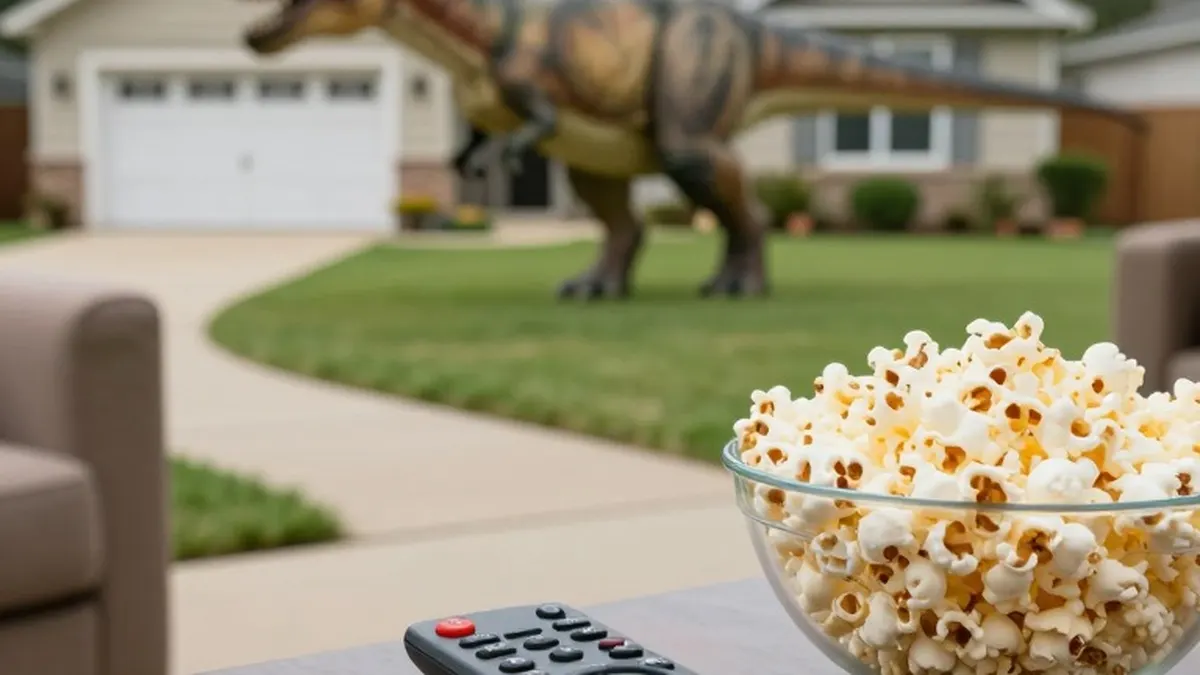
In the film sector, David Robert Mitchell’s The End of Oak Street has recently become available in Israel on HBO Max and is also streaming on Apple TV+. The movie, set in 1982, features dinosaurs appearing in a suburban neighborhood after a strange electrical storm. The premise invites immediate comparisons to Steven Spielberg’s Jurassic Park and Close Encounters of the Third Kind, both of which focus on suburban families encountering extraordinary phenomena.
The film stars Anne Hathaway as a frustrated mother who dreams of writing in New York, and Ewan McGregor as her husband, who works pizza deliveries to make ends meet. While the cast delivers solid performances, the movie’s scenes are often described as clunky and predictable. Critics note that despite modern special effects being superior to those of 1993, the film fails to capture the suspense and inventive storytelling that made the original Jurassic Park a classic. The narrative prioritizes spectacle over character depth, resulting in a viewing experience that falls short of its ambitious references.
Also arriving on streaming platforms is a new television adaptation of Charles Dickens’ A Tale of Two Cities. The miniseries is currently available on Hot VOD and Next TV, with a premiere scheduled for November 30 on Hot 3. The cast includes Kit Harington as Sydney Carton, François Civil as Charles Darnay, Mirren Mack as Lucie Manette, and Roxane Duran as Madame Defarge. Although the actors provide competent performances, the adaptation has been criticized for feeling bland and lacking the necessary chemistry in the central love triangle.
The historical plot concerning the French Revolution also fails to generate significant intensity, leading some viewers to question the necessity of another adaptation of the famous novel. The series opens with the iconic line about the best and worst of times, but the execution does not quite match the literary legacy. For viewers seeking more impactful historical dramas, this particular interpretation may not deliver the expected emotional weight.