Jesus Owono has rapidly become a focal point of global attention following a tragic incident in Spanish football. The Andorra goalkeeper’s challenge resulted in the death of Tenerife forward Jesus de Miguel. The 30-year-old forward succumbed to a cardiac arrest in a Santa Cruz hospital on Tuesday morning. He had suffered the medical emergency after a high challenge by Owono during stoppage time of Monday’s La Liga 2 match.
Owono, a 25-year-old goalkeeper, was born in Bata, Equatorial Guinea, before moving to Spain’s Basque Country as a child. He began his career at the age of eight with Antiguoko, a youth club in San Sebastian, and later joined Real Sociedad. There, he represented the Basque Country at the under-16 level. In 2017, he joined Alaves, working through the youth ranks until making his first-team debut in January 2022. That match, a 1-1 draw against Real Sociedad, marked his status as the first player born in Equatorial Guinea to appear in La Liga.
After making 20 appearances for Alaves in the league and Copa del Rey, Owono spent the previous season on loan with Andorra. He kept six clean sheets in 20 league games before securing a permanent two-year deal in August. On the international stage, he made his Equatorial Guinea debut in March 2019, shortly after turning 18. He has since earned 46 caps, playing every minute of his country’s group games in the 2025 AFCON and both 2027 qualifiers against DR Congo and Sierra Leone in September.
The incident occurred when 10-man Andorra was applying late pressure to attempt a comeback from a 2-0 deficit. Owono was positioned well outside his area when Tenerife cleared the ball toward the halfway line. De Miguel appeared to have a clear run on goal, prompting Owono to sprint forward and jump for an aerial challenge. His knee reportedly struck De Miguel in the chest and head before the ball bounced.
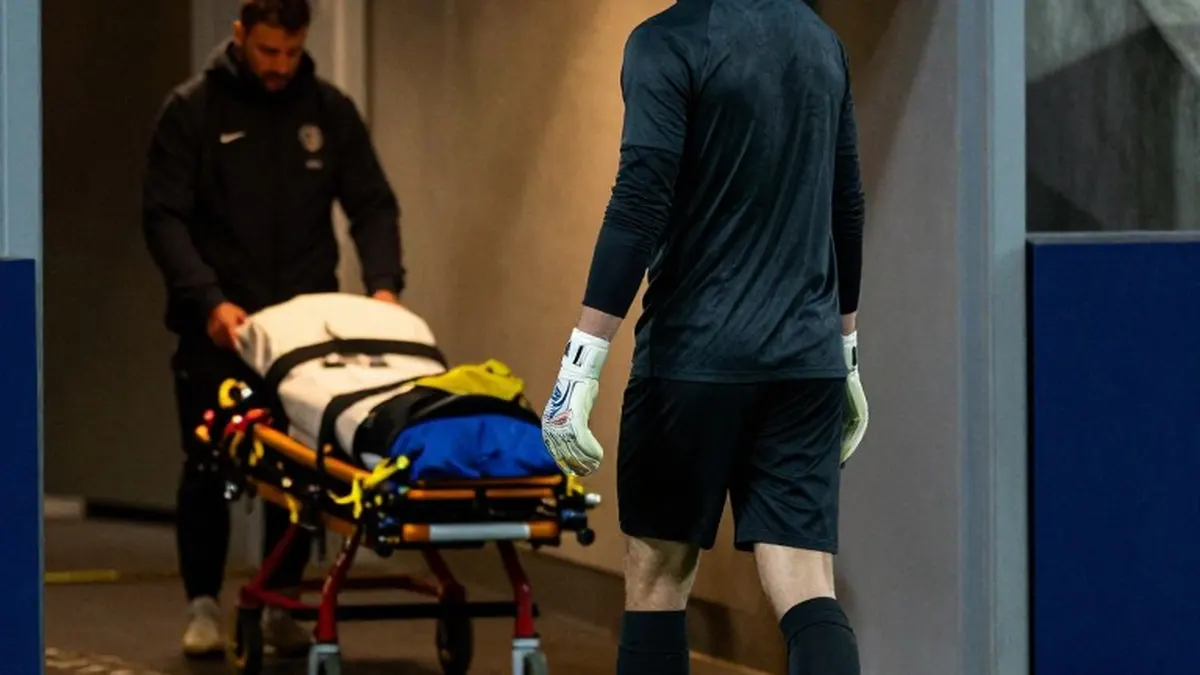
Owono received a straight red card from referee Manuel Angel Perez Hernandez. After the collision, he initially walked toward the touchline, anticipating the dismissal. However, as medical staff rushed onto the pitch, he turned back and jogged to join the players surrounding De Miguel. He remained on the field until club officials led him down the tunnel. This happened simultaneously as De Miguel was rushed off on a stretcher to a waiting ambulance. Videos of the scene showed Tenerife fans chanting “assassin” at the goalkeeper.
The reaction to the challenge has been widespread criticism, with many viewing it as reckless and involving excessive force. Social media users have called for a life ban and criminal charges, while some have directed racist abuse and insults at Owono’s online profiles. Local police in Tenerife have reported that an investigation into the incident has begun.
The Spanish Football Federation’s Disciplinary Code outlines potential sporting sanctions. For violent conduct during play that results in serious injury, the suggested suspension is between four and 12 matches. An investigation will assess the challenge and its context to determine the final punishment. While a severe sporting sanction seems likely, the question of criminal liability is more complex.
The Homicide Group of the National Police in Santa Cruz is investigating the circumstances of De Miguel’s death. Deaths due to on-field acts are rare, and there are no established precedents for this specific tragedy. The determination of charges will likely depend on whether the challenge meets the threshold of criminal negligence under Spanish law.
Article 142 of the Spanish Penal Code distinguishes between manslaughter due to gross negligence and that due to less serious negligence. If gross negligence is proven, it can carry a prison sentence of up to four years. The lesser charge carries a fine calculated over a period of three to 18 months.