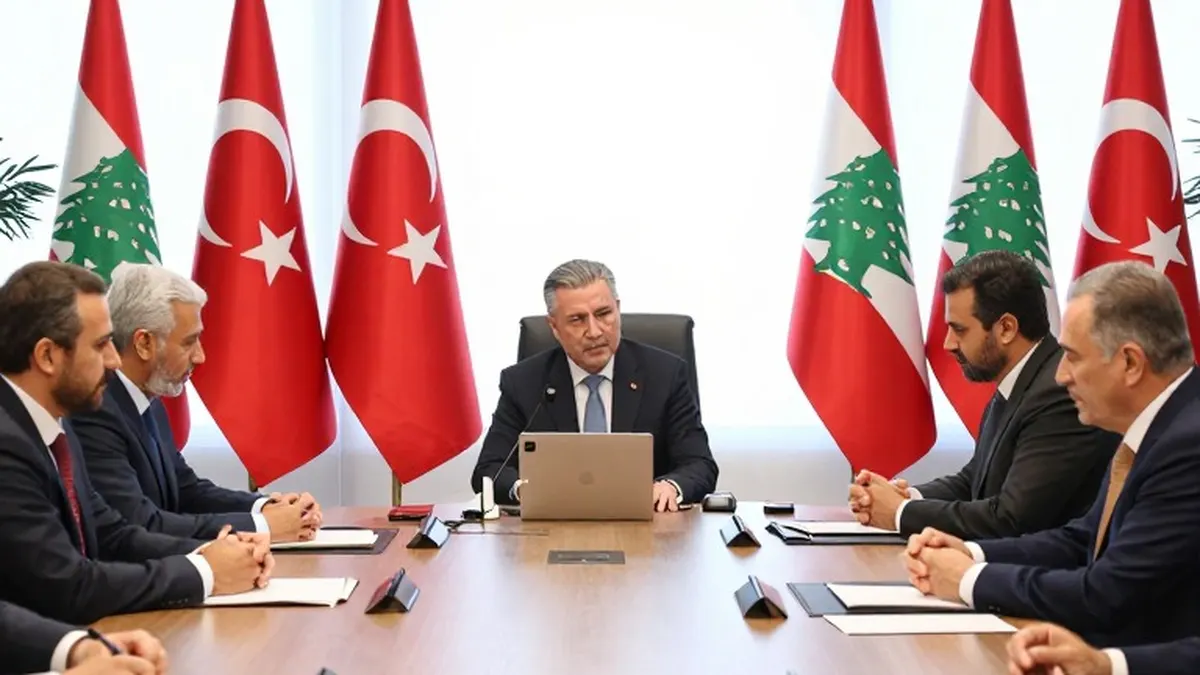
Necmettin Bilal Erdogan, the son of Turkish President Recep Tayyip Erdogan, has drawn attention across the Middle East following a two-day visit to Lebanon. Although he does not hold an official position in the Turkish government, the younger Erdogan is widely recognized for his work in promoting traditional sports, humanitarian aid, and philanthropy on a global scale.
A senior Lebanese government official described the visit as social and economic in nature. The official noted that Erdogan arrived with a delegation of Turkish businessmen and institutions to convey a message of support to Lebanon. The trip was coordinated in advance with the Lebanese state, according to the same source.
The timing of the visit, which coincided with heightened regional tensions, has led to speculation about its purpose. Some observers in the region view Bilal Erdogan as a potential successor to his father. However, sources close to the family told Middle East Eye that the trip is one of many he has made recently to the region and beyond, carrying no specific political weight. He was in Tokyo earlier this month and visited Syria earlier this year, with other independent trips to Europe, North Africa, and South Asia.
The delegation included Selim Argun, president of the Yunus Emre Institute, to emphasize the cultural aspects of the itinerary. The institute is known for promoting the Turkish language, arts, and cultural heritage through its international branches. Bilal Erdogan was invited by Deputy Prime Minister Tarek Mitri, who oversees Lebanon’s relations with Ankara and Damascus.
During his meetings, Erdogan discussed joint projects between Turkish and Lebanese entities in sectors such as transport, trade, and exports. A government official stated that Erdogan warned of the danger posed by Israel to both Lebanon and Syria in every meeting. He also stressed Turkey's role in linking the two countries. The visit aligns with Ankara's broader efforts to deepen political ties with Beirut and assist in Syria's repair of relations with Lebanon.
Another source involved in planning the trip insisted the goal was purely to build cultural bridges without political ambitions. The source dismissed suggestions that Erdogan was working behind closed doors to ease tensions between Syria and Hezbollah. Instead, the trip was characterized as an opportunity to explore Lebanon, meet key figures, and understand the region better.
On Friday, Erdogan spoke at the Lebanon-Turkey Strategic Leadership Dialogue, hosted by the Lebanese economy ministry. He stated that the visit aimed to reaffirm the deep-rooted ties between the two peoples, highlighting historical and cultural dimensions. He suggested that Lebanon and Syria could experience economic growth similar to Turkey's over the past two decades if conditions allowed. He added that stability in neighboring countries, including Greece, Armenia, Lebanon, and Syria, serves Turkey's interest and contributes to regional peace.
Earlier in the week, on Thursday, Erdogan held separate meetings with parliament speaker Nabih Berri, Future Movement Vice President Bahia Hariri, and Druze leader Walid Jumblatt. He also met with members of the Lebanese state and other senior officials in Beirut.
The visit extended to Tripoli on Friday, a city known as a Sunni stronghold. Footage showed crowds welcoming him with Turkish flags. Members of the city’s Iman Scouting Association, carrying both Turkish and Lebanese flags, saw him off during his departure. According to the Anadolu Agency, he was received by Tripoli's mufti, Sheikh Muhammad Imam, and the head of the Alawi Islamic Council, Sheikh Ali Qaddour.
In a meeting hall at a mosque, Erdogan also met with Muslim and Christian religious leaders, including Maronite Archbishop Youssef Soueif and Greek Orthodox Archbishop Ephrem Kyriakos. He told the gathering that Turkey, Lebanon, and Syria needed to strengthen their fraternal ties. He emphasized that Muslim countries and other regional nations should prioritize the well-being of their immediate neighbors and focus on regional solidarity.