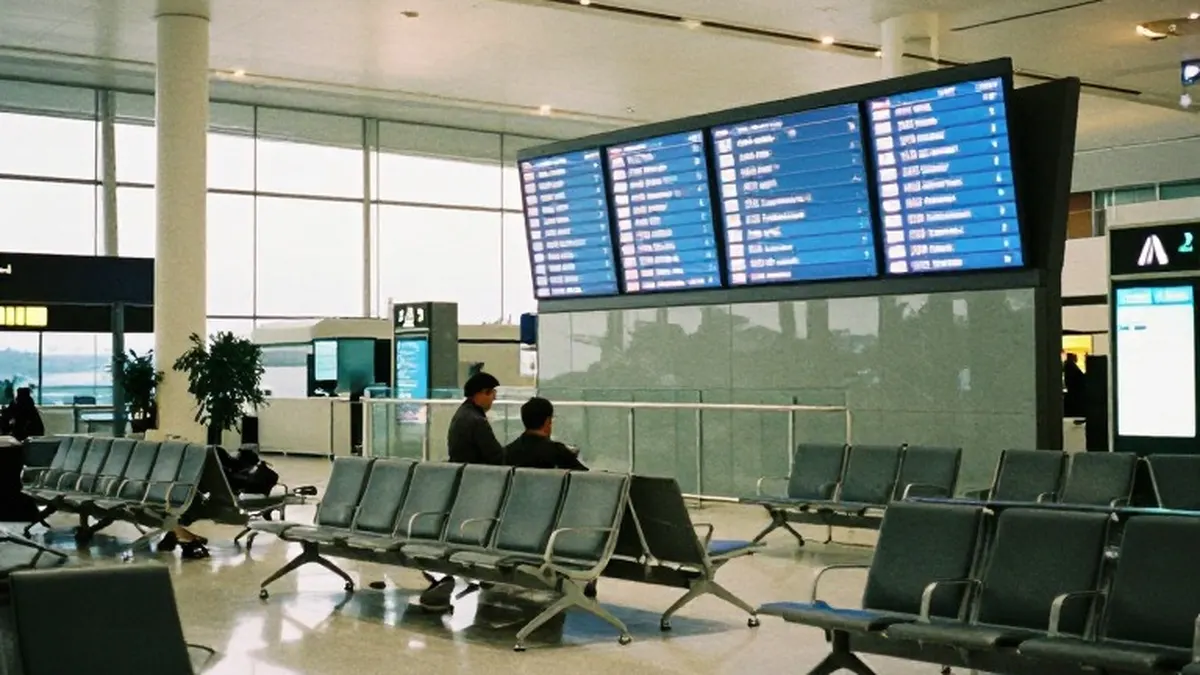
A nationwide ground stop declared by the Federal Aviation Administration last week has underscored the vulnerabilities of the United States air traffic control system. Rossana D'Antonio, the president-elect of the American Society of Civil Engineers, experienced the disruption firsthand at John F. Kennedy International Airport. Her flight to Los Angeles was canceled, leaving her stranded overnight at the airport after hotels filled up. The incident has reignited discussions about the reliance on infrastructure that dates back to the 1980s.
D'Antonio described the situation as a confirmation of long-standing warnings regarding the system's age. She noted that the industry has known about the outdated technology for years but has not acted quickly enough to address it. The recent failure serves as a stark reminder that the nation's airspace management still depends on antiquated tools despite the high volume of daily flights.
FAA Administrator Bryan Bedford acknowledged the issues during a speech at the American Aviation Leadership Summit in Washington. He described the current setup as a patchwork of archaic federal telephone networks. Bedford emphasized the urgent need to transition away from this legacy infrastructure while ensuring that safety standards remain uncompromised during the transition.
The agency has identified the initial cause of the telecommunications failure as work to install a router at a remote facility in Arkansas. This task was part of a broader effort to replace obsolete copper wiring with modern fiber-optic cables. Although the exact cause of the meltdown is still under investigation, the incident marks the second nationwide ground stop since the September 11 attacks.
Former officials from the FAA and the Department of Transportation attribute the persistence of these old systems largely to chronic underfunding. Michael Huerta, who served as FAA administrator during the Obama administration, stated that the core issue is financial. The agency has been required to expand its operations while operating with reduced budgets, creating a difficult balance between investing in new technology and maintaining existing systems.
Maintaining the older networks is both fragile and costly because the equipment is obsolete. Connecting these legacy systems with modern fiber-optic compatible hardware presents significant technical challenges. William Voss, a former FAA executive involved in modernization efforts in the 1990s, warned that the agency has been spending substantial resources just to keep the old systems running. He compared the situation to managing an antique store within the world's busiest air traffic network.
Congress allocated $12.5 billion to upgrade the air traffic control system last year, providing a significant financial boost. However, Voss cautioned that the task is complex and has rarely been attempted in such a large leap. He expressed concern that the current administration is moving too fast without adequate time for planning and coordination. He specifically questioned why the failed upgrade was scheduled for a busy Friday afternoon, a time when disruptions would be most impactful.
Dave Spero, the national president of Professional Aviation Safety Specialists, agreed that the timing was questionable. He suggested that a midnight shift would have been a safer choice for such critical network work. The Government Accountability Office has also raised concerns about the accelerated timeline for modernization. A report published in September noted that the administration is prioritizing speed, which increases the risk of cost uncertainty and potential disruptions to national airspace.
The GAO report highlighted that the first phase of the modernization effort involves more than 11,000 distinct projects without an integrated master plan. Kevin Walsh, the director of the GAO's Information Technology and Cybersecurity team, explained that while this approach might function, it heightens the risk of outages, particularly given the propensity of older systems to fail. Transportation Secretary Sean Duffy defended the administration's pace, stating that staying on the old network makes the system less safe over time.
Experts suggest that the push for speed may also be a strategic move to demonstrate progress to Congress. Eric Soskin, a former Department of Transportation inspector general, noted that the FAA wants to signal that it is serious about completing this important effort after years of delayed modernization. Despite the recent disruption, former agency leaders believe the FAA will work hard to avoid another major shutdown. Michael O'Donnell, a former senior executive, expressed confidence that while minor disruptions are likely, another event of the same magnitude as last Friday is unlikely.