
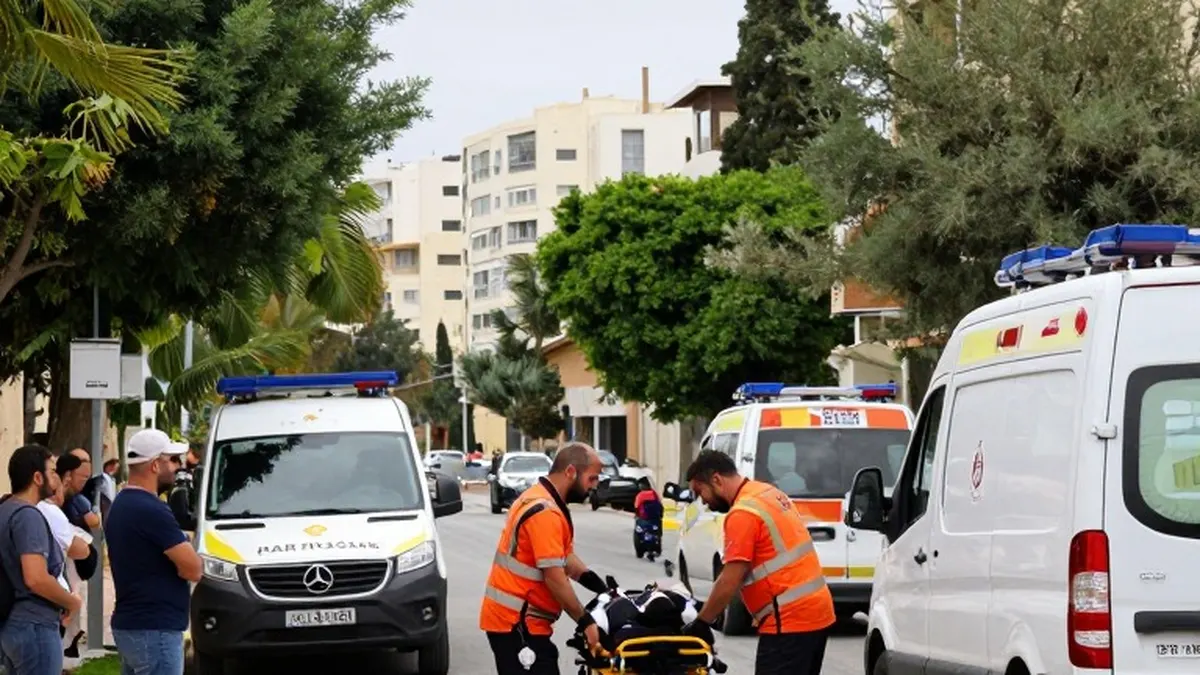
A 38-year-old man sustained serious injuries on Tuesday after being attacked by a wild boar in the northern city of Haifa, according to the Magen David Adom emergency service. The incident marked a notable event as wild boar encounters had previously shown a downward trend in the region.
MDA’s Carmel region 101 emergency call center received the report of the attack, prompting medics and paramedics to respond to the scene. The victim was found to be fully conscious but suffering from severe injuries to his limbs. He was treated at the scene and subsequently evacuated to Bnai Zion Hospital in a serious and unstable condition.
Hanan Zohar, the director of MDA’s Haifa station, described the situation upon arrival. He stated that the man was conscious and reported being attacked by a wild boar. The medical team provided lifesaving treatment, which involved stopping bleeding and administering necessary medications. The patient was then transported to the hospital in an MDA mobile intensive care unit.
This incident occurs against the backdrop of a University of Haifa study from 2024, which indicated that the frequency of wild boar encounters and the perceived harm caused by them had significantly decreased. The study noted this decline began approximately four months after Yona Yahav assumed the role of mayor.
A survey conducted in the first half of August 2024 revealed substantial changes in resident experiences. The percentage of residents who had never encountered wild boars rose from 10% to 31%, more than tripling the previous figure. Conversely, the proportion of residents facing encounters two to three times a week or more dropped from 27% in February to 10% by August.
The data also showed that the percentage of residents meeting a wild boar once a week or more fell from 52% to 34% over the same period. These statistics suggest a marked improvement in the city's management of the wild boar population during that timeframe.
Professor Itai Bar-Ilan, head of the Department of Public Administration and Policy at the University of Haifa, attributed the decrease to the municipality's policies. These measures primarily included the culling of wild boars in large numbers, along with auxiliary strategies such as installing fencing, frequently emptying garbage bins, and running public campaigns to discourage residents from feeding the animals.
The survey also highlighted public opinion on various management strategies. A significant minority, between 11% and 19%, opposed policies aimed at reducing wild boar feeding. Additionally, 78% of residents supported a catch-neuter-return-to-the-valleys program, although this method was not in use at the time of the survey, while 16% to 17% opposed it.
Public support for culling varied depending on the type of animal targeted. Eighty-four percent of residents supported the culling of adult and rogue wild boars entering urban areas. However, support dropped to 47% for piglets, pregnant sows, or lactating sows, with 45% of citizens opposing culling in those specific cases.
Professor Bar-Ilan concluded that the public's stance is complex. While the extent of culling in February 2024 was relatively low, leading to less criticism, the period from March to August 2024 saw the public benefit from reduced friction with wild boars. Yet, exposure to scenes and reports of the municipal approach also increased criticism. He noted that the Haifa public essentially prefers to have it both ways.





