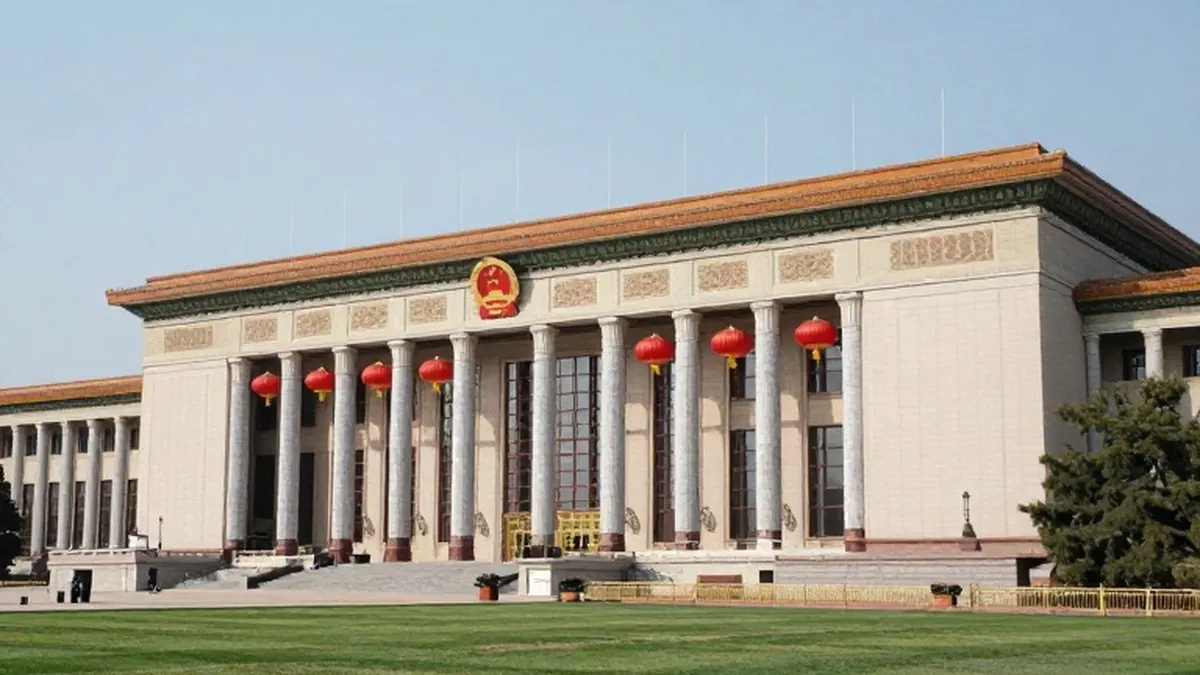
Chinese President Xi Jinping delivered a firm statement on the status of Taiwan on Thursday, declaring that the tide of history cannot be stopped. Speaking at the Great Hall of the People in Beijing, Xi characterized the resolution of the Taiwan question as an unwavering historical mission for the Chinese Communist Party. He emphasized that the complete reunification of the motherland must be achieved and is certain to occur.
The remarks were made during a speech marking the 160th birthday of Sun Yat-sen, a revolutionary hero who helped lead the 1911 revolt that ended imperial rule in China. While the event honored the founding father of the Republic of China, the primary focus of Xi’s address was the ongoing relationship between the mainland and the island territory. China continues to view the democratically governed island as its own, despite strong rejection of that claim by Taipei.
Beijing has repeatedly proposed a model of autonomy known as one country, two systems, a framework not supported by any major political party in Taiwan. In his address, Xi stated that China adheres to the policy of peaceful reunification and is willing to engage in dialogue with Taiwan while upholding the one China principle. He called for all Chinese people to join hands in opposing separatist forces and striving for the peaceful development of cross-strait ties.
Taiwan’s government quickly responded to the president’s comments. The Mainland Affairs Council stated that neither the government nor the people could accept the one country, two systems proposal, arguing that it would ultimately result in submission to the Communist Party’s rule. Council spokesperson Liang Wen-chieh told reporters that the specific wording regarding unification was not significantly different from past statements by Beijing.
Although Xi did not explicitly mention the use of force, a capability China has never formally renounced, the military situation in the region remains active. The Chinese military operates around the island on a daily basis and continues to extend its reach into the Pacific. According to Taiwan’s defence ministry, 29 Chinese military aircraft, including J-16 fighter jets and drones, were detected conducting a joint combat readiness patrol around the island in conjunction with warships starting Thursday.
The timing of the speech is significant as it comes just one week before the APEC summit in Shenzhen, a major tech hub in southern China. At the summit, President Xi is expected to meet again with US President Donald Trump. The address also arrives more than two weeks before local elections in Taiwan, a period of heightened political sensitivity.
The dynamic between Beijing and Washington regarding Taiwan has been a point of discussion in recent months. During a state visit to Washington in September, Xi urged Trump to show prudence over the island and called on the US to oppose its independence. Tensions were further highlighted in May when the US paused a 14 billion dollar weapons purchase by Taiwan. Trump referred to the pause as a very good negotiating chip in dealings with China, raising concerns that Taiwan’s security might be used in broader diplomatic negotiations.
As both nations prepare for their upcoming leaders’ summit, the rhetoric from Beijing suggests a continued emphasis on the inevitability of reunification. The interplay between military posturing, diplomatic meetings, and domestic political events in Taiwan will likely shape the immediate future of cross-strait relations.
Observers will be watching closely to see how the APEC summit in Shenzhen influences the tone of future interactions. The combination of historical framing in Xi’s speech and the practical realities of military patrols and economic ties creates a complex landscape for the region.
The statement serves as a reminder of the long-standing dispute over the island’s status. While peaceful dialogue remains the stated preference of the Chinese leadership, the assertion that reunification is a matter of certainty adds weight to the political pressure felt in Taipei and across the strait.