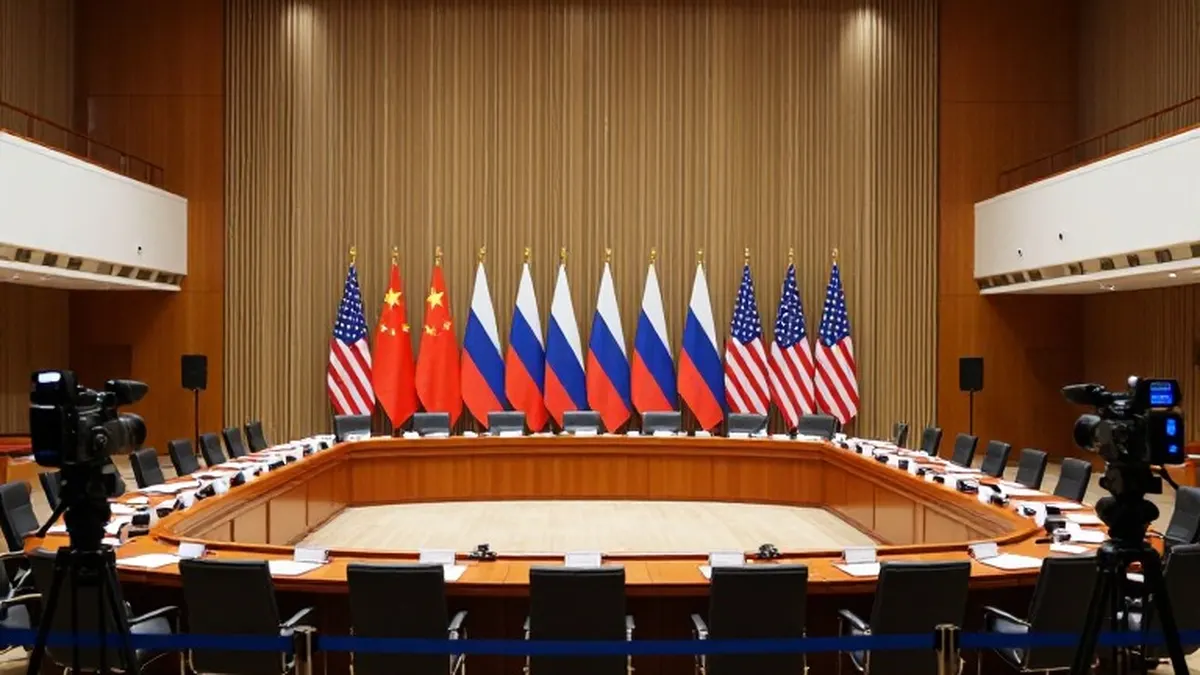
Chinese leader Xi Jinping and Russian President Vladimir Putin opened talks in Shenzhen on Wednesday, one day before a historic three-way summit with US President Donald Trump in the southern Chinese city. The meeting took place on the sidelines of the Asia-Pacific Economic Cooperation gathering.
Thursday's trilateral has raised alarms that the three leaders could settle the fate of Ukraine over the heads of Kyiv and Europe, and attempt to divide the world into 21st-century spheres of influence. Washington had initially signalled that Ukraine, which Xi firmly regards as not China's problem, was not expected to be discussed, before Trump said it would be.
Beijing has said only that the leaders would hold 'in-depth exchanges on safeguarding world peace and promoting strategic stability in major-power relations.' According to Washington, the Iran war and nuclear disarmament are also on the agenda, after a US-Russia bilateral treaty on atomic weapons expired in February. China has long argued that Washington and Moscow should shrink their vast nuclear arsenals before it will negotiate over its own smaller stockpile.
Chinese and Russian news agencies reported around noon on Wednesday that the two leaders had met, the fifth encounter between Xi and Putin this year, including one by video link. Putin has been shunned by the West since his 2022 attack on Ukraine launched Europe's worst conflict since World War II.
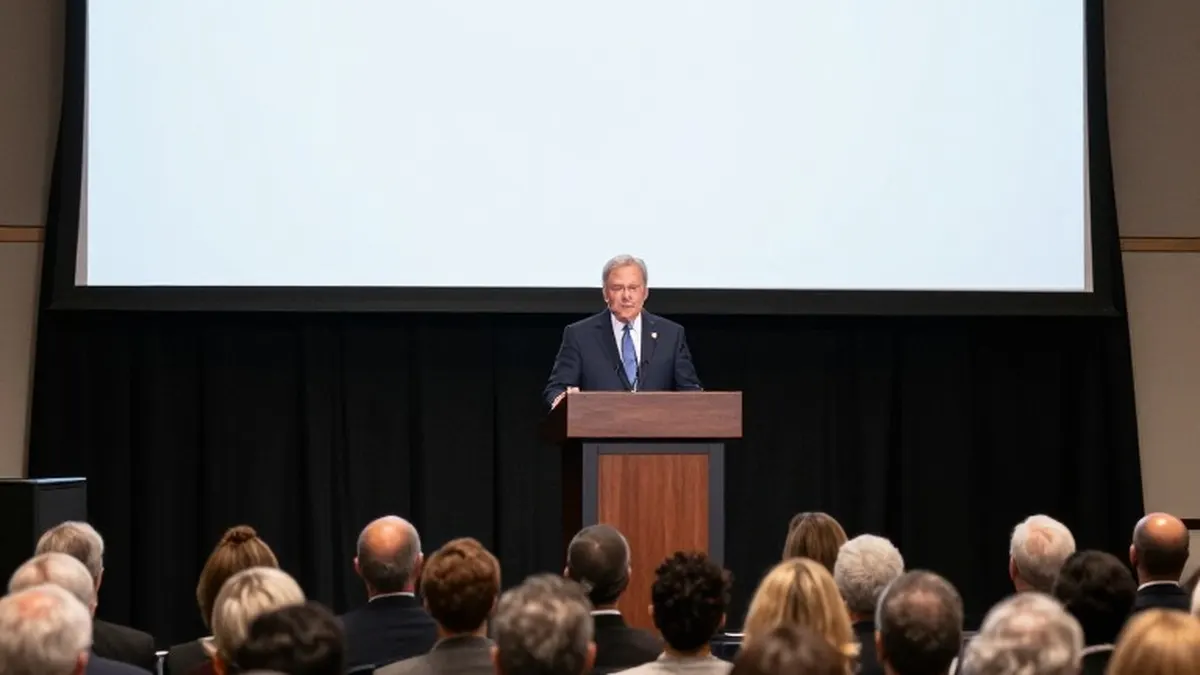
Addressing the APEC gathering on Wednesday, Putin said he expected the trilateral with Xi and Trump to be 'highly useful.' 'At a time when military-political risks are on the rise, what is desperately needed is unity rather than division .. and dialogue rather than ultimatums,' he said. He also argued that Western sanctions imposed on Russia since 2022 had failed, saying they were 'not capable of fully stopping growth or destroying the economies of the competition.'
Xi, for his part, used his opening address to call for closer international cooperation on artificial intelligence and free trade. 'Starting by lowering tariffs, expanding access and exploring regulations and management standards, China will conduct deep-seated reform,' he said. Russian officials said Xi and Putin were expected to cover energy and finance, followed by foreign policy, including Ukraine and North Korea, in a smaller format.
Trump was still in the Philippines on Wednesday, where a day earlier he met his fellow Quad leaders from Australia, Japan and India for the first time in his second term. The grouping is broadly aimed at counterbalancing China's regional influence. Trump said he was eyeing one-on-one talks with both Putin and North Korean leader Kim Jong Un at his next stop in Shenzhen, adding that Kim 'would like' to meet in China.
US Secretary of State Marco Rubio stopped short of confirming any meeting with Kim. 'If we have a problem with North Korea, the only way we're ever going to solve it is if we engage with them,' Rubio said in Manila. Trump was in the Philippines for a summit of the 11-member Association of Southeast Asian Nations, and his visit drew protests from around 2,000 people carrying banners reading 'Trump out now' and 'Reject Pax Silica,' a reference to a US supply chain initiative.
Trade friction has loomed over the regional gatherings. Chinese Premier Li Qiang on Monday denounced what he called a 'countercurrent of unilateralism and protectionism,' while Brazilian President Luiz Inacio Lula da Silva and Canada's Mark Carney both spoke of reducing their dependence on the US market. On Tuesday, Trump said the United States would catch China in rare-earths production 'within 10 months.' Hours before he landed in Manila, Washington unveiled rules requiring a special licence for companies shipping advanced AI chips to Singapore, Malaysia, Thailand and Indonesia, citing a 'higher-than-normal risk of diversion.' Singapore said it was exploring ways to facilitate 'trusted access' for firms based in the city-state.