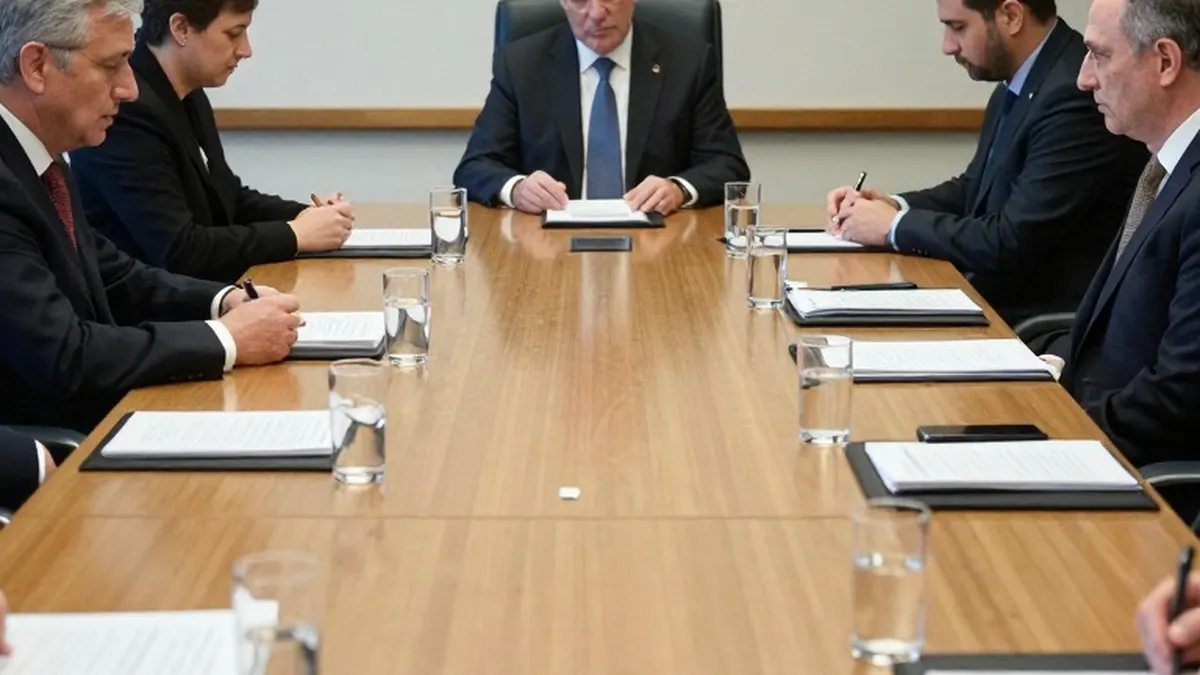
The Democrats party said on Monday, November 2, that it would recommend Yashar leader Gadi Eisenkot to President Isaac Herzog to form Israel's next government. The announcement places the party led by Yair Golan behind Eisenkot ahead of presidential consultations with party representatives scheduled to begin Wednesday.
Two other leaders in the bloc seeking to replace Prime Minister Benjamin Netanyahu had already announced the same choice. Naftali Bennett, who leads B'Yachad, and Avigdor Liberman, the leader of Yisrael Beytenu, both said they would recommend Eisenkot. The Democrats' decision adds Golan's party to those backing the Yashar leader for the task of assembling a government.
Eisenkot had previously argued that the opposition bloc should put forward the leader of its largest party as its candidate for prime minister. Before the elections, however, Bennett, Liberman and Golan did not announce an agreement within the bloc on that proposed arrangement for choosing a candidate.
The consultations at the President's Residence could result in Eisenkot becoming the first candidate to receive Herzog's mandate to form a coalition. If given that mandate, he would have 28 days to assemble a government, with the possibility of a further 14 days. The Democrats announced their recommendation before those talks had begun.
The endorsements come as the parties seeking to replace Netanyahu face a separate question over the composition of a coalition. Golan has called for the opposition bloc to form a government together with Arab parties, whose support the bloc needs to reach the required parliamentary majority.
Other opposition party heads had previously ruled out including Arab parties in a government. They said those parties were not viable coalition partners following the October 7 massacre in 2023. Golan's call for a coalition including them differs from the position those leaders had set out.
Election results left Netanyahu's bloc ahead with 53 seats in the next Knesset, compared with 48 for the opposition bloc. The opposition therefore lacks the 61 seats required for a majority without Arab party support. As Herzog prepares to hear the parties' recommendations, the announced backing for Eisenkot comes alongside that unresolved division over coalition partners.