For much of American history, ambitious Southerners headed north for college. Admissions counselors and students say the flow is now increasingly running the other way, with more Northeastern teenagers choosing campuses in the South.
Adam Whitney, a student at Boston Latin School, had never given much thought to the University of Tennessee. His admissions coach suggested it, and the application was free. After he was accepted, a former varsity hockey teammate home on break from the University of Alabama urged him to go. "Yo, you got to go," the friend told him, describing a lively social scene at big football schools. Whitney later toured the campus and was won over, even by the information session. He called his friend from the airport to say he was right.
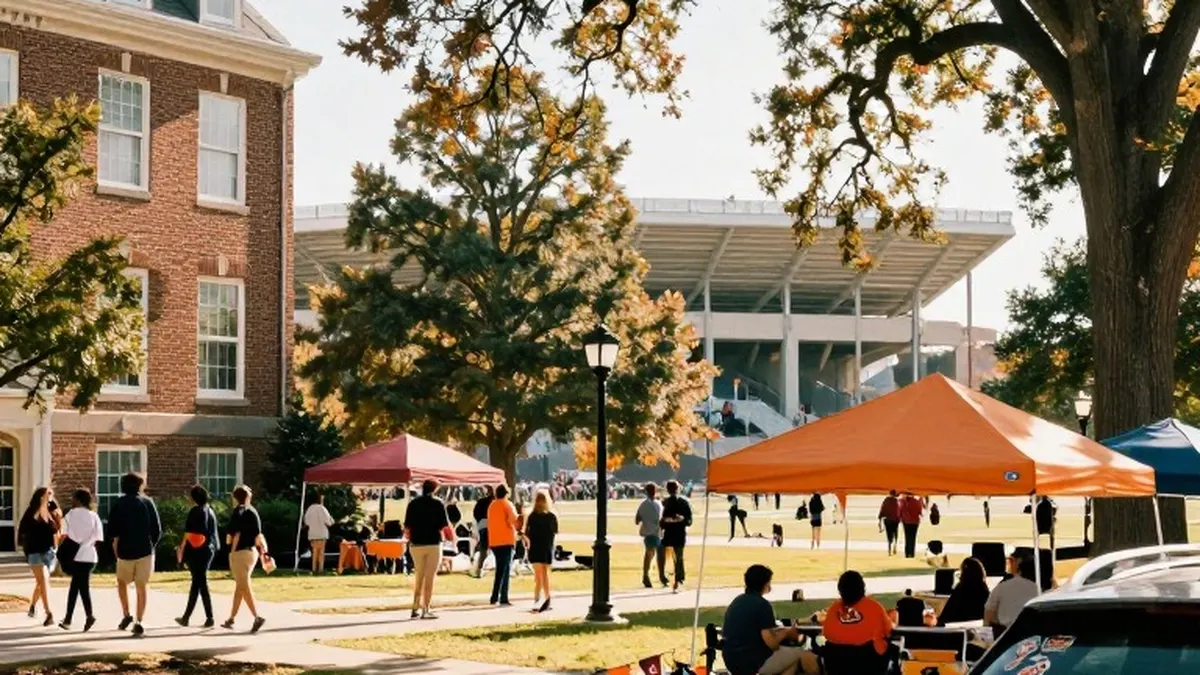
Students cite a range of reasons, including warmer weather, football culture, tuition that can cost less than at some Northeastern schools, attractive campuses and a break from heavy politicization. Jeff Selingo, author of "Dream School: Finding the College That's Right for You," said some Northeastern students felt politics was in their face every day.
Admission odds can also play a role. Krista Montesano Peterson, an admissions counselor with the New England-based firm College Goals, said that at equally strong schools it can be easier for Northeastern students to get into Southern institutions than ones closer to home. Geographic diversity gives applicants an edge, she said, as does the large size of many Southern universities. A growing number of Black students are also heading south to historically Black colleges and universities, sometimes because of family ties.
Kim Harrington Sokop, founder of Kim's College Coaching & Prep in Lynnfield, said the trend had been building but accelerated during and after COVID. Younger students remembered peers in the North confined to dorm rooms and taking classes over Zoom, while they watched social media posts from Southern campuses showing tailgates and football games. A 2024 Wall Street Journal analysis of Department of Education data found the number of Northern students at Southern public schools rose 84 percent over two decades and 30 percent from 2018 to 2022.
Schools are noticing. Coastal Carolina University in Conway, S.C., saw an 11.6 percent rise in applications from New England between the 2024 and 2025 cycles, according to Amanda E. Craddock, vice president for enrollment management. "Candidly, it surprises me," she said. Casey McManus, a senior at Ursuline Academy in Dedham, said the vibe at her school is to go south. She was admitted to her top choice, East Carolina University, where the two on-campus hospitals and the school spirit appealed to her as a prospective physician assistant.
Social media gives Southern schools a free boost, particularly through viral sorority rush videos and "day in the life" clips. Grace Donovan, now a freshman at Clemson University, said the videos she watched at Boston Latin often showed a huge tailgate in the background. Choosing between Clemson and the University of New Hampshire, she said the students she met at UNH on a rainy tour day felt like "just Northern kids."
The move does not suit everyone. One standout student from a western Boston suburb found the University of Georgia a "cultural mismatch," her mother said, citing sororities that were not inclusive, a student body dominated by Georgia residents, an overwhelming party and football scene and politics that were too conservative. She now attends school in Boston.
Some parents have reservations as well. Alexandra Chan of Portsmouth, N.H., said she felt a "creeping sense of dread" about big Southern universities because of the rollback of human and civil rights in some states. But after her son felt the same sense of belonging at Clemson that she once felt at Vassar, she was won over. "I'm a Tiger," he said.