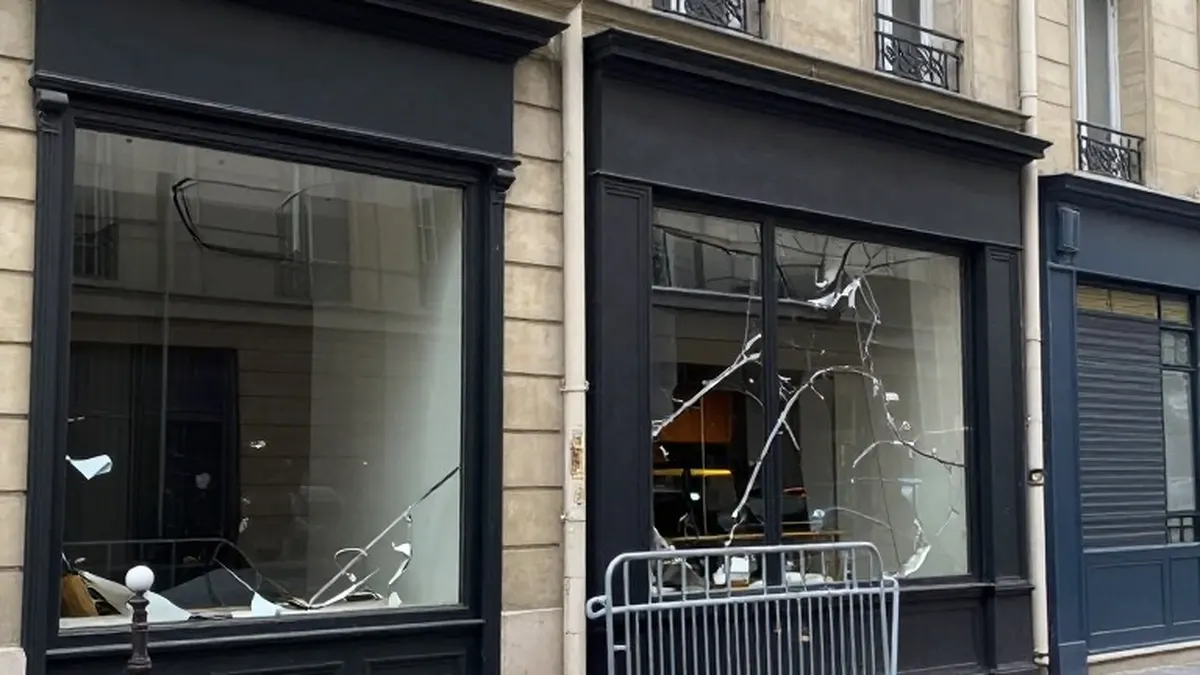
Weeks of protests in France have widened public anger over economic inequality and the government’s response to unrest, creating an opening for Marine Le Pen ahead of the presidential election next April. CBS News reported that 2,500 businesses had sustained damage and more than 1,500 police officers had been injured, with property damage reportedly exceeding $1 billion.
The demonstrations began in mid-September at a deteriorating high school in a working-class suburb outside Paris where many immigrant families live. Students were protesting teacher shortages and poor facilities. Malhia Garin, who joined an early demonstration at Saint-Ex, said students shared footage online, drawing widespread attention before protests spread to Paris, Marseilles, Lyon and other cities.
Within weeks, demonstrations were attracting half a million people. Parents joined to support students, workers protested living costs, and Black and Arab young people expressed frustration over employment discrimination. The initial demand for more education funding developed into a broader challenge to economic inequality, with much of the anger directed at President Emmanuel Macron and his government.
Some young activists have rallied behind Jean-Luc Melenchon, a 75-year-old former communist whose supporters describe him as a defense against authoritarian rule from the right. He declined an interview with CBS News. Several demonstrators interviewed by the broadcaster voiced fears about fascism, while others challenged capitalism and questioned whether voting alone could address what they considered an unfair political system.
The destruction intensified on Oct. 17, a month after the school protests began. Arsonists burned the historic town hall in Limoges, which opened on Bastille Day in 1883. In Paris, looters ransacked Jhemima Sheilha’s bakery. Sheilha, who arrived in France from the Democratic Republic of the Congo at age 9, built the business with her husband and employs dozens of people. She said the attack had cost her five years of work and left her questioning whether rebuilding would offer any lasting security.
Sheilha later confronted student activist Lola-Fleur Whittaker during a television appearance that spread widely online. Whittaker, 22, who is half-British and half-French, advocates ending capitalism and faced accusations of minimizing the looting. Asked about the bakery attack, she acknowledged that those responsible were wrong but argued that homelessness and other social suffering attracted less outrage than damage to businesses.
Le Pen, the longtime National Rally leader, has gained popularity during the unrest. CBS News described her as the presidential favorite after three unsuccessful bids. She blamed the extreme left for violence against people, police and property, while acknowledging that some students’ demands deserved attention. She rejected accusations of fascism, saying her party supported political pluralism.
Le Pen took over the movement from her father in 2011 and expelled him four years later as part of an effort to distance it from bigotry. He had been convicted and fined for Holocaust denial and hate speech. Her own embezzlement conviction last year has not diminished her popularity, according to the report. She maintains her innocence and said she had taken the case to France’s highest court.
Immigration remains central to Le Pen’s message. She argued that excessive immigration destabilizes France and rejected the suggestion that discrimination explains employment difficulties among immigrant communities. She also said newcomers must adopt French culture and respect its laws, suggesting that people who reject those expectations could be forced to leave.