Nvidia investors faced a volatile start to the trading week as reports surfaced that the chipmaker's board of directors had convened to discuss the future of CEO Jensen Huang. Following media coverage of the board meeting, six analysts moved to downgrade the company’s stock between Wednesday night and Thursday morning. The uncertainty has cast a shadow over one of the most valuable companies in the world, with shares reflecting significant concern over leadership stability.
The scrutiny intensified after The New York Times reported that Huang had engaged in a second extramarital affair with an employee. This development came as the CEO was already under investigation for a romantic relationship with a woman whom U.S. intelligence believes is a Chinese spy. While Nvidia has not yet issued a formal public statement regarding Huang's status, CNBC confirmed late Wednesday that the board is actively deciding whether to remove him after more than three decades at the helm.
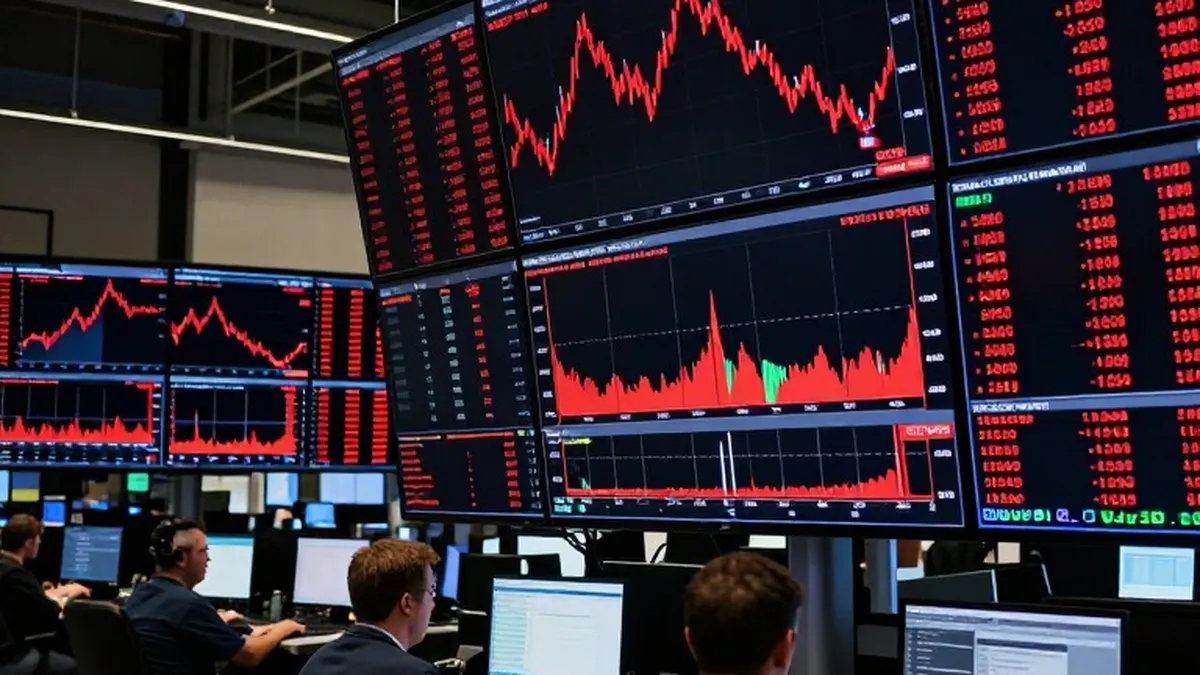
The stock market reaction has been sharp. Shares were down approximately 7 percent for the week, having dropped 4.3 percent on Monday and 5.5 percent on Tuesday as headlines dominated global news cycles. Although the stock rebounded by 2.9 percent on Wednesday, it was seen falling roughly 5.4 percent in premarket trading on Thursday. This volatility has prompted a wave of reassessments from Wall Street analysts who had previously been bullish on the AI leader.
Ben Reitzes of Melius Research, a longtime supporter of the stock, changed his rating from buy to hold. He lowered his price target to $185, down from $315, noting that the current crisis is unique in the tech sector. Reitzes compared the situation to HP in 2010, stating that while Nvidia is a stronger company, the speed of its market moves and geopolitical implications make the current crisis particularly challenging to navigate.
Mark Lipacis also downgraded Nvidia to in line from outperform, cutting his price target to $186 from $465. He cited the board's decision to hire law firm Wachtell Lipton to lead an investigation. Lipacis expressed concern that the lack of an obvious succession plan or a clear number two operational executive would lead to continued compression of the company's price-to-earnings multiple.
Other analysts echoed these concerns. Sebastien Naji of William Blair downgraded the stock to market perform, arguing that Huang's likely departure and heightened scrutiny would create a significant overhang on shares in the near term. Rick Schafer similarly moved his rating to perform, removing his price target entirely. He described the dual allegations as a one-two punch that forced the board's hand, expecting fundamentals to take a backseat to leadership issues for now.
Stacy Rasgon slashed his price target from $400, noting that while the business fundamentals remain intact, the uncertainty surrounding a potential new CEO adds complexity. He suggested that the stock is becoming cheaper as bad news is priced in, but the risk of further allegations and governmental investigations makes it difficult to advocate for a large position at this stage.
John Vinh downgraded the stock from overweight, stating that Huang's departure represents a material increase in strategic and execution risk. He believes it will be challenging for Nvidia to find a successor with the same leadership vision. Citi analysts also trimmed their target price to $225, suggesting that CFO Colette Kress could serve as interim CEO while the board evaluates external candidates.
Dan Ives, a renowned tech bull, described the situation as a dark day for Nvidia but remained confident that the company would navigate the turmoil. He valued the stock at $300 per share with Huang in charge and $225 without him. Meanwhile, UBS warned that the episode highlights the risks of concentrated portfolios in the AI sector, urging investors to maintain diversification as the trade matures.
Investors also pointed to the lack of succession planning as a key flaw. Richard Reyle, a CIO, noted that unlike Apple, which groomed Tim Cook to succeed Steve Jobs, Nvidia has no obvious replacement ready to step in. This gap in leadership planning has made the stock appear uninvestable for some, despite the company's strong position in the AI infrastructure market.