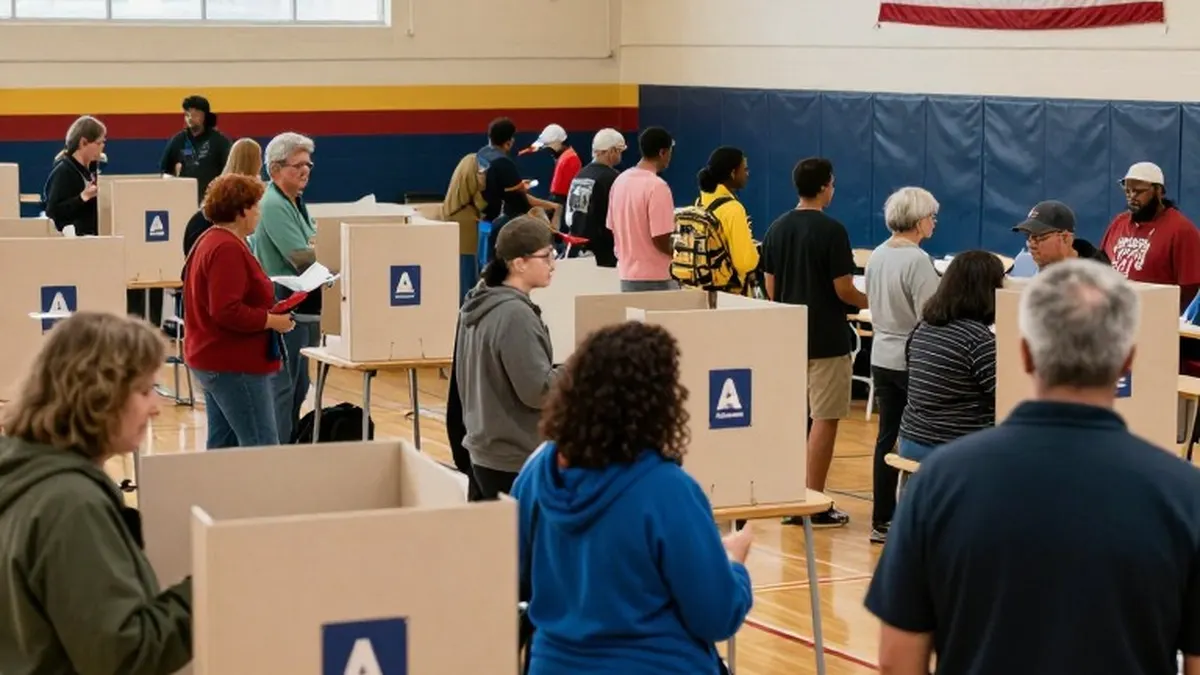
Hispanic voters played a decisive role in the Democratic victories that swept Tuesday's midterm elections, erasing much of the progress President Trump had made with Latino men in 2024 and swelling the ranks of Hispanic Democrats in Congress.
Exit polling from the firm BSP found that 17 percent of Latinos who supported Trump in the last presidential cycle cast ballots for Democrats this time around. Turnout also reached unprecedented levels, with 17 percent of Latino voters casting their first ballot in a federal election and 41 percent having joined the electorate since 2022.
Janet Murguía, president and CEO of UnidosUS, told reporters the early figures point to what will "undoubtedly be the largest turnout of Latino voters ever in a midterm election," with an estimated 14.5 million Hispanics going to the polls. She said Trump had urged voters to pretend he was on the ballot, and that Latinos responded by "resoundingly rejecting his extreme policies and actions and anyone who rubber-stamped them."
The shift is also visible in Washington. The Congressional Hispanic Caucus said its membership will grow to 56 lawmakers as the group marks its 50th anniversary, with 16 new members expanding its size by a net 12 seats. Some newcomers flipped seats held by Hispanic Republicans, others defeated Hispanic Democratic incumbents, and some won districts that had never had Latino representation.
Outgoing CHC Chair Adriano Espaillat (D-N.Y.) told The Hill the outcome defied expectations. Because of Republican-driven mid-decade redistricting, he said, "we may lose seats, and it was sort of the other way around. We gained them, or we overperformed."
Latino voters were also central to Democratic wins in Republican strongholds such as Texas, which Trump carried decisively two years ago but which now has a Democratic senator and elected Gina Hinojosa as the state's first Latina governor. Associated Press data showed roughly 7 in 10 Hispanic voters backed Democrat James Talarico in the Senate race against Republican Ken Paxton, after Texas Latinos split evenly in the 2024 presidential contest.
Economic anxiety was a major driver. BSP president Gary Segura said only 15 percent of Hispanics polled described their finances as "comfortable," half had nothing left after paying bills or struggled to cover them, and more than 4 in 10 expected a continuation of Trump's economic policies to leave them worse off within a year. Sixty-four percent viewed Trump unfavorably, and Segura said about 7 in 10 believe Republicans either do not care about the Latino community or are actively hostile toward it.
Immigration also loomed large. Espaillat argued that the aggressiveness of Immigration and Customs Enforcement operations, including detentions, deportations and killings, had a dramatic effect on Latino turnout. Several Latinos have been shot and killed by immigration officers during the first two years of Trump's second term, and more than 60 people have died in immigration detention since he took office. Segura said 76 percent of those polled want ICE reforms and 68 percent want the agency's funding pulled back.
Still, Segura cautioned that Latinos favor a nuanced approach, noting that 90 percent agreed with a policy statement calling for "a balanced and orderly immigration system" with an earned path to citizenship for long-term residents, accountable interior enforcement, legal immigration channels and a secure border. Murguía said the 2024 and 2026 results should convince the political establishment "that Latinos are indeed a swing vote," adding that she hopes both parties learn "that outreach matters."