Artificial intelligence has emerged as a significant factor in the dating scene, particularly in San Francisco, which served as the epicenter for the technology boom following the release of ChatGPT in 2022. Many residents now view AI as a critical dealbreaker or a key compatibility indicator. Some individuals explicitly state their aversion to the technology on their profiles, using prompts to signal that they will not get along with those who embrace AI tools. These statements are common among people working in fields such as the arts, nursing, and graphic design.
The impact of AI on romance varies widely among different groups. For some, feelings about the technology carry a weight similar to political affiliations, appearing alongside other identity markers on dating profiles. Others are grappling with the ethical implications of dating someone who builds AI, weighing the financial benefits against the uncertainty of the future. The rapid development of the industry has influenced long-term planning, including decisions about where to live and whether to have children.
Kyle, a researcher at an AI safety nonprofit in his early twenties, illustrates this existential uncertainty. He notes that some experts estimate a ten percent chance of human extinction due to AI, a possibility that shapes his conversations with potential partners. Kyle finds it difficult to discuss long-term life plans because he does not expect a stable future. He prefers to have these complex discussions in person so that dates can ask follow-up questions about his perspective. He is currently focused on finding a partner with whom he enjoys spending time, though he says he would need to think hard about dating someone who works in frontier AI.
In contrast, Bryan, who works at a frontier AI company, believes that feelings about the technology are largely irrelevant to romance. He argues that dating is more about how people communicate and have fun. Despite his job, he thinks that physical appearance and fitness are more likely to secure a match than AI affiliation. However, he acknowledges that wealth is always a plus, and he notes that many people have become wealthy through the AI sector.
The financial allure of the industry is evident in the dating market. With upcoming initial public offerings from major AI companies, matchmakers have reported that clients are specifying AI engineers as a preferred qualification. A CBRE report from August indicated that over 20,000 AI jobs were added to the San Francisco Bay Area’s tech workforce, even as overall tech talent contracted. The average salary for an AI researcher is around $300,000, making these roles highly attractive. One matchmaker even noted a client who booked a six-month stay in San Francisco specifically to meet a potential partner connected to an AI company going public.
AI is also seeping into the emotional aspects of relationships. Andromeda, an EMT and AI security analyst, is concerned about the unintended consequences of people turning to chatbots for emotional support. A study by Elon University found that 27 percent of Americans use AI chatbots for personal or social queries, and 38 percent said they share things with AI that they would not tell their partners. Andromeda is willing to date someone who uses AI to process intense feelings, but she is hesitant to date someone who relies on bots for basic emotional regulation, fearing that how they treat the chatbot may predict how they treat her.
Some individuals have taken automation a step further. Joseph, a 21-year-old software engineer, has outsourced his swiping on Hinge to an AI agent managed by a virtual assistant. The agent is fine-tuned to mimic his speaking style and sends tailored messages to potential matches. It determines compatibility and books dates for him. Joseph, who works long hours to launch his startup, says the system is highly successful, averaging two dates per week. The women he meets do not know they are interacting with an AI initially, and the goal is to meet in person.
Meanwhile, JJ, a 29-year-old former product designer turned AI safety worker, has stopped using traditional dating apps. She uses the Date-Me Directory, a platform with longform, resume-like profiles. Many users in this space mention the singularity, the point where technology overtakes human control, as a factor in their decision to have children. Some are unsure if they want kids before or after this potential shift. JJ notes that these existential concerns are common, with some people viewing the world as a place of potential suffering that might not be right for raising a child.
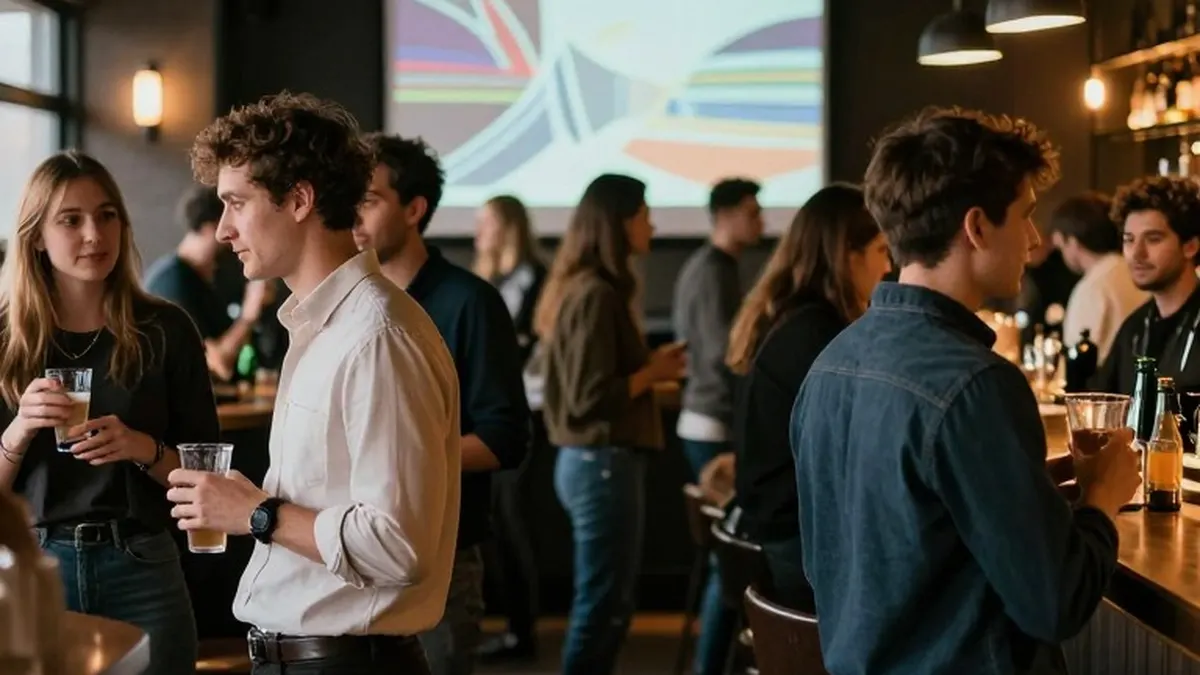
This tech skepticism has also led to a backlash, with stop the AI rallies appearing at major industry events. At local social events, such as a pop-up pitch night in the Mission District, people often highlight that their friends work in tech but are unhappy about it. Organizers of these events note that many tech workers are seeking analog, in-person connections to break away from their digital-heavy lives.
Despite the anti-tech sentiment, financial realities remain a strong draw. Lucy Segraves, a cofounder of a local dating event series, says that while it is popular to be anti-tech, she does not judge those who work in the field. She acknowledges that the money is there and that everyone is trying to make a living. The intersection of love, money, and existential dread continues to define the modern dating landscape in the Bay Area.