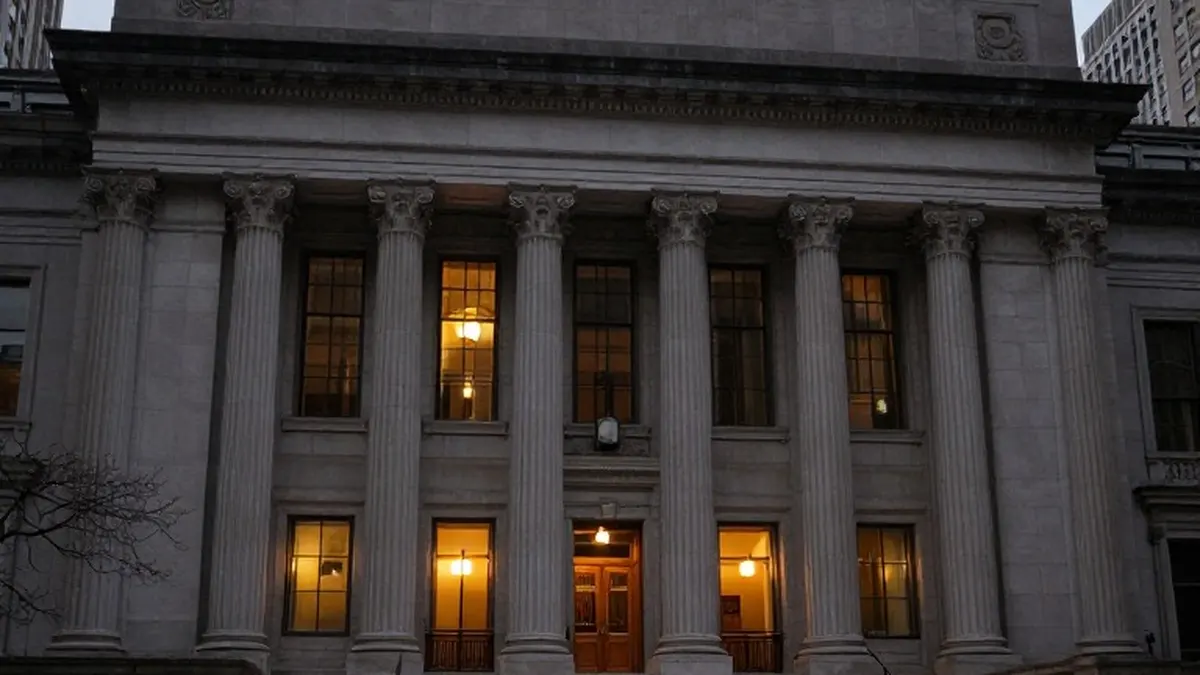
Alvin Hellerstein, a federal judge who spent decades presiding over some of the country's most closely watched cases, has died at 92. A spokesperson for the Southern District of New York confirmed his death on Wednesday.
At the time of his death, Hellerstein was overseeing the criminal case against Nicolas Maduro, the former president of Venezuela. He was also continuing to refuse a request from Donald Trump to move his criminal case from New York state court to the federal courthouse in the Southern District of New York.
Hellerstein took on the Maduro case in January, just days after turning 92, and drew some criticism for doing so. That criticism followed an earlier episode in which reporters observed him appearing to briefly fall asleep during the high-profile trial of a 32-year-old CEO convicted of defrauding JPMorgan in the $175 million sale of her startup.
Barry Pollack, an attorney for Maduro, said in a text message to CBS News, "We were saddened to learn of Judge Hellerstein's passing and offer our condolences to his family."
President Bill Clinton appointed Hellerstein to the federal bench when he was 64. Over the three decades that followed, he presided over major lawsuits tied to the Sept. 11, 2001, terrorist attacks, a federal suit against a convicted sex offender, and litigation involving evidence of abuse at Abu Ghraib prison in Iraq. He also oversaw the trial of Ponzi schemer David Hu, and last year ruled against President Trump's use of the Alien Enemies Act in a case about the deportation of Venezuelans.
In his final years, Hellerstein was a persistent obstacle for Trump. The judge repeatedly turned down the former president's attempts to shift his New York State criminal case into federal court, and his opinions often dismissed the arguments of Trump's lawyers, who contended that the underlying facts involved official acts carried out under the color of his office. A state jury later found Trump guilty in the case, which centered on reimbursements to former Trump attorney Michael Cohen for a payment made shortly before the 2016 presidential election to adult film star Stephanie Clifford, known as Stormy Daniels.
"Reimbursing Cohen for advancing hush money to Stephanie Clifford cannot be considered the performance of a constitutional duty," Hellerstein wrote. "Falsifying business records to hide such reimbursement, and to transform the reimbursement into a business expense for Trump and income to Cohen, likewise does not relate to a presidential duty."
A 2024 Supreme Court ruling on presidential immunity required him to revisit the question. The U.S. Court of Appeals for the Second Circuit directed Hellerstein to reexamine the immunity arguments in light of that decision. On Aug. 28, he ruled against Trump once more, writing that "the trial evidence does not infringe on presidential immunity."
Hellerstein had presided over matters connected to the Maduro case since 2014. Even so, lawyer and former federal prosecutor Duncan Levin said his death is unlikely to cause major delays. "There's no automatic pause, and there's really no fixed period of delay," Levin said, adding that a new judge could keep the existing dates or adjust them as needed. "One of the main qualifications of being a judge is that you can read a lot of paper. The fact that there's extra paperwork falls into their skill set."