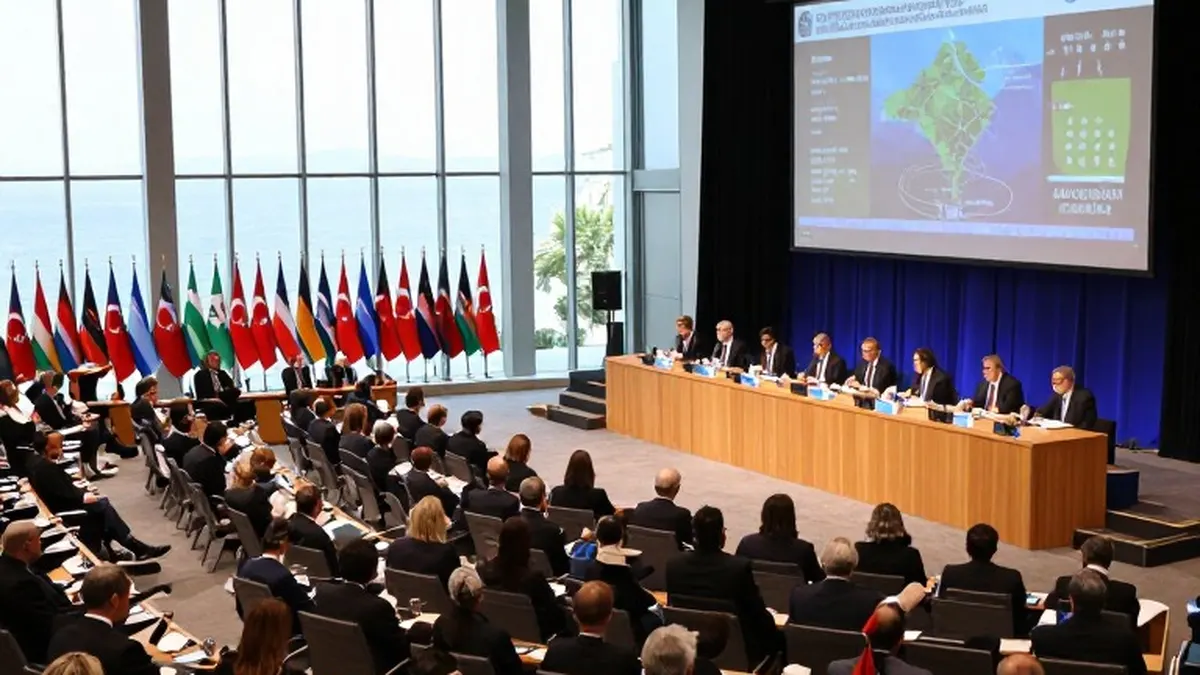
Australian Prime Minister Anthony Albanese delivered a speech at the United Nations climate summit in Antalya, Turkey, declaring that governments hold a solemn responsibility to act on climate change. The address, described as historic by the Prime Minister, highlighted the nation's progress in renewable energy and its commitment to the Pacific region. However, the speech notably omitted any reference to fossil fuels, a key driver of the climate crisis.
Albanese arrived in the Mediterranean resort city on Wednesday morning, where the Cop31 talks are hosted by Turkey and presided over by Australian Climate Change Minister Chris Bowen. The opening ceremony featured traditional whirling dancers and a global film, setting a formal tone for the discussions ahead. Just moments before Albanese took the stage, UN Secretary General Antonio Guterres had issued an unambiguous warning about the need to preserve the 1.5C temperature goal.
Guterres stated that keeping the 1.5C target alive means there should be no new coal. He emphasized that leaders from developed countries cannot continue to expand fossil fuel production while claiming commitment to this limit. The Secretary General outlined specific targets, noting that coal power must fall by at least 75% by 2035 to keep global heating within reach. He further argued that unabated coal power, which does not capture carbon dioxide emissions, must be nearly phased out by 2040, while oil and gas use should be reduced by a third.
Despite these clear directives, Albanese focused on Australia's significant climate successes. He pointed to the doubling of renewable energy generation over the past six years, a sector that now accounts for half of the country's electricity. The Prime Minister also highlighted the development of one of the world's largest markets for rooftop solar and battery storage. He expressed pride in Australia's role as a renewable energy leader and its advocacy for the interests of its Pacific neighbors.
The omission of fossil fuels in Albanese's remarks drew criticism from environmental leaders. Adam Bandt, former Greens leader and current chief executive of the Australian Conservation Foundation, argued that the Prime Minister had bluntly ignored the Secretary General's message. Bandt described the speech as a snub to the call for truth, noting that Australia is frequently called out for opening new coal and gas mines. He suggested that the government can no longer avoid addressing these issues.
Bill Hare, chief executive of Climate Analytics Australia and a veteran of Cop meetings, found it disturbing that a major fossil fuel exporter failed to mention the topic. He noted that 38 fossil fuel projects have been approved by the Albanese government since it came to power in 2022. Hare described fossil fuels as a dirty word and an elephant in the room, suggesting that a responsible leader would have outlined a pathway to move away from them.
Australia and Turkey are jointly seeking support for a global goal to ensure that 35% of final-use energy comes from electricity by 2035. This target represents an increase from the current figure of about one fifth. The initiative aims to address the growing energy demands driven by various sectors, including the rising power requirements for artificial intelligence.
During a roll-call of world leaders, Minister Bowen addressed the challenges facing international cooperation. He acknowledged that the world is questioning whether multilateralism can rise to the occasion amid a polycrisis involving climate change, energy security, and conflict. Bowen affirmed that international cooperation remains a viable path forward and expressed confidence that the two-week summit would provide a positive answer to these concerns.