A five-page internal strategy memo distributed to key allies by the campaign committee for Rep. Alexandria Ocasio-Cortez of New York outlines a significant evolution in her political role. The document contends that the lawmaker has transformed from a progressive firebrand into a formidable national force within the Democratic Party. Notably, the memo does not reference a potential bid for the presidency or the Senate in 2028. Instead, it urges stakeholders to view her track record as that of one of the party's most effective messengers for working-class voters.
According to the text, Ocasio-Cortez launched an aggressive nationwide effort to rebuild the party around economic populism following President Donald Trump's victory in the 2024 election. The goal was to establish a broad movement for working families. The memo states that over the past two years, she has built a record of success that extends beyond her own electoral victories. Candidates from both rural districts and battleground seats now view her endorsement as a valuable asset for their general election campaigns.
The document highlights the scale of her fundraising reach, citing more than 2 million contributions totaling $38 million. The average donation amount is listed as $17.56. Additionally, the memo notes that over $3 million has been funneled to other Democratic candidates and state parties. Her small-donor fundraising operation is described as unmatched in the House of Representatives and comparable to that of Sen. Bernie Sanders of Vermont.
The strategy behind this push was shaped by conversations with split-ticket voters in her New York district who supported both Trump and Ocasio-Cortez in 2024. These voters expressed deep, cross-partisan frustration with a political establishment they perceived as favoring corporate billionaires over ordinary workers. The memo states that Ocasio-Cortez argued the party needed to center its path to winning back working-class voters on confronting concentrated wealth and power while revitalizing American democracy.
The memo points to race-altering endorsements in key primary and general election races across California, Michigan, Pennsylvania, and Montana. It specifically highlights Abdul El-Sayed's Senate campaign in Michigan and Sam Forstag's Congressional primary victory in Montana as central case studies of her influence in rural and conservative-leaning areas.
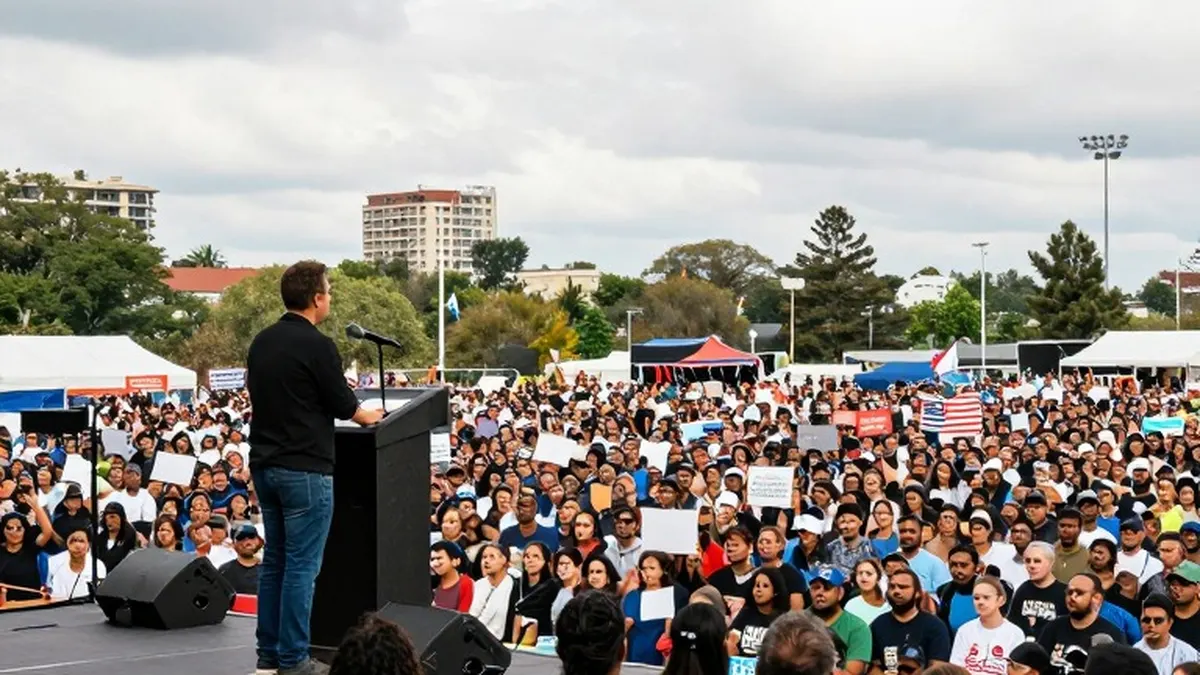
In Montana, Forstag trailed significantly in the polls before joining Ocasio-Cortez and Sanders on stage at their Fighting Oligarchy rally in Missoula. Following her endorsement and appearance at the event, he was able to erase the deficit and secure the Democratic primary victory.
The document identifies a turning point in her approach following an unsuccessful bid for the position of ranking member of the House Oversight Committee. This period also included a budget standoff in March 2025, during which Senate Democratic leadership accepted concessions during federal shutdown negotiations. In response to these developments, Ocasio-Cortez shifted her focus to taking her message directly to voters.
Speaking at a rally in Idaho, the representative laid out the central thesis of her national tour. She described the constant pressure felt in daily life, such as the rising cost of living and the fear of speaking up, as evidence of being governed by billionaires. She urged her audience to understand that these feelings are the direct result of the current political structure.
Since that time, the memo states that Ocasio-Cortez has held large-scale rallies in purple, red, and blue regions across the country. She has made endorsements that changed the trajectory of races in swing districts, deep-blue party primaries, and her home base of New York City.