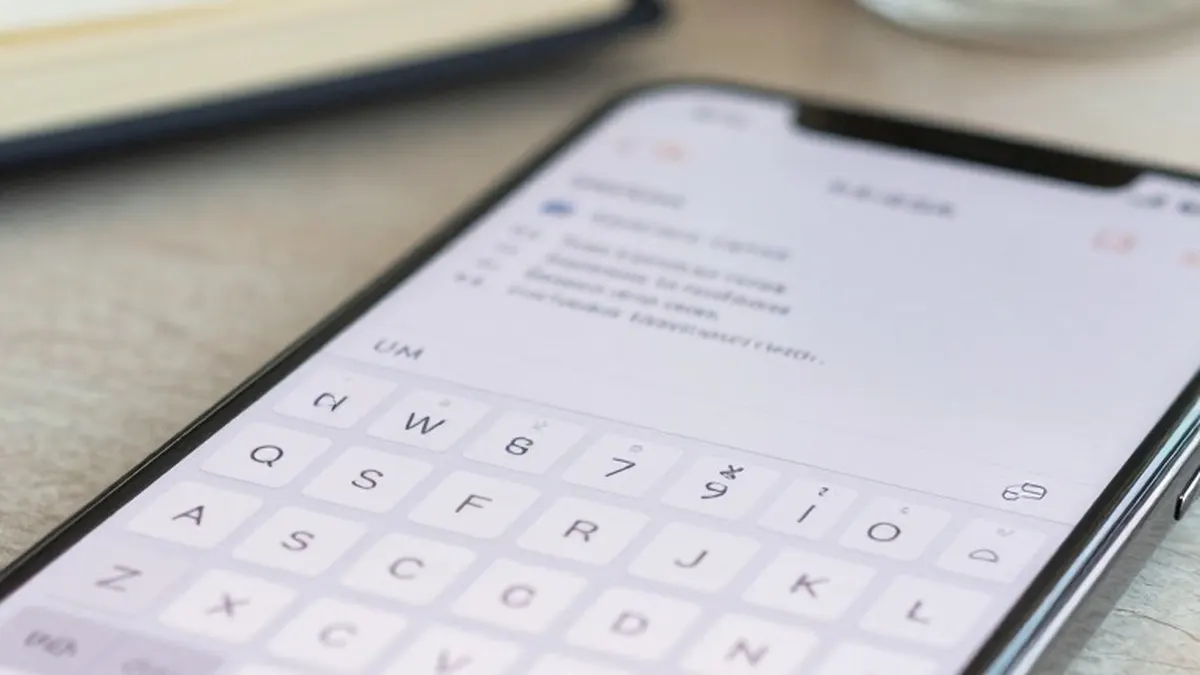
A software researcher has identified a comprehensive list of words and phrases that Apple prevents from appearing as predictive text on iOS devices. The discovery, reported by Reuters, indicates that the company maintains a hidden database containing more than 100,000 entries across every major language supported by the operating system. These blocked terms are filtered out of the keyboard's autocomplete and swipe-type functions, effectively hiding them from users who rely on predictive suggestions.
Derik Kauffman, the researcher behind the find, explained that the blocklist does not prevent users from typing the words manually. Individuals can still input any banned phrase one letter at a time. However, the keyboard will not offer these terms as suggestions. Furthermore, when using the swipe-typing feature, the system may automatically alter the intended text. For example, if a user swipes to type the phrase left wing conspiracy, the keyboard might correct it to left wrong conspiracy.
The majority of the entries on the list consist of offensive terms, slurs, and phrases related to sex and drugs. However, the database also includes a variety of political expressions. Notable examples found in the list include illegal immigrant, dictator Trump, sleepy Joe, covid was a hoax, and left wing conspiracy. The scope of the blocklist extends to less controversial phrases as well, such as Santa isn’t real and iMessage isn’t working.
Kauffman also noted several inconsistencies within the database. In some cases, a specific phrase is blocked while its counterpart is not. A prominent example of this discrepancy is the blocking of the phrase bad girl while allowing bad boy to appear as a suggestion. These irregularities suggest that the list may not be perfectly curated or that the filtering logic has certain quirks.
To uncover the hidden list, Kauffman utilized advanced AI tools, specifically OpenAI’s Codex and Anthropic’s Claude Code. These tools assisted in locating the data deep within the iOS file system. On his personal website, Kauffman described the data structure as a hash table. He was able to convert this hashed data back into readable text, revealing the full extent of the banned phrases. An independent researcher also told Reuters that they were able to obtain the same list, verifying Kauffman's findings.
Apple has a history of designing its keyboard to minimize the chance of presenting potentially inappropriate or offensive suggestions to users. In a statement to Reuters, the company confirmed that this is the intended functionality. Apple noted that while the keyboard filters these terms from predictive text, users retain full control over their input. They can always type their desired words manually or override the predictive text suggestions if they choose to.
The discovery highlights the extent to which tech companies curate user experiences through subtle software adjustments. While the blocklist is not visible to the average user, it plays a significant role in shaping the language that appears on the screen. The inclusion of political phrases and cultural references indicates that the list is updated to reflect current events and social sensitivities.
This revelation comes at a time when digital privacy and software transparency are increasingly important to consumers. Users are often curious about how their devices process and store data, especially when it comes to personal communication tools like the keyboard. The use of AI coding assistants to discover this hidden feature demonstrates the evolving landscape of software research and reverse engineering.
Apple did not immediately respond to a request for comment from The Verge regarding the specific details of the blocklist or its maintenance process. The company's previous statements to Reuters focused on the design philosophy of avoiding offensive suggestions while maintaining user flexibility. The findings provide a rare look into the behind-the-scenes mechanics of one of the world's most widely used mobile operating systems.
As smartphone keyboards become more intelligent, the balance between helpful automation and subtle censorship will likely remain a topic of discussion. The existence of such a large and detailed list suggests that Apple places a high priority on the user interface experience, even if it means hiding certain common phrases from the predictive text engine. The research serves as a reminder that much of the technology we use daily operates on invisible rules.