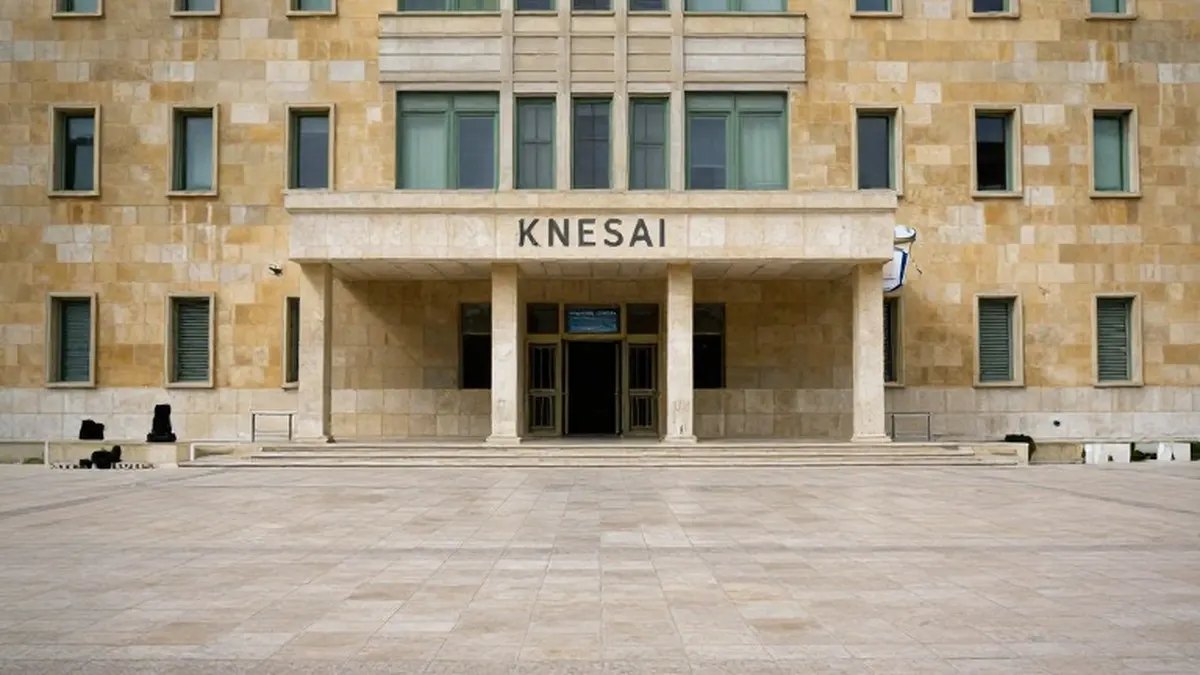
Israel’s Arab parties have emerged from last Tuesday’s election with unprecedented parliamentary strength, potentially giving them a decisive role in forming the next government. With counting complete, the Islamist Ra’am party increased its representation from five seats to eight, while the Joint List won 11. Together, they hold 19 of the Knesset’s 120 seats, as neither Prime Minister Benjamin Netanyahu’s bloc nor the opposition led by Gadi Eisenkot has enough seats to govern.
Arab voter turnout reached about 80 percent, compared with 53.2 percent in 2022. Analysts attributed the increase to fears about the outgoing government’s rhetoric and policies after four years dominated by far-right nationalists. Arab citizens account for around 21 percent of Israel’s population. Yohanan Plesner, president of the Israel Democracy Institute, said their participation reflected a desire for the political system to address their concerns, although its willingness to respond remained uncertain.
Among the issues driving voters were home demolitions overseen by National Security Minister Itamar Ben Gvir, particularly in Bedouin towns in the Negev, and his failure to address rising crime in Arab communities. Finance Minister Bezalel Smotrich’s threats to force Arabs from the land and his September plan to Judaize Arab-majority areas also heightened concern. Michael Milshtein of Tel Aviv University cited a postelection Kul al-Arab poll in which nearly 92 percent of Arab voters identified fear of the two ministers as their main motivation.
Ra’am already has experience in government. Led by Mansour Abbas and rooted in the Muslim Brotherhood, the party emphasizes social welfare and fighting crime. It joined the coalition led by Naftali Bennett and Yair Lapid in 2021, briefly helping remove Netanyahu from office. Abbas signaled after the exit polls that the party intended to turn its increased representation into political influence.
The Joint List faces a more substantial departure from its traditional position. Its constituent parties, Hadash, Ta’al and Balad, share a commitment to Palestinian rights and statehood. Hadash and Ta’al have nevertheless indicated flexibility to help replace the current leadership. Joint List leader Yousef Jabareen said the alliance was prepared to cooperate with an alternative government committed to changing policies he described as racist and ending Arab citizens’ political exclusion.
Resistance remains strong among potential coalition partners. Before the election, almost every party in Eisenkot’s bloc rejected cooperation with Arab parties, with Yair Golan’s Democrats the exception. International Crisis Group analyst Mairav Zonszein said accepting Arab support was effectively the opposition’s only route to removing Netanyahu. Hebrew University professor Gadi Taub opposed including the parties, describing them as anti-Zionist and accusing some of supporting terrorism.
Public opinion presents another obstacle. An Israel Democracy Institute poll shortly before voting found that a clear majority of Jewish Israelis opposed either Arab party having a role in government. Most respondents on the left supported participation or outside backing, while those in the center and on the right preferred another election.
Netanyahu and his supporters have also challenged the Arab vote’s legitimacy, alleging fraud and foreign interference. The Central Elections Committee said it was investigating suspected foreign funding irregularities. On Sunday, committee chairman and Supreme Court Justice Noam Sohlberg said the inquiry was serious and continuing, but that even substantiated suspicions would not invalidate the overall electoral process or results.
Saturday night brought protests both for and against cooperation, with larger supportive gatherings urging Eisenkot to act. Mohamed Darawshe, a political analyst at Givat Haviva, warned that exclusion by prospective Jewish partners could leave Arab voters disillusioned and less likely to participate in future elections at comparable levels.