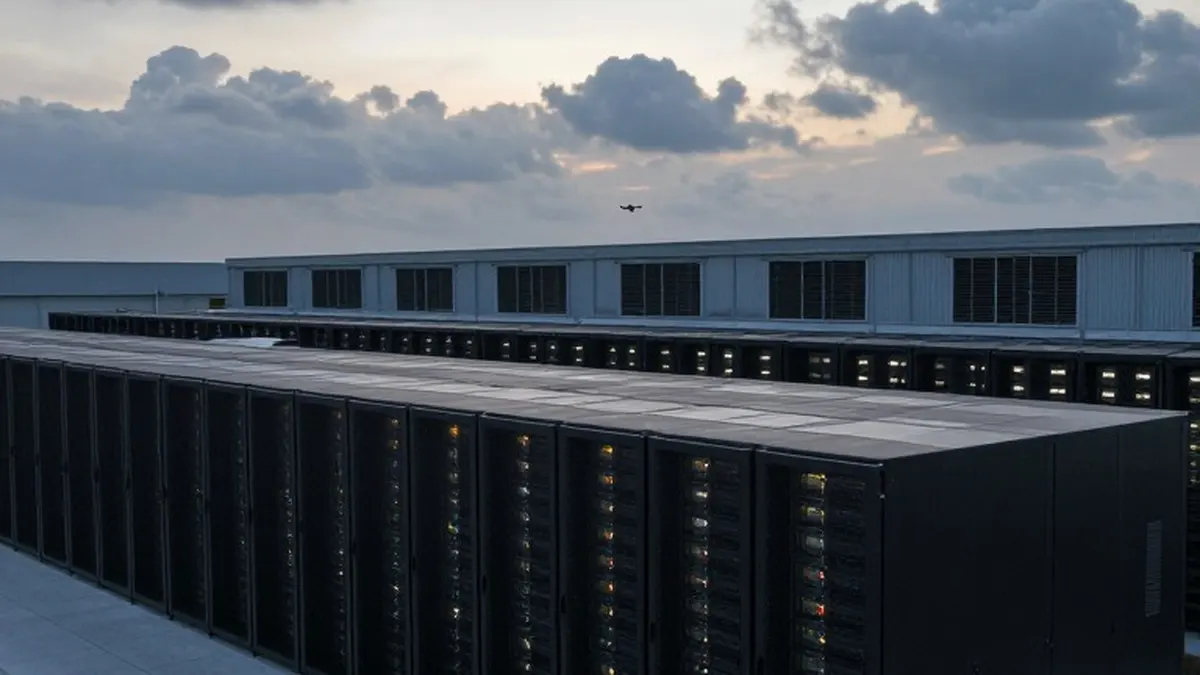
The landscape of cloud infrastructure security has shifted dramatically as military forces in the Middle East and Eastern Europe have begun to view data centers as critical targets. This year marked a historic first as Amazon data centers came under military attack in the Middle East. Simultaneously, Russia and Ukraine engaged in an unprecedented exchange of drone strikes aimed at each other’s data centers. To analyze the implications of these events for the cloud services that modern societies depend upon, Ars Technica hosted a live discussion featuring experts in defense and technology.
Joseph Jarnecki of the Royal United Services Institute joined Ars Technica Tech Reporter Jeremy Hsu to discuss the evolving nature of these threats. Jarnecki explained that the primary driver behind targeting public cloud data centers is the concept of dual use. This phenomenon is increasingly recognized in both public and private cloud environments. Militaries now utilize compute functions within these facilities for a variety of purposes, including running battlefield management systems, handling human resources, and managing resources.
Under international law and the principles of targeting adopted by militaries, civilian infrastructure can become a military object once it is used by a military force. This status makes such facilities attractive targets for adversaries who seek to disrupt operations. The incentive to strike these locations is strong because they support essential military functions while remaining part of the broader civilian digital ecosystem.
Beyond their strategic value, data centers are also targets for economic warfare. Jarnecki noted that relatively inexpensive kamikaze drones can inflict disproportionate economic costs and cause widespread cloud disruptions. This tactic has been observed in strikes on major Russian data centers, including those operated by Yandex, as well as American hyperscalers based in the Gulf region. The goal is to impose economic costs on an adversary in a manner that would be difficult to achieve through other means.
The cost efficiency of this strategy is striking. Jarnecki compared the massive investments made by companies like Amazon Web Services to build data center installations in the Gulf with the cost of Shahed drones manufactured and utilized by Iran. He estimated that the cost ratio between the value of the infrastructure and the cost of the munitions is conservatively 100 to 1, or potentially higher. This lucrative cost ratio provides adversaries with a powerful tool to degrade the economic outcomes of their targets.
The discussion also turned to lessons for cloud resilience that both governments and hyperscalers can learn. Major operators such as Amazon, Google, Microsoft, and Meta are reevaluating their strategies in light of these attacks. Understanding how to safeguard infrastructure against low-cost, high-impact threats is now a priority for the industry.
A key example of proactive defense was highlighted by Jarnecki, who pointed to the actions taken by Ukraine. When Russian President Vladimir Putin ordered the full-scale invasion of Ukraine in February 2022, Ukrainian authorities took steps to protect their cloud infrastructure. This early move to safeguard digital assets provided valuable insights into how nations can prepare for military targeting of critical cloud resources.
The conversation underscored that the era of data centers being purely civilian assets is ending. As militaries integrate cloud services into their operational frameworks, these facilities become legitimate targets in armed conflict. The ability of low-cost drones to disrupt high-value infrastructure means that economic and military objectives are increasingly intertwined in modern warfare.
For hyperscalers, the challenge is to maintain global service reliability while accounting for new geopolitical risks. The attacks on Amazon facilities in the Middle East and the drone strikes in Ukraine serve as stark reminders that cloud services are now central to national security strategies. Companies must balance the need for expansion with the need for robust defensive measures.
As the conflict in the Middle East and the war in Ukraine continue, the targeting of data centers is likely to remain a feature of military operations. The dual use of cloud computing ensures that these facilities will continue to be of interest to adversaries. The industry must adapt to this new reality, recognizing that resilience is no longer just a technical requirement but a strategic imperative.