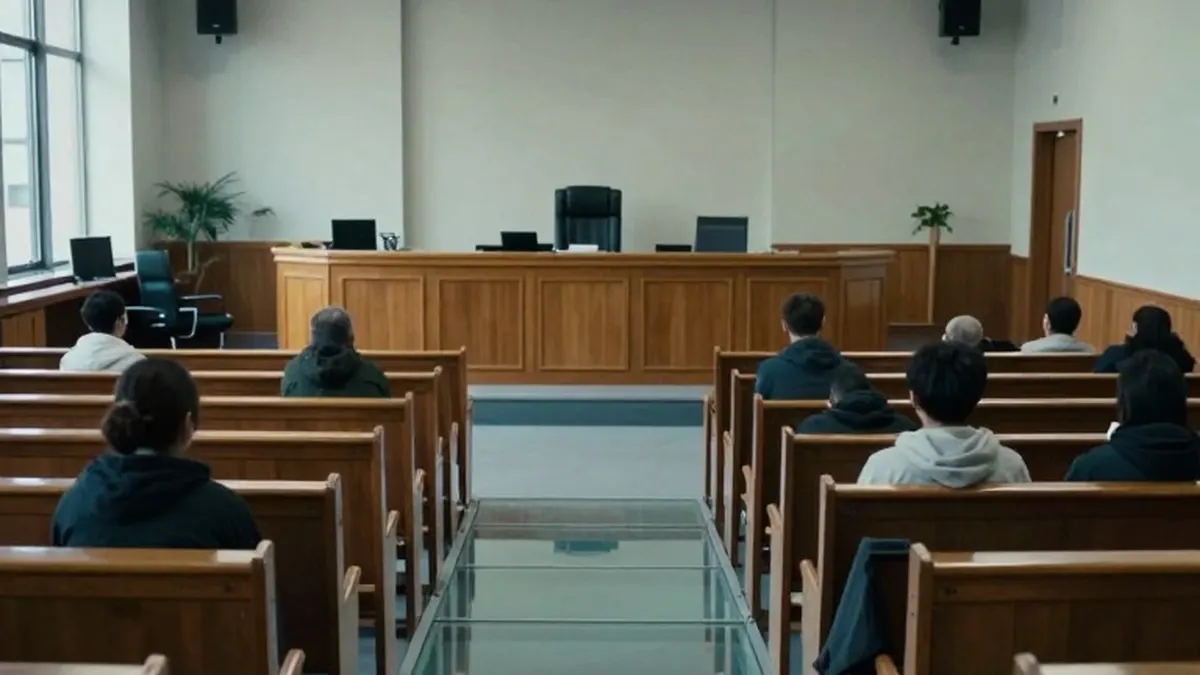
Russell Brand has begun serving a ten year prison sentence following his conviction for one rape and three sexual assaults. The former comedian stood in the glass dock at Southwark Crown Court in London while Justice Bennathan delivered the verdict. The judge spoke directly to Brand, referencing a specific incident where the actor launched himself at an unknown woman in a studio corridor. Justice Bennathan noted that while Brand's companions may have viewed the act as outrageous laddish behavior, it was also a criminal sexual offense. The judge concluded that Brand had not ultimately gotten away with it.
The path to this conviction was paved by a joint investigation conducted by Channel 4's Dispatches and The Sunday Times. Published in September 2023, the report detailed serious allegations that Brand had sexually assaulted four women between 2006 and 2013. Brand denied any wrongdoing throughout the process. It is worth noting that none of the women featured in that documentary were involved in the recent criminal trial. However, the Metropolitan Police are understood to be investigating at least one of those complaints, which may lead to further charges against the former Hollywood star.
Brand had long cultivated a persona of degeneracy, which allowed him to operate in plain sight for many years. It was only after the 2023 investigation was published that police opened a formal case. It remains unclear whether the media spotlight prompted more women to come forward, a point repeatedly argued by Brand's lawyer Ian Winter, or if it simply gave authorities the resolve to investigate a high profile celebrity.
Brand is not the only prominent figure to face legal consequences after media scrutiny. In 2023, news anchor Huw Edwards, then the highest paid journalist at the BBC, was the subject of a Sun exposé. The report revealed an inappropriate text based relationship with a teenager during which Edwards paid for nude photographs. Although that specific instance was not unlawful, Edwards was arrested less than a year later. He was eventually convicted of making indecent images after police found videos of children as young as seven on his phone, which he had received from a pedophile to whom he had also gifted cash.
Actor Kevin Spacey has faced a similar trajectory of legal battles across the Atlantic. Following a 2017 interview with Buzzfeed where he was accused of assaulting a 14 year old boy, Spacey endured numerous criminal and civil trials. He has always denied misconduct and was ultimately acquitted on all nine counts of sexual assault at Southwark Crown Court in the UK. Despite the acquittal, his career has not recovered, and some jurors even asked to meet the Oscar winner after the trial.
The pressure of potential exposés has also driven celebrities to seek legal protection. Last month, comedian and author David Walliams sought an injunction to block a newspaper investigation into his alleged sexual misconduct. His lawyers argued at London's High Court that Walliams was likely to commit suicide if the story were published. The judge dismissed the injunction, ruling that suicidal ideation is not a sufficient ground to stop a publication in the public interest, while noting this did not confirm the allegations were true.
The Guardian published its report on Walliams on the same day as Brand's sentencing. The article accuses the former Britain's Got Talent judge of grooming young fans and harassment. One woman alleged that at age 15, Walliams drove her to his house and engaged in behavior she now considers assault. Walliams has denied all claims. While there is no active police investigation, his career has suffered significantly, with his agent dropping him and his books no longer being published.
Throughout his trial, Brand's celebrity status played a major role. Some victims were initially thrilled fans, while others were vulnerable due to his power. Justice Bennathan stated that Brand's fame was an intrinsic part of each offense, allowing him to commit the crimes. However, the judge also cautioned against punishing him more severely solely because of his fame.
These cases illustrate a shifting dynamic in the entertainment industry. While fame has often provided a buffer for misconduct, investigative journalism has increasingly dismantled that protection. When journalists turn their spotlight on alleged wrongdoings, whether criminal or not, that same fame can become the very factor that leads to a celebrity's downfall.