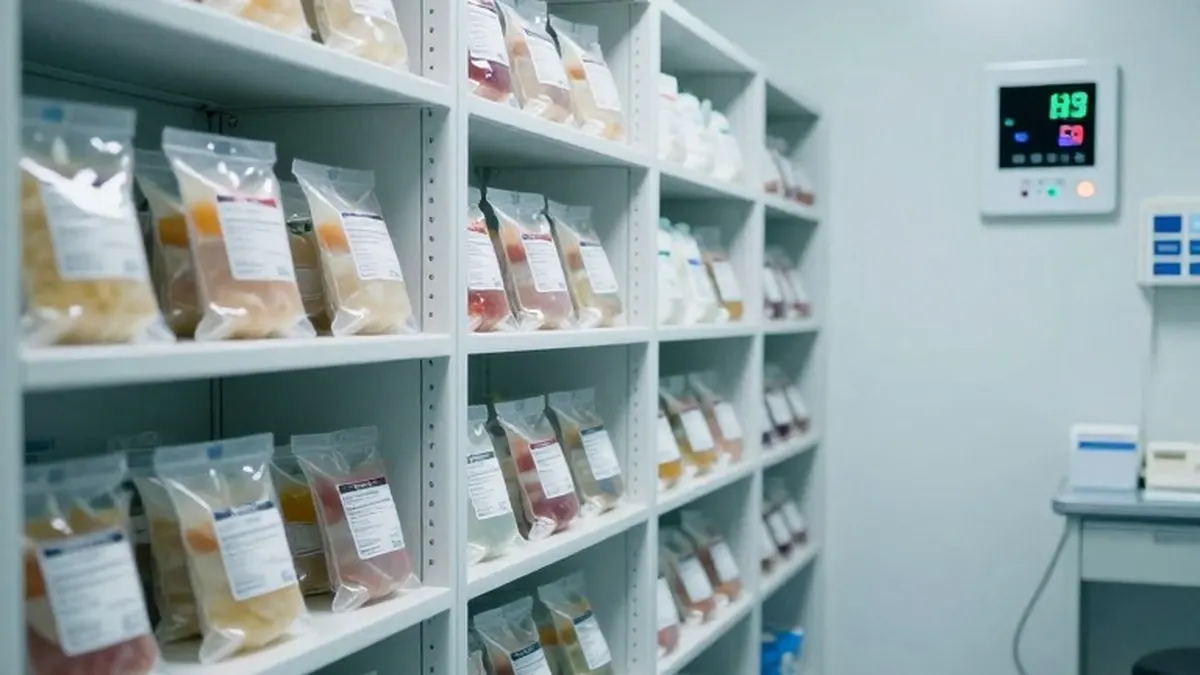
French authorities confirmed on Wednesday that a recent cyberattack targeting several blood banks was successfully thwarted before it could cause any significant damage to medical supplies. The incident involved an attempt to raise the temperatures inside cold-storage facilities to dangerous levels, a tactic that mirrors previous attacks on European retail infrastructure.
The French Blood Establishment, known as EFS, issued a statement late Tuesday explaining that temperature and defrosting thresholds were pushed to extremely high settings at three of its plasma storage sites on Monday. The organization noted that its monitoring systems quickly detected the anomaly, allowing staff to intervene in time to prevent any blood products or samples from being compromised.
According to a report by the French weekly newspaper Le Canard Enchaîné, which first broke the news, the hackers attempted to reset the internal temperatures from the standard minus 22 Fahrenheit, or minus 30 Celsius, to as high as 230 Fahrenheit, or 110 Celsius. The attack specifically targeted a supplier of refrigeration equipment serving the three affected EFS locations.
The facilities stored bags of plasma intended for patient transfusions as well as plasma used in the manufacturing of medicines. The EFS stated that all affected products were either secured or transferred to safe storage. The blood bank emphasized that no health consequences have been identified and that no blood products were lost during the incident.
Operations for blood collection and distribution have remained uninterrupted, ensuring that hospitals and other healthcare providers continue to receive necessary services. The refrigeration equipment supplier, Coolworld, acknowledged the cybersecurity incident in a public statement. The company explained that the vulnerability relates to a component from a third-party supplier that was outside of its direct control.
Coolworld added that only a limited number of units were affected and that it is taking appropriate measures to address the issue. France’s national cybersecurity agency and the Health Ministry are currently investigating the details of the breach. The Health Ministry has not yet indicated who might be behind the attack.
This latest incident follows a similar wave of cyberattacks in mid-October that targeted freezers and refrigerators at hundreds of supermarkets and independent stores across France, Belgium, and the Netherlands. Those earlier attacks resulted in the spoiling of tons of food and caused millions of dollars in losses for the affected businesses.
The Dutch supermarket chain Ahold Delhaize, which was among the retailers hit in October, provided updated financial expectations on Wednesday. The company anticipates that the cyberattack will reduce its fourth-quarter sales by as much as 281 million dollars, or 250 million euros. It also expects operating income for the period to drop by over 112 million dollars, or roughly 100 million euros.
Franz Muller, the CEO of Ahold Delhaize, stated in a release accompanying the company's quarterly earnings that while most disruptions were contained within two weeks, work continues to fully restore normal operations. He noted that cyber threats are an increasingly harsh reality in modern business.
The company previously attributed the October incident to malicious actions by external parties. In response, Ahold Delhaize proactively took several systems offline, including websites and apps for its various brands in both Europe and the United States, to mitigate further risks.