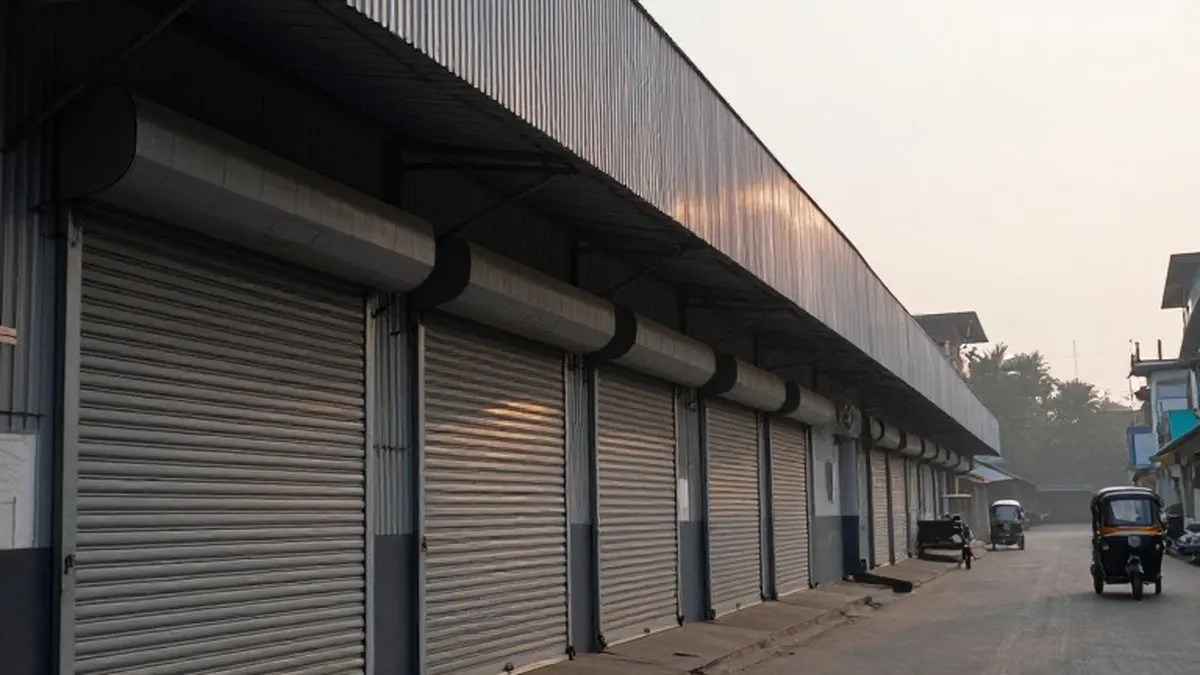
Dozens of garment factories in Bangladesh have been shut after workers went on strike to press their demand for a higher minimum wage, halting production across the country's main clothing manufacturing belt.
Nearly 150 sites were closed over the weekend in the textile hubs of Savar, Ashulia and Gazipur. On Sunday morning, workers massed on the Dhaka-Tangail highway in Gazipur and blocked the road, stopping traffic for about an hour before police stepped in.
The stoppages strike at the heart of the Bangladeshi economy. The garment industry generates nearly $40bn (£30bn) in exports every year and makes up 10% of the country's total GDP. It employs about four million workers, who produce clothes for major international brands including H&M, Primark and Zara. Bangladesh is the world's second largest exporter of ready-to-wear clothing after China.
The strikers are calling for a minimum monthly wage of 30,000 taka (£182). The current minimum stands at 12,500 taka, which employees say is not enough to deal with the cost of living crisis.
Police Supt Mohammad Amjad Hossain told the BBC that officers shut factories in the city after the workers walked out. He said 13 factories were closed on Saturday night and that "sixteen factories were closed during the morning unrest".
A "No Work No Pay" provision of the country's labour laws allows owners to suspend operations and withhold wages when production is disrupted, giving factory management a legal route to keep sites closed during the unrest.
Industry groups have responded by demanding security for their plants. The Bangladesh Garment Manufacturers and Exporters Association (BGMEA) and the Bangladesh Knitwear Manufacturers and Exporters Association (BKMEA) are calling for protection for factories. "BGMEA and BKMEA have questioned the justification of continuing to participate in wage board negotiations without any assurance that the factories will be protected," BGMEA President Mahmud Hasan Khan said, adding that factories unable to continue production because of the unrest would remain indefinitely closed from Monday under Bangladesh's labour law.
There are fears that a prolonged shutdown could have a knock-on effect for international buyers who rely on Bangladeshi suppliers, particularly if the disruption continues for a substantial amount of time.
The government formed a minimum wage board on 1 November to recommend a revised pay structure for workers. The board, chaired by a senior district judge, said at its first meeting that it would finalise its recommendations by the end of November. Once put in place, the revised pay structure is expected to take effect from 1 December.