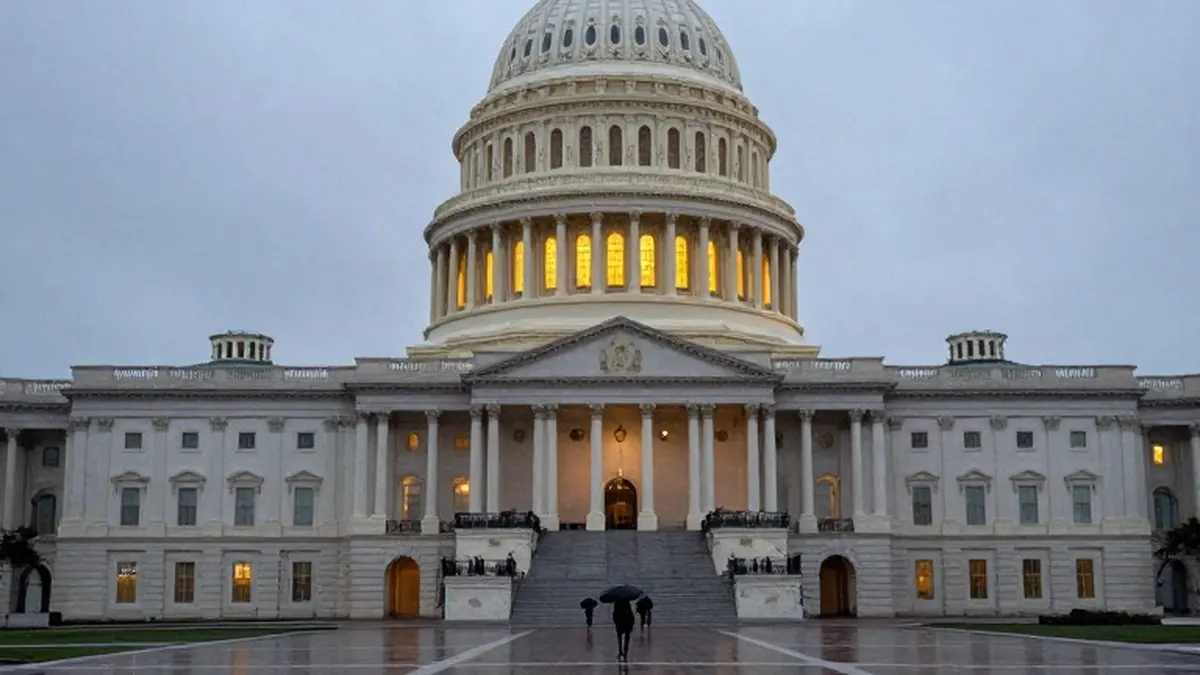
The House and Senate return to Washington on Monday for the final weeks of the 119th Congress with a crowded agenda and a new balance of power. Republicans return diminished after substantial midterm losses. Democrats won a commanding House majority, at least 255 of 435 seats, and could hold as many as 56 Senate seats, leaving them little incentive to cut deals with the GOP.
The most pressing task is funding the government. Current funding expires Dec. 11, and Congress must pass another continuing resolution to hold spending at current levels or a full-year set of appropriations bills to avoid a shutdown. Both require bipartisan majorities under the Senate's 60-vote filibuster threshold. Democrats are unlikely to negotiate a full-year deal before the new Congress, when their majorities will give them leverage over the White House.
Sen. Patty Murray of Washington, the presumptive chair of the Senate Appropriations Committee, wrote on X Tuesday as election results rolled in: "This former preschool teacher is going to teach President Trump a simple lesson: The power of the purse belongs to CONGRESS! It's NOT Trump's money. Taxpayer dollars belong to the American PEOPLE."
The spending talks will also proceed without Sen. Susan Collins of Maine, the current Senate Appropriations chair and one of the "four corners" of the negotiations, who lost reelection to Democrat Troy Jackson after five terms.
Sen. Kevin Cramer of North Dakota and other lawmakers want the debt limit raised before Republicans lose control. The federal debt hit $40 trillion for the first time in September, nearing the $41.1 trillion ceiling in the GOP's 2025 budget reconciliation law. The Bipartisan Policy Center expects Treasury to reach maximum borrowing capacity by mid-summer, and a Bank of America estimate from Nov. 6 said the country may be unable to meet all obligations by November 2027. Democrats may instead prefer to use the debt limit as a bargaining chip.
A pre-election permitting deal struck by top senators on the energy committees could now be in jeopardy, though the Senate plans a procedural vote to advance it Monday evening, according to a Senate aide. Democrats' resounding majorities may tempt them to sink the deal in hopes of a better one. Politico reported Thursday that House Minority Leader Hakeem Jeffries of New York, the likely next speaker, did not support it.
The National Defense Authorization Act faces its own hurdles. The House passed its version in July, authorizing more than $1 trillion in defense spending, but Senate Democrats blocked their chamber's version over concerns about the Iran war. "Donald Trump is dragging America deeper into a war in Iran with no authorization, no plan, and no exit strategy. Democrats will not go along," Senate Minority Leader Chuck Schumer said at the time. The bill drew business pushback for barring Pentagon contractors from buybacks and dividends without Defense Department approval, and Defense Secretary Pete Hegseth faces a vote on articles of impeachment when Congress returns.
Other priorities could get floor time. In September the Senate voted, with bipartisan support, to establish federal rules for college athlete compensation, but the bill has many House opponents, particularly Democrats. A yearslong effort to ban lawmakers from owning or trading individual stocks also remains unresolved. The GOP-led Stop Insider Trading Act passed the House with some bipartisan support in July, but Democrats objected that it would apply only to Congress and would not require divesting existing holdings.
Sen. Todd Young of Indiana, co-sponsor of the Senate version, wrote on X Thursday: "We have a great opportunity in the lame duck session to restore a small amount of trust by banning Members of Congress from trading stocks. I've been talking about this for many months, and it should be a no-brainer." Democrats want to claim the issue in the next Congress. Jeffries, in a letter announcing his candidacy for speaker, listed a stock trading ban among the party's anti-corruption priorities.