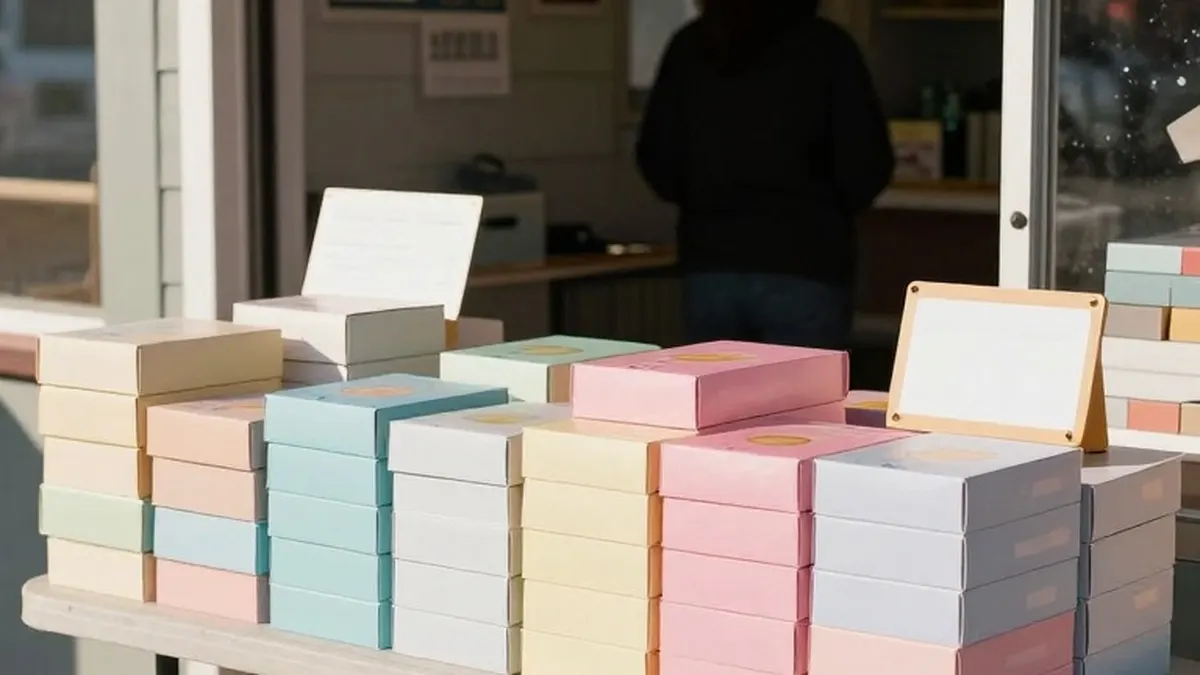
In a year crowded with heavy and dispiriting documentaries, Cookie Queens has stood out as a breath of fresh air. Directed by Alysa Nahmias, the film chronicles four young girls who, while facing varying forms of adversity, work to meet their goals during Girl Scouts cookie-selling season. The film premiered at Sundance, won the audience award at SXSW and has become the year's highest-grossing non-celebrity documentary.
In late October, Nahmias brought the film to the SCAD Savannah Film Festival, where it screened in the festival's Docs to Watch sidebar, followed by a Q&A. During the festival she also appeared as one of 10 directors of outstanding 2026 documentaries featured on its Doc to Watch Panel.
Nahmias has spent the past 20 years directing and producing documentaries, with a longtime focus on art and architecture. Her young children nudged her to make something they and their friends could enjoy. She was fairly sure she had found that project when a friend recounted being complimented by a young girl who then asked him to buy some of her Girl Scout cookies.
Nahmias, who was never a Girl Scout herself, though her mother was a Brownie, felt that following several Girl Scouts over one cookie-selling season could open up questions about girlhood and why women of all ages are underestimated. "I wasn't actually that interested in the cookies," she explains, describing the Girl Scouts element as "a delicious way in" and calling it "honey on the razor's edge" of thinking about what it means to be a girl in American capitalism.
Nahmias met with Girl Scouts of the USA but ultimately decided to make the film independent of the national youth organization that oversees Girl Scouts, which was founded in 1912 in, of all places, Savannah, Georgia. She set out to cast girls representing a diversity of racial and ethnic demographics, economic backgrounds and geography, eventually finding seven whose families consented to filming over a six-month stretch in which she and her team constantly traversed the country.
Stylistically, Nahmias drew as much inspiration from scripted portraits of childhood such as The Florida Project, Moonrise Kingdom and Petit Maman as from documentaries like Salesman, Spellbound and Boys State. One big takeaway was that she always shot from the kids' points of view. In the end, she cut the stories of three girls and focused the film on four: Olive, a smooth-talking go-getter who has something of a tiger mom; Nikki, who dreams of being as cool as her older sisters; Shannon Elizabeth, the sweet child of a financially strapped couple; and Ara, a diabetic with a bright-eyed view of the world.
Some might assume the film is a competition documentary in which the girls ultimately cross paths, but in fact they never met until after the film was locked. "I was never interested in how many boxes the girls sold," Nahmias emphasizes. "I was always interested in their inner journeys."