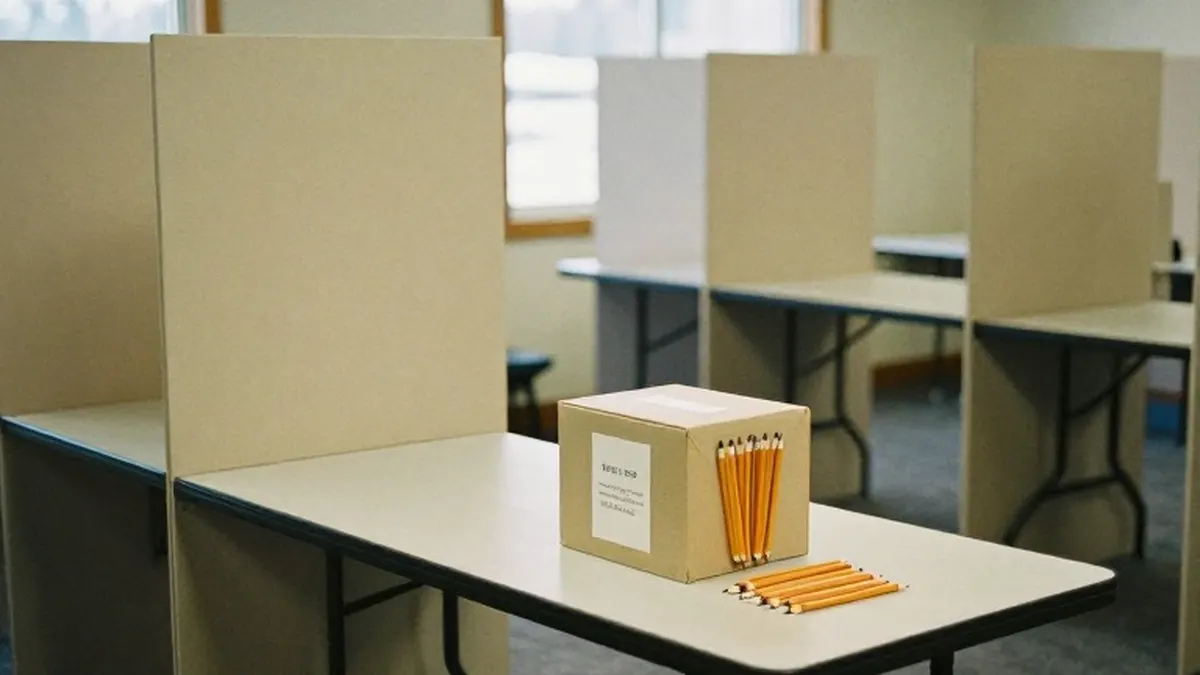
Alaska voters have rejected a ballot proposal to repeal ranked choice voting, NBC News projects, preserving a system that first took effect in 2022. The result marks another unsuccessful attempt to overturn the voting method, following a repeal effort that fell short by fewer than 800 votes in 2024.
The decision comes after the system drew scrutiny during the closing stretch of Alaska’s competitive Senate contest. A controversy involving a potential spoiler candidate intensified debate over an election process that supporters describe as empowering voters and critics say can be confusing.
Alaska’s system combines a primary open to candidates from every party with a general election in which voters rank their choices. All candidates appear on a shared primary ballot, and the four who receive the most votes move on to the general election. Voters then list those finalists in their preferred order.
If no candidate receives more than 50% of the initial vote, the count proceeds through ranked choice tabulation. The candidate in fourth place is removed, and votes cast by that candidate’s supporters are reassigned according to their rankings of the remaining contenders. Elimination and redistribution continue until one candidate has a majority.
One week before Election Day, The New York Times reported that Democratic Senate candidate Mary Peltola’s campaign had participated in recruiting someone who shared Republican Sen. Dan Sullivan’s name to enter the Senate race. Peltola and her campaign denied encouraging Dan J. Sullivan, a retired teacher, to run and denied involvement in his campaign.
The episode is being investigated at both the federal and state levels. Earlier in November, a federal judge dismissed an attempt by the Trump administration to segregate ballots cast for Dan J. Sullivan.
Advocates of ranked choice voting argue that it gives voters greater influence and encourages candidates to seek support beyond a party’s most extreme elements. They also say allowing voters to rank several candidates limits the impact of spoilers. Spoiler candidacies can occur under other voting methods as well, while opponents of ranked choice voting maintain that the process creates confusion.
Alaskans originally approved the system through a ballot measure in 2020. Alaska and Maine remain the only states that use ranked choice voting in statewide elections.