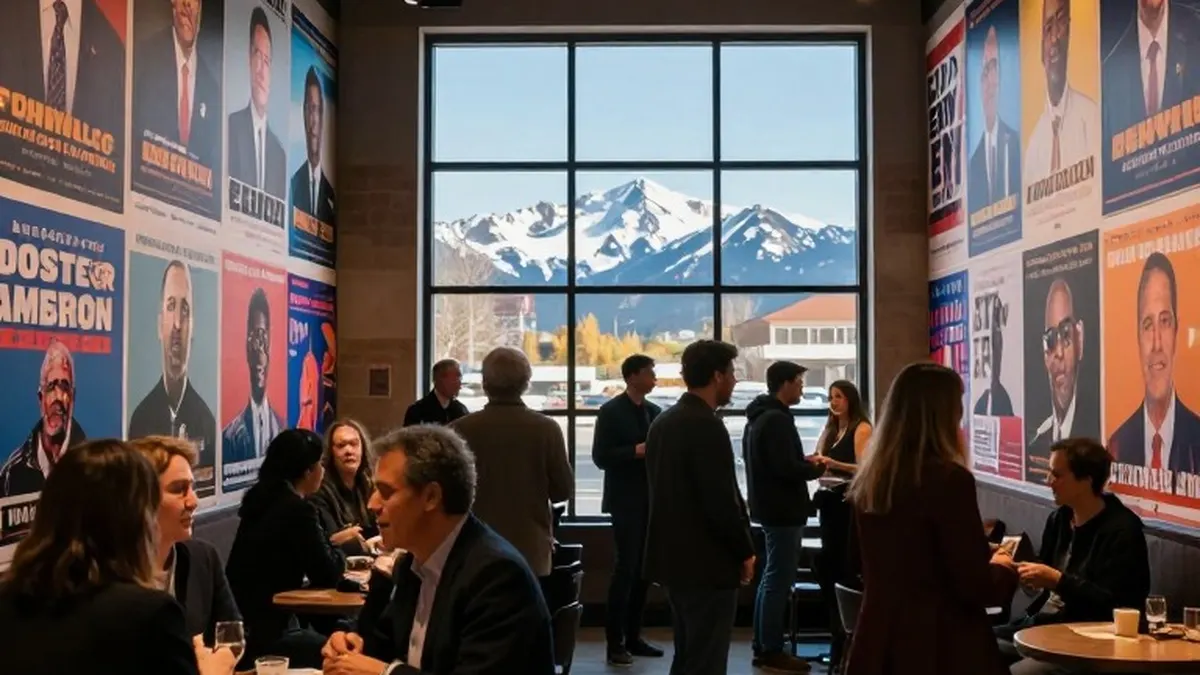
Democratic leaders and strategists gathered in Denver this week for the What's Next conference, an event that marked a significant shift in tone for the party. Following a sweep of the midterm elections, attendees emerged from the two-day session with a renewed sense of confidence, a mood that surprised many who had expected a more cautious strategy meeting.
The party recently secured victories in nearly every contested race, including flipping U.S. Senate seats in Mississippi and South Carolina. They also turned Texas blue and achieved substantial majorities in Congress. Political consultant Stephanie Valencia, co-founder of Equis, noted that the atmosphere was unlike any previous post-election gathering. She stated that the group arrived with a level of hope she had not anticipated, marking the first time the outlines of a post-Trump era became visible.
During the sessions, speakers frequently used the term supermajority to describe their new leverage. Data analysts presented scenarios for pushing the party's Senate presence to 60 seats, pointing to winnable races in states such as Missouri and Utah. This optimistic outlook prompted former Secretary of Transportation Pete Buttigieg to urge the group to celebrate their current standing while remaining vigilant about future challenges.
Despite the jubilation, some attendees cautioned that voter enthusiasm was driven largely by frustration over high prices, the Iran war, and government corruption rather than a deep renewed love for the party. No definitive economic plan was finalized during the conference, yet participants expressed confidence in their ability to address affordability concerns moving forward.
The energy was palpable among local activists. Jason Delattre, who traveled from the Rio Grande Valley after helping secure Democratic wins in Texas, described the new opportunities as stunning. He and his friend Jose Robbie Juarez emphasized the significant power the party now holds compared to previous years. The optimism extended to territorial issues, with Luis Davila, the Democratic chair for Puerto Rico, expressing belief that statehood is finally within reach.
Pennsylvania Governor Josh Shapiro, a potential presidential candidate, set an ambitious target for the next election cycle. He suggested the party should aim for 370 electoral votes, a figure five higher than the 2008 total achieved by Barack Obama. Shapiro argued that Democrats should fight hard for a landslide rather than merely scrapping for the 270 votes needed to win.
The conference was held at a prominent music venue in a trendy Denver neighborhood, with snow-capped mountains visible in the distance. The setting featured concert-style posters of political figures, creating a festive environment. However, not all attendees agreed on the party's direction. Protesters from the Sunrise Movement gathered outside, criticizing the event's sponsor, Majority Democrats, for being too centrist and influenced by wealthy business interests.
The likely new House speaker, Hakeem Jeffries, faced a brief interruption during his appearance. A couple of protesters demanded a Green New Deal and an arms embargo against Israel. One man shouted at Jeffries before being escorted out, but the speaker remained unfazed, joking that as a native of Brooklyn, he was accustomed to such scenes.
Internal debates also surfaced, with Maryland Senator Chris Van Hollen aligning with the liberal wing to argue for more change. New Jersey Senator Cory Booker described the leadership dynamics as a healthy family conversation, welcoming the dissent as a sign of a robust political future. He concluded that a new day is dawning in America.
Colorado Representative Joe Neguse highlighted the party's breadth, describing it as a big tent organization. He noted that the ideological spectrum covers nearly every element of Democratic thought, a diversity he found exciting for the party's future.