Michael Intrator, the chief executive of CoreWeave, informed CNBC on Wednesday that he has suspended his planned stock sale program. This decision follows the company's recent announcement of significant revenue growth and results that exceeded third-quarter expectations. Intrator explained that his 10b5-1 selling plan is currently on hold until there is a material change in the company's equity pricing.
On CNBC's Squawk on the Street, Intrator stated that any future sales would be limited to normal tax-related transactions. Under the original 10b5-1 plan, which was announced in November 2025, the CEO sold 8.26 million shares. These shares were sold at an average price of $96.14 each, generating a total of $794.2 million for Intrator.
The timing of this pause comes amid mixed sentiment regarding the company's stock performance. While shares have dropped 18% so far in 2026, they experienced a 20% rally on Wednesday following the earnings report. Intrator and his co-founders have previously faced criticism for selling stock while the share price struggled. The recent positive reaction from the market provided some relief to investors who had seen the shares decline by approximately 27% over the past month.
Beyond stock performance, CoreWeave has faced external pressure from a shift in the political landscape. Last week's midterm elections resulted in a sweeping victory for Democrats, which led to a sell-off in the stock. Intrator addressed these changes directly with investors during the earnings call held late Tuesday. He stated that the company does not anticipate any significant impact from the regulatory shifts that have occurred.
Intrator described the election outcome as a statement on how infrastructure should be built. He emphasized that the company intends to build responsibly. This assurance was provided in response to questions about new pressures arising from the election results. The company remains focused on its operational goals despite the changing political environment.
The earnings report itself highlighted strong financial health. CoreWeave reported year-over-year revenue growth of 168%, a figure that beat analyst estimates. Additionally, the company raised its forecast for the full year 2026. This positive data contributed to the stock's rally in extended trading after the initial release.
Broader market concerns have fueled anxieties that the artificial intelligence boom may be cooling. Rising interest rates and an unfavorable political environment have led some investors to worry that companies like CoreWeave will face difficulties in raising capital. These factors have created a challenging backdrop for the sector.
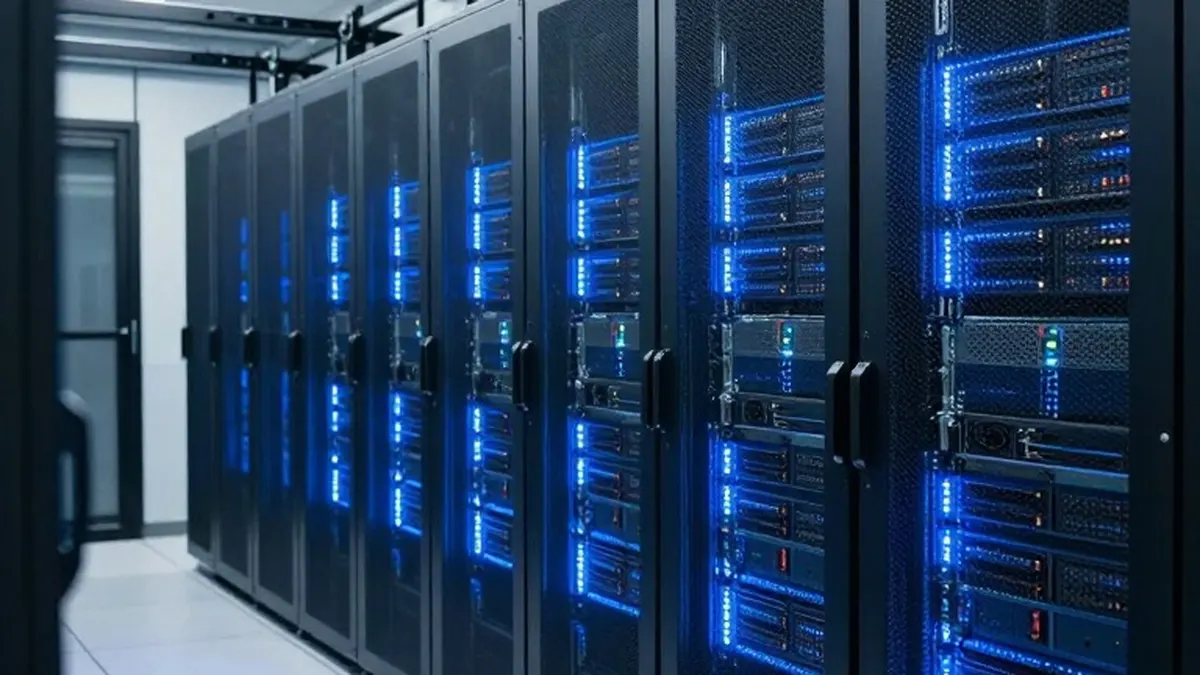
The political changes are particularly notable in the realm of data center development. According to Ballotpedia, voters in the November 3 elections supported greater restrictions on data centers in 40 out of 41 ballot measures across 10 states. Democrats also gained control of both houses of Congress and won governor races in key AI infrastructure states, including Texas, Ohio, and Georgia. In each of these states, the winning candidates favor some level of restriction on new data centers.
J.P. Morgan Asset Management noted in a post-election report that data center projects scheduled for 2028 and beyond are most exposed to these changes. The firm warned that such projects face greater uncertainty regarding permitting, power availability, and financing. However, CoreWeave maintains that it is not slowing down its expansion plans.
The company still anticipates having 1.85 gigawatts of active power by the end of 2026. It is now targeting full-year capital expenditures between $37 billion and $39 billion. This range implies 155% growth at the midpoint, which is close to the $37.69 billion that analysts polled by Visible Alpha were expecting. Intrator expressed confidence in the company's pipeline, stating that the message from voters is not a deterrent. He added that the company is always conscious of being good neighbors and sees the new political reality as an opportunity to continue scaling its business.