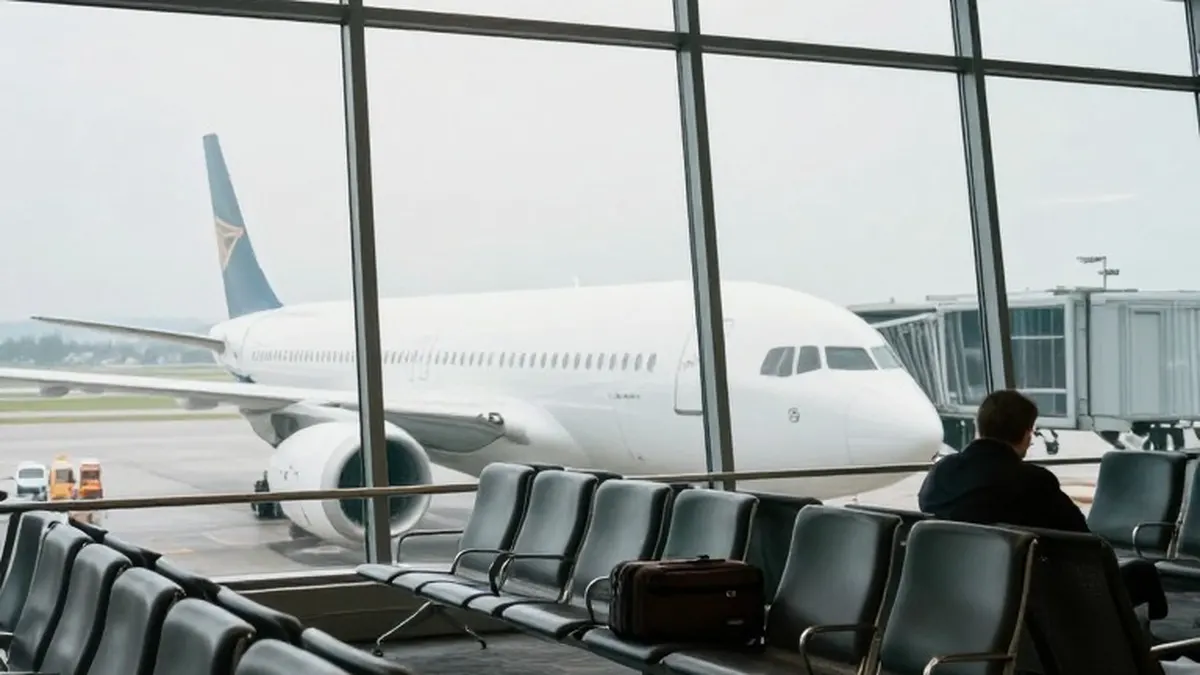
Air travel was recovering Saturday after a nationwide ground stop lasting more than four hours disrupted flights across the United States on Friday. Alongside a Microsoft outage believed to have affected millions worldwide, the aviation problems left some travelers questioning the reliability of the technology they depend on and wondering whether something more troubling was happening.
Administration officials attributed the aviation disruption to an upgrade that overwhelmed aging air traffic control equipment, producing intermittent gaps in communications and radar coverage. Federal Aviation Administration administrator Bryan Bedford said airline schedules were expected to return to normal by late Sunday. Microsoft said Saturday that its services were fully restored, explaining that a recent network change had exposed a problem introduced during an earlier capacity upgrade.
Both Microsoft and the FAA said they had found no indication of malicious activity. Even so, the disruptions stirred fears among people struggling to get home. Maxine Gustafson, a 34-year-old physician assistant from Minneapolis, was waiting for a rental car at Chicago’s O’Hare airport Friday so she and her colleagues could return from work training. “It makes you think, like, is this a cyberattack?” she said.
At Newark Liberty International Airport, 68-year-old Chuck Amasio of Rahway, New Jersey, returned Saturday after a canceled flight had forced him to spend the night in a hotel. He said the unusual events made him think about how attacks on airspace or power systems could damage an economy. His reaction reflected the uncertainty expressed by other passengers caught in the disruption.
Tori Perkins, 34, spent Friday night at San Diego International Airport while traveling from Hawaii to visit family in Florida. By Saturday morning, Terminal 2 listed 11 of its 62 flights as canceled and another 11 as delayed, although crowds were normal. Perkins said conflicting accounts made it difficult to know what to believe.
The shutdown also renewed attention on the air traffic control overhaul. Transportation Secretary Sean Duffy appealed Friday for tens of billions of dollars in additional funding. Since the overhaul began last year following congressional approval of $12.5 billion, the FAA has replaced thousands of copper wire connections with fiber optic lines and upgraded hundreds of radio systems. The White House wants another $30 billion to finish the work.
Some stranded travelers described patience and kindness. Corbyn Wascher, a 37-year-old high school teacher returning to Moline, Illinois, from an education conference in Miami, spent four hours on the tarmac in Charlotte. He said passengers remained cordial and praised American Airlines staff for distributing water and snacks despite the strain.
In Newark, Caroline Ruiz rested near a heating vent after the first flight of her 24-hour journey to Australia was canceled. Hoping to depart later Saturday, she observed that technology had disrupted two consecutive days. Still, she found one upside: the Microsoft outage had effectively given her a free day.