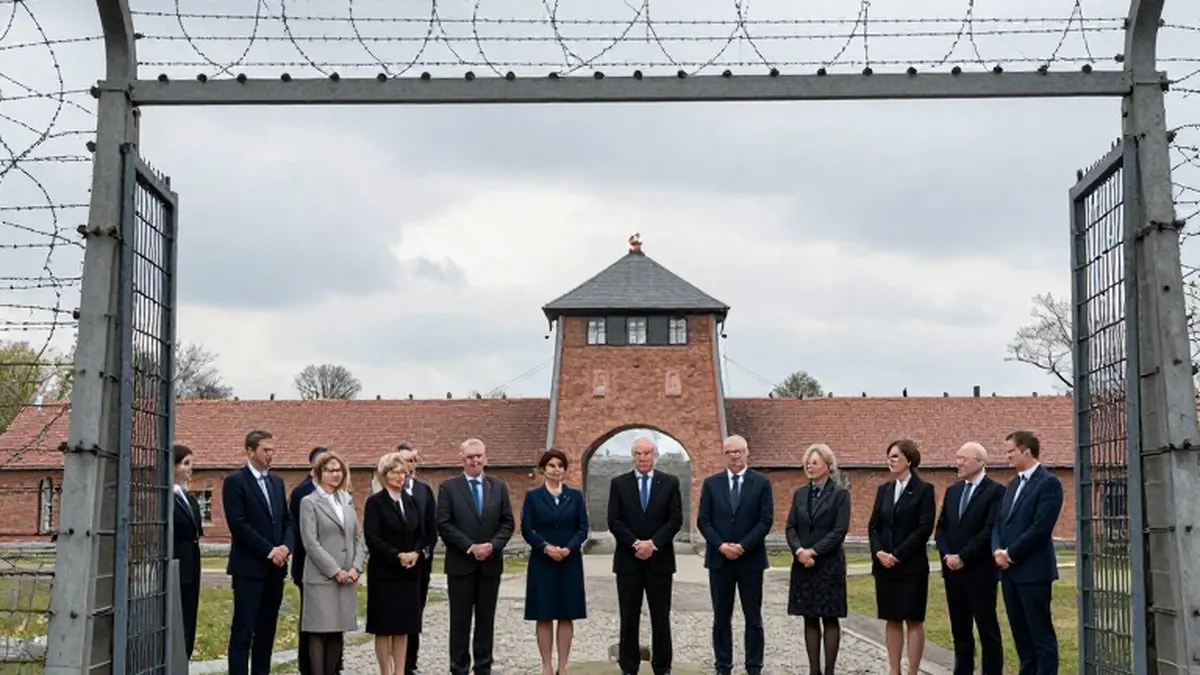
A delegation comprising ambassadors from more than twenty nations traveled to the Auschwitz-Birkenau extermination camp in Poland on Wednesday. The group was led by Danny Danon, Israel’s ambassador to the United Nations, who organized the trip to highlight the ongoing struggle against antisemitism and to address the persistent threats posed by Iran.
This visit marked a significant diplomatic milestone, as it was the first time Germany’s ambassador to the United Nations joined an Israeli-led delegation at the former Nazi death camp. The inclusion of Germany, whose regime established and operated the camp during World War II, added a layer of historical weight to the proceedings. The delegation also featured the ambassador from Trinidad and Tobago, a nation that is set to assume a non-permanent seat on the UN Security Council on January 1, 2027.
The event was arranged as part of the work of an international task force created by Danon to combat antisemitism within the UN system and globally. This year’s mission focused on practical steps to counter hatred against Jews. Danon stated that he brought the world’s ambassadors to the site to send a clear message about the importance of historical context in fighting modern prejudice.
While standing at the location where millions of Jews were systematically murdered, Danon drew a direct line between the Holocaust and the current geopolitical landscape. He noted that the Iranian regime continues to call for the destruction of Israel while the international community often pays lip service to the promise of never allowing such atrocities to happen again. He argued that granting legitimacy to those who incite hatred within the UN undermines that commitment.
Danon’s remarks reflect his long-standing criticism of how the international community responds to both antisemitic incitement and Iranian threats. He has consistently advocated for placing antisemitism higher on the diplomatic agenda, insisting that verbal condemnations must be paired with concrete actions. These actions should include measures to address hatred within the UN’s own institutions and procedures.
The participation of diplomats from over twenty countries demonstrated the broad international reach of this initiative. The presence of the Trinidad and Tobago ambassador offered Israel a chance to engage with an incoming Security Council member on issues of remembrance and the response to threats against the Jewish state. This interaction aimed to prepare future council members for the diplomatic challenges they will face.
The journey to Auschwitz was designed to go beyond simple remembrance. For the Israeli mission, the visit served to expose diplomats to the tangible consequences of historical persecution. It underscored the responsibility of modern international bodies to act decisively against contemporary forms of antisemitism and incitement.
Danon emphasized that the slogan of never again must have practical implications for how the United Nations handles actors who threaten Israel and the Jewish people. By bringing ambassadors to the site of one of history’s greatest tragedies, the delegation sought to ensure that the memory of the Holocaust informs and strengthens the fight against hatred in the present day.